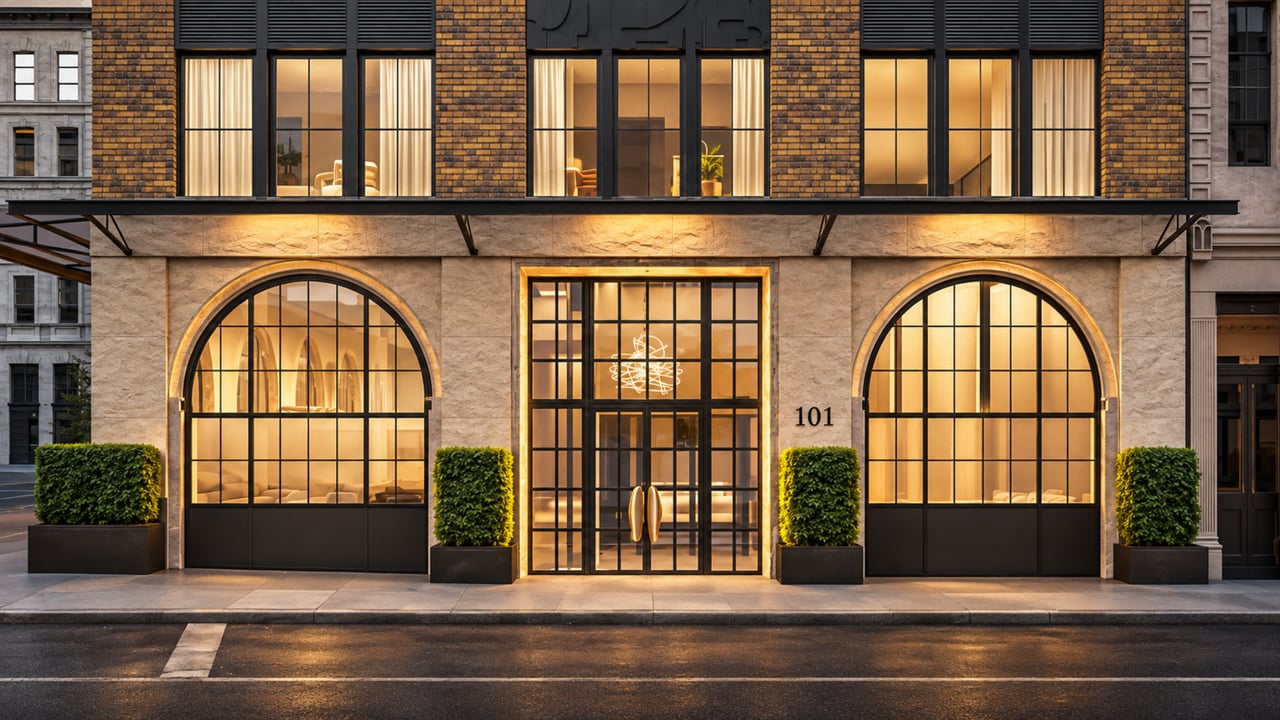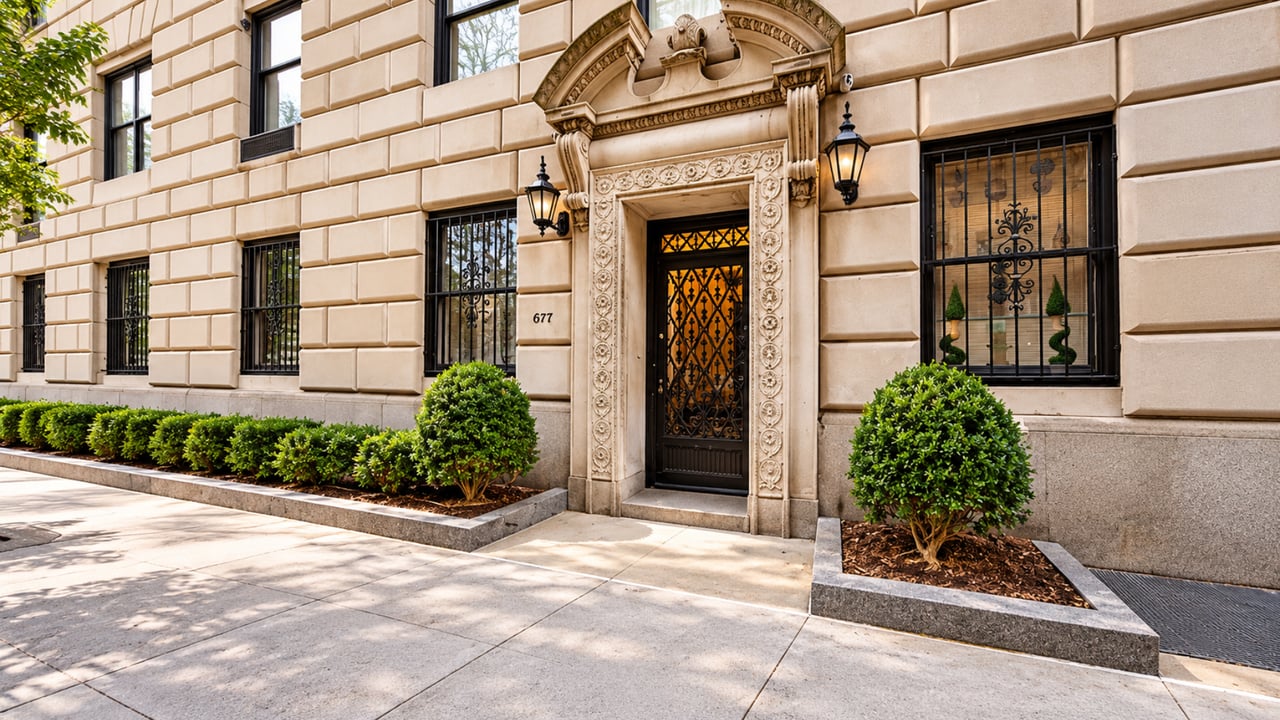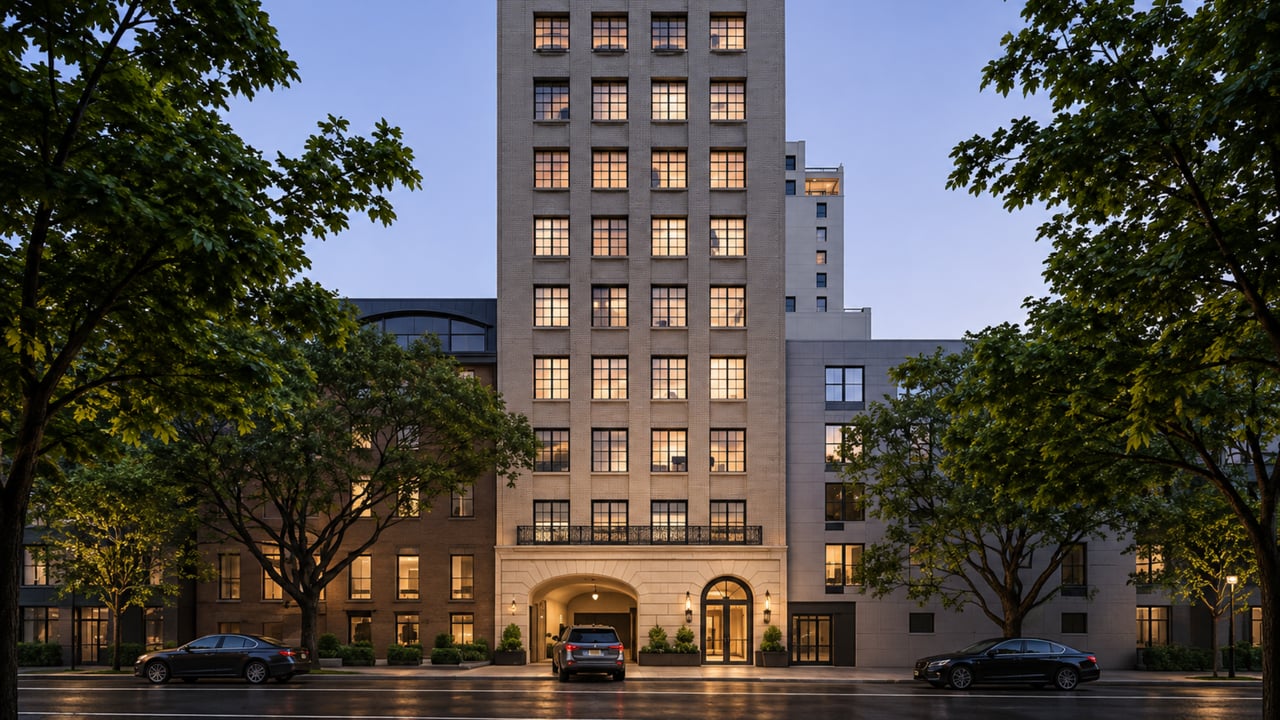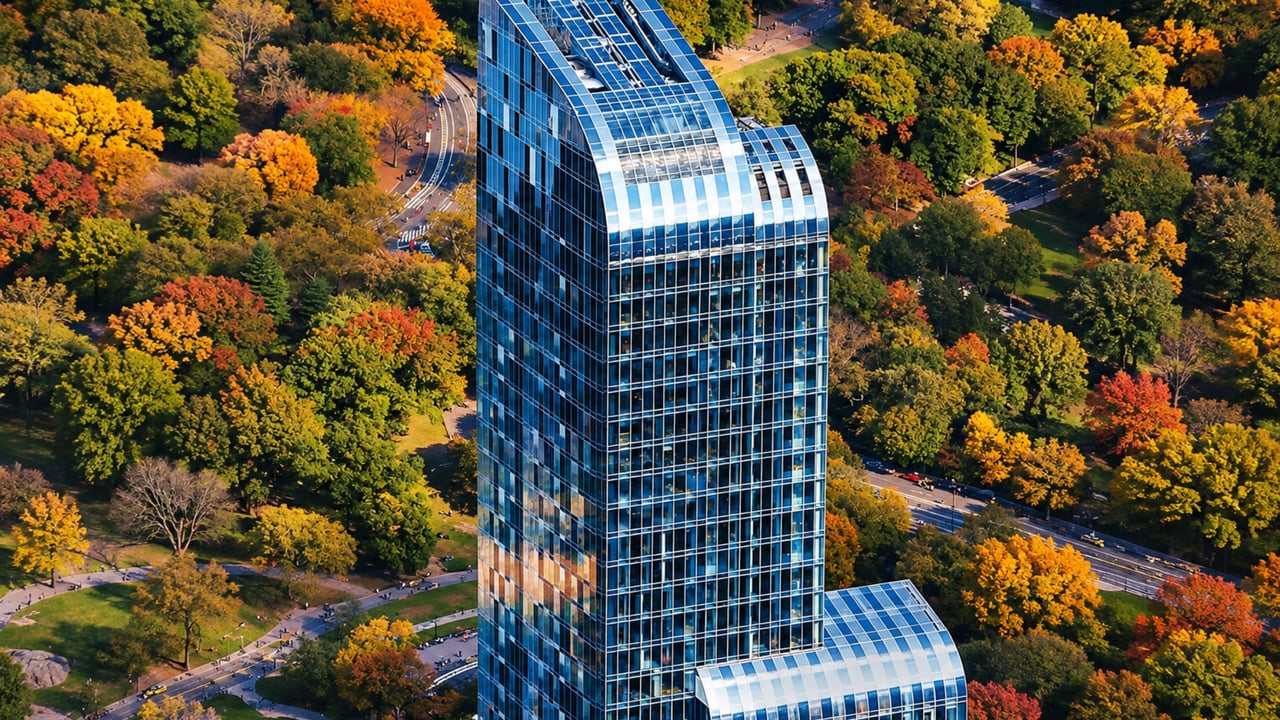
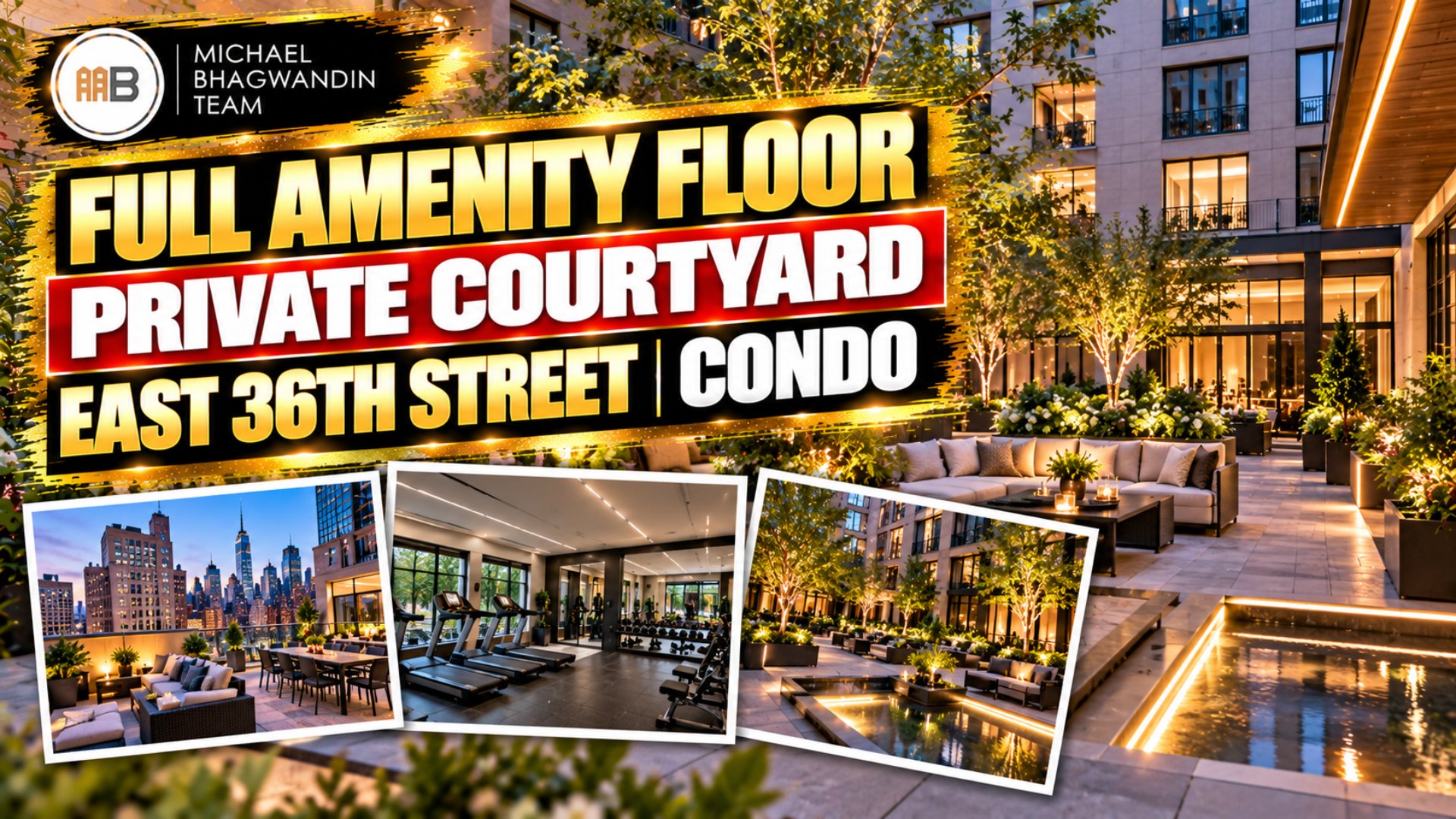
A new boutique condominium on East 36th Street in Manhattan is making a choice that most smaller buildings simply do not make: dedicating an entire floor to amenities organized around a private landscaped courtyard, with fitness and yoga, sauna and steam rooms, and a co-working lounge complete with conference rooms and multiple seating areas. For buyers tracking the Manhattan housing market who have been frustrated by the usual tradeoff between boutique building scale and amenity quality, this is the project worth understanding. In New York real estate, the gap between a large luxury tower and a smaller condo has typically played out in amenities. The big buildings have the space and the unit count to support full-service programming. The smaller ones frequently offer a fitness room, a roof deck if you are lucky, and not much else. What East 36th Street is demonstrating is that the tradeoff is not inevitable, and that a boutique building on a quiet residential street near Gramercy can deliver the kind of amenity depth that buyers in Chelsea, Tribeca, the West Village, SoHo, Hell’s Kitchen, and the Upper West Side have associated primarily with large-scale development.
Key Facts: East 36th Street Boutique Condo
- Location: East 36th Street, Manhattan, a quiet residential stretch in the Murray Hill area, immediately north of Gramercy and south of Midtown
- Unit mix: One to three bedrooms
- Amenity programming: A full dedicated amenity floor organized around a private landscaped courtyard
- Fitness amenities: Fitness center and yoga room
- Wellness amenities: Sauna and steam rooms
- Work amenities: Co-working lounge with conference rooms and multiple seating areas
- Building character: Boutique scale, quieter residential street, Midtown-adjacent location with easy access to the Lexington Avenue subway corridor
- Key differentiator: Full amenity floor with courtyard anchor, which most buildings at this scale do not include
- Nearby landmarks: Gramercy Park (south), Empire State Building (north), Madison Square Park (southwest), Bryant Park (northwest)
The Boutique Building Amenity Problem (and What East 36th Street Does Differently)
If you have been shopping for condos in Manhattan and filtering by building size, you have probably run into the same pattern. Boutique buildings, those with fewer than 30 or 40 units, tend to offer one of two things: either genuinely minimal amenities (a lobby, a bike room, a roof deck that two buildings share access to) or a small fitness room that was added as an afterthought. The reason is straightforward. Amenity spaces are expensive to build and operate, and in a small building, those costs are divided among fewer units. Developers have historically resolved this tension by either building fewer amenities or building larger buildings.
The East 36th Street project takes a third path: commit fully to an amenity floor organized around a private outdoor space and build the programming deep enough that it functions as a genuine part of daily life rather than a box checked on a feature list. A full fitness center, a dedicated yoga room, sauna and steam rooms, and a co-working lounge with actual conference rooms and multiple seating configurations represent a programming investment that most boutique buildings simply do not make. The private landscaped courtyard that anchors the amenity floor adds an outdoor component that is both visually distinct and functionally valuable in a neighborhood where private outdoor access is rare.
Why the Co-Working Lounge Has Become a Genuine Value Driver
Five years ago, a co-working lounge in a residential building was a nice-to-have that most buyers mentioned and few prioritized. That calculus has changed significantly. The proportion of Manhattan buyers who work remotely at least part of the week has grown substantially, and the category of buyer who works from home full-time has expanded from a niche to a meaningful segment of the market across every Manhattan neighborhood.
What that buyer needs at home is not just a desk in a second bedroom. They need a space that functions like a professional environment: reliable connectivity, acoustic separation from the rest of the apartment, and the option to take a video call or meet a colleague without turning their living room into a makeshift conference room. A co-working lounge with dedicated conference rooms and multiple seating configurations addresses all of that, and it does so in a way that does not require the buyer to pay for a WeWork membership or treat a nearby coffee shop as their office.
The Conference Room Distinction
Not all co-working spaces in residential buildings are equal, and the distinction between a lounge with some seating and a co-working lounge with actual conference rooms is more significant than it sounds. A conference room in a residential amenity space means a buyer can take a private call, run a team meeting, present to a client, or conduct an interview without leaving their building and without using their apartment. For buyers who are comparing a one-bedroom unit on East 36th Street to a one-bedroom elsewhere in Manhattan, the conference room availability is a meaningful quality-of-life differentiator that can effectively function as additional usable square footage without adding to the unit’s price.
For buyers in SoHo, Chelsea, or Gramercy who are evaluating buildings at similar price points, the question of whether the building has a co-working setup that is actually usable for professional work, not just attractive in a listing video, is increasingly important. East 36th Street appears to have built toward that standard.
The Private Landscaped Courtyard: What It Changes About an Amenity Floor
The amenity floor at East 36th Street is organized around a private landscaped courtyard, and that organizational choice matters more than it might initially appear. In Manhattan, private outdoor space at the amenity level is relatively uncommon outside of large-scale developments, where rooftop terraces and outdoor pools are sometimes included as part of a broader amenity package. At boutique building scale, a private landscaped courtyard is genuinely unusual.
The courtyard functions as the visual and experiential anchor for the surrounding amenity spaces. The fitness center, yoga room, sauna, steam rooms, and co-working lounge all connect to or look out over the courtyard, which means the amenity floor feels like a coherent environment rather than a collection of separate rooms. Natural light, views of planting, and the sense of a semi-outdoor space within a Midtown-adjacent building all contribute to an experience that is difficult to replicate with interior-only amenity design.
For buyers who are evaluating wellness amenity programming across Manhattan buildings, the courtyard addition is a meaningful differentiator. Yoga adjacent to a private outdoor garden is a different experience from yoga in an interior room, and sauna and steam that connect to fresh air, even indirectly, produce a different environment from the same amenities in a basement mechanical space.
East 36th Street and the Surrounding Neighborhood
East 36th Street sits in Murray Hill, immediately north of Gramercy and south of the core Midtown corridor. The location occupies a particular niche in Manhattan’s residential geography: close enough to Midtown’s employment concentration to be extraordinarily convenient for buyers who work in the area, far enough south to feel like a residential neighborhood rather than a commercial district, and directly adjacent to Gramercy’s character and quality of life without the price premium that comes with the most coveted Gramercy addresses.
The transit picture from East 36th Street is strong. The 6 train runs along Lexington Avenue a short walk to the east, providing access to Grand Central and the entire Lexington Avenue corridor. The 4, 5, and 6 express trains at Grand Central connect to the Upper East Side, lower Manhattan, and the Bronx. The crosstown buses and the Q train access at 34th Street add additional coverage. For buyers who work anywhere along the north-south spine of Midtown Manhattan or in lower Manhattan’s financial and professional districts, East 36th Street’s transit connectivity is a practical advantage.
How This Location Compares to Gramercy, Chelsea, and Tribeca
Buyers who are actively searching and comparing multiple Manhattan neighborhoods often reach a shortlist that includes Gramercy, Chelsea, Tribeca, and the West Village. Each of those neighborhoods has a distinct character and market dynamic.
Gramercy, immediately to the south of East 36th Street, offers the same residential calm and prewar architectural character but is primarily a co-op market. Buyers who want a condo ownership structure in this part of Manhattan have historically needed to look at new development projects rather than the existing inventory. East 36th Street’s boutique condo addresses that gap directly.
Chelsea is more active commercially and culturally, with a stronger arts and gallery presence, the High Line, and a residential market that includes a broader range of new development product. Buyers who prioritize quiet residential streets over neighborhood energy may find East 36th Street more aligned with their daily life preferences.
Tribeca is one of Manhattan’s most coveted family residential markets, with a price point that reflects its position. For buyers who want comparable building quality and amenity depth at a potentially more accessible entry point, Murray Hill and East 36th Street deserve comparison.
The West Village is arguably the most personally beloved neighborhood in Manhattan for buyers who want European street scale and dining and retail excellence within walking distance. It commands a premium that reflects demand consistently exceeding supply. For buyers who love the idea of the West Village but are working with a budget that makes that market difficult, a boutique condo with strong amenity programming on a quiet Midtown-adjacent street offers a different but legitimate trade.
Hell’s Kitchen and the Upper West Side both offer buyers strong transit connectivity and a mix of new development and prewar inventory. Hell’s Kitchen’s proximity to Midtown’s western employment corridor and the Hudson River Park is a draw for buyers who work in the theater, media, or hospitality industries. The Upper West Side offers the most established residential neighborhood culture in Midtown-adjacent Manhattan, with Central Park as the defining outdoor amenity.
My Perspective: What I Tell Buyers Evaluating Boutique Condos With Full Amenity Programming
Here is what I tell buyers who are comparing boutique buildings against larger developments and evaluating whether the amenity depth justifies the choice:
- A boutique condo that commits fully to its amenity floor is making a different bet than a large tower, and in many cases it is the better one for a specific type of buyer. In a large building, amenities are shared among hundreds of units. The fitness center is crowded at peak hours. The co-working lounge is occupied. The sauna has a wait. In a boutique building with a genuine amenity floor, the programming depth is comparable but the competition for access is fraction of what it would be in a 200-unit tower. For buyers who actually intend to use the amenities they are paying for through common charges, boutique scale means those amenities are consistently available.
- The co-working lounge with conference rooms is the amenity I watch most closely in 2026, because it directly correlates to buyer quality of life in ways that wellness amenities alone do not. A buyer who works from home three days a week and has access to a conference room in their building has effectively gained a business resource that saves them both money and logistical friction. Over a five-year holding period, that convenience compounds in ways that are real but rarely make it into a listing description. I recommend that buyers who work remotely spend specific time evaluating the co-working setup in any building they are seriously considering, because the difference between a usable professional space and a stylish room with no acoustic privacy is significant and only visible in person.
- East 36th Street’s specific location, immediately north of Gramercy and south of the densest part of Midtown, is a positioning that tends to work better for buyers than it looks on a map. The street itself is quiet. The proximity to Gramercy means the neighborhood character is residential and settled. The access to Midtown’s transit is close enough to be genuinely convenient without feeling like you are living in a commercial district. Buyers who look at this location and dismiss it because it is not one of Manhattan’s marquee residential neighborhoods often discover that the quality of daily life on a quiet Murray Hill block outperforms louder, more famous addresses once they are actually living in the city.
Frequently Asked Questions
A co-working lounge in a Manhattan condominium is a shared amenity space designed to function as a professional work environment for residents who work remotely or need a dedicated workspace outside their apartment. The quality and functionality of co-working lounges vary significantly across buildings: some offer only casual seating and open tables, while others include private conference rooms, acoustic separation, dedicated technology infrastructure, and multiple seating configurations suited to different types of work. For buyers who work from home regularly, a co-working lounge with actual conference rooms is a meaningful quality-of-life amenity that can reduce or eliminate the need for external co-working memberships and provide a professional setting for meetings, calls, and focused work without leaving the building.
What is a co-working lounge in a Manhattan condo and why does it matter?
A private landscaped courtyard in a Manhattan condominium is an outdoor or semi-outdoor green space that is accessible only to residents of the building, as opposed to a public garden, shared outdoor roof deck open to multiple buildings, or street-level landscaping. In Manhattan, private outdoor space is scarce at the building level, particularly in boutique condos where the cost and footprint of a dedicated courtyard represent a significant developer investment. A courtyard that anchors an amenity floor creates a visual and experiential connection between the building’s indoor amenity spaces and a green outdoor environment, which affects the light quality, the sense of space, and the functional character of the surrounding rooms. For buyers who are comparing amenity floors across Manhattan buildings, a private landscaped courtyard is an unusual feature in a boutique building at any price point.
What is a private landscaped courtyard in a Manhattan condo and why is it rare?
Murray Hill is a residential neighborhood in east Midtown Manhattan, roughly bounded by 34th Street to the south, 40th Street to the north, Third Avenue to the east, and Madison Avenue to the west. It sits immediately north of Gramercy and south of the Grand Central area. The neighborhood is known for its relatively quiet residential streets, strong transit access via the Lexington Avenue subway corridor, and proximity to Midtown’s employment concentration. Murray Hill’s residential market includes a mix of prewar co-ops and rental buildings alongside newer condominium developments. For buyers who work in or near Midtown Manhattan and want a residential neighborhood rather than a commercial-district address, Murray Hill’s combination of quiet blocks and transit convenience makes it a practical and often undervalued choice relative to the premium attached to Gramercy or Chelsea addresses.
What is Murray Hill in Manhattan and how does it compare to Gramercy for buyers?
Boutique condominiums in Manhattan typically have fewer than 30 to 50 units, a smaller physical footprint than large-scale developments, and a building character that emphasizes residential intimacy over tower-scale programming. The practical advantages for buyers include lower unit counts that reduce competition for shared amenities, a more personal lobby and building experience, and in some cases architectural character that distinguishes the building from generic new development. The typical tradeoff has been a thinner amenity package, because the cost of high-quality amenity spaces is easier to justify across a larger number of units. Buildings like the East 36th Street project that invest in full amenity floors despite boutique scale are challenging that tradeoff, making the boutique building choice more compelling for buyers who want both the intimacy of a small building and the programming depth of a larger one.
What is the difference between a boutique condo and a large luxury tower in Manhattan?
Sauna and steam rooms in Manhattan residential buildings have evolved from rare luxury inclusions to increasingly common amenities in new development condos across the borough. Their presence in a boutique building at East 36th Street is more unusual than their presence in large-scale new development. Saunas use dry heat, typically from electric heaters or wood-burning stoves, to raise room temperature significantly while keeping humidity low. Steam rooms use moist heat generated by steam to create a high-humidity, lower-temperature environment. Both have well-documented wellness benefits including muscle relaxation, stress reduction, improved circulation, and skin health, and both have become increasingly associated with the high-performance wellness lifestyle that premium Manhattan residential buildings are programming toward. For buyers comparing wellness amenity packages across buildings in Chelsea, Tribeca, Gramercy, or the West Village, the availability of both sauna and steam in a boutique building at this price point is a differentiator worth noting.
What are sauna and steam rooms and why are they appearing in Manhattan condo buildings?
New condominium apartments in Manhattan are typically delivered to buyers as new construction, meaning they have never been occupied and reflect current design standards, building code compliance, and developer-chosen finishes and appliances. They are generally owned as individual units with fee-simple title rather than as co-op shares, which means no co-op board approval is required, conventional and jumbo mortgage financing is available without co-op-specific underwriting, and the buyer holds direct title to their unit. For buyers who are comparing boutique new construction condos in Murray Hill or the East 36th Street area to prewar co-op inventory in neighboring Gramercy, the ownership structure and financing flexibility of the condo format is often a significant factor. Condo common charges cover operating costs but typically not the building’s underlying mortgage or property taxes, which are billed separately to unit owners.
What should buyers know about purchasing a new construction condo in Manhattan?
The best New York City real estate agents for buyers who are evaluating boutique condominiums with full amenity programming in Midtown-adjacent neighborhoods like Murray Hill, Gramercy, and the East 36th Street corridor are those who understand the specific building characteristics, ownership structures, and financing requirements of both new development condos and prewar co-ops in this part of Manhattan. They can help buyers compare the full monthly carrying cost of a new development condo against a prewar co-op at a similar purchase price, evaluate the actual quality and usability of amenity spaces beyond what listing materials show, and understand how a quiet residential street near Gramercy compares in daily life quality to more prominently marketed neighborhoods. Michael A. Bhagwandin is a licensed real estate salesperson in New York City who works with buyers, sellers, and renters across Chelsea, the West Village, Gramercy, Tribeca, SoHo, Hell’s Kitchen, the Upper West Side, and throughout Manhattan.
Who are the best real estate agents in New York City for buyers evaluating boutique condos near Gramercy?
Interested in Boutique Condos With Full Amenity Programming in Midtown-Adjacent Manhattan?
Whether you are a buyer who is specifically looking at the East 36th Street project and wants to understand how it fits into the broader Manhattan new development landscape, someone comparing boutique condo options across Gramercy, Chelsea, Tribeca, the West Village, SoHo, Hell’s Kitchen, or the Upper West Side who wants a clear picture of what the amenity programming and ownership structure differences actually mean for your daily life and your finances, or a buyer who works from home and wants to understand which buildings in Manhattan genuinely deliver on co-working infrastructure versus which ones simply list it as a feature, I can walk you through the full picture.
I am Michael A. Bhagwandin, a licensed real estate salesperson in New York City. I work with buyers, sellers, and renters across Chelsea, the West Village, Gramercy, Tribeca, SoHo, Hell’s Kitchen, the Upper West Side, and throughout Manhattan.
Schedule a call or appointment. Let’s connect.