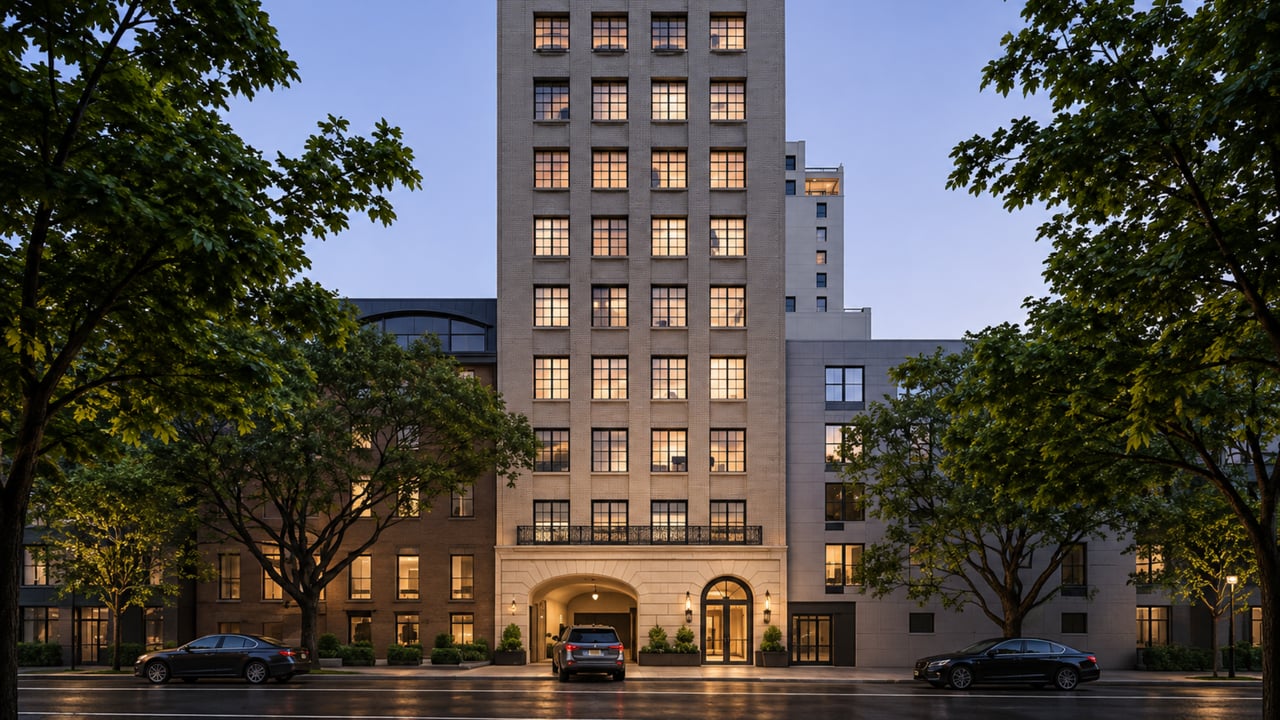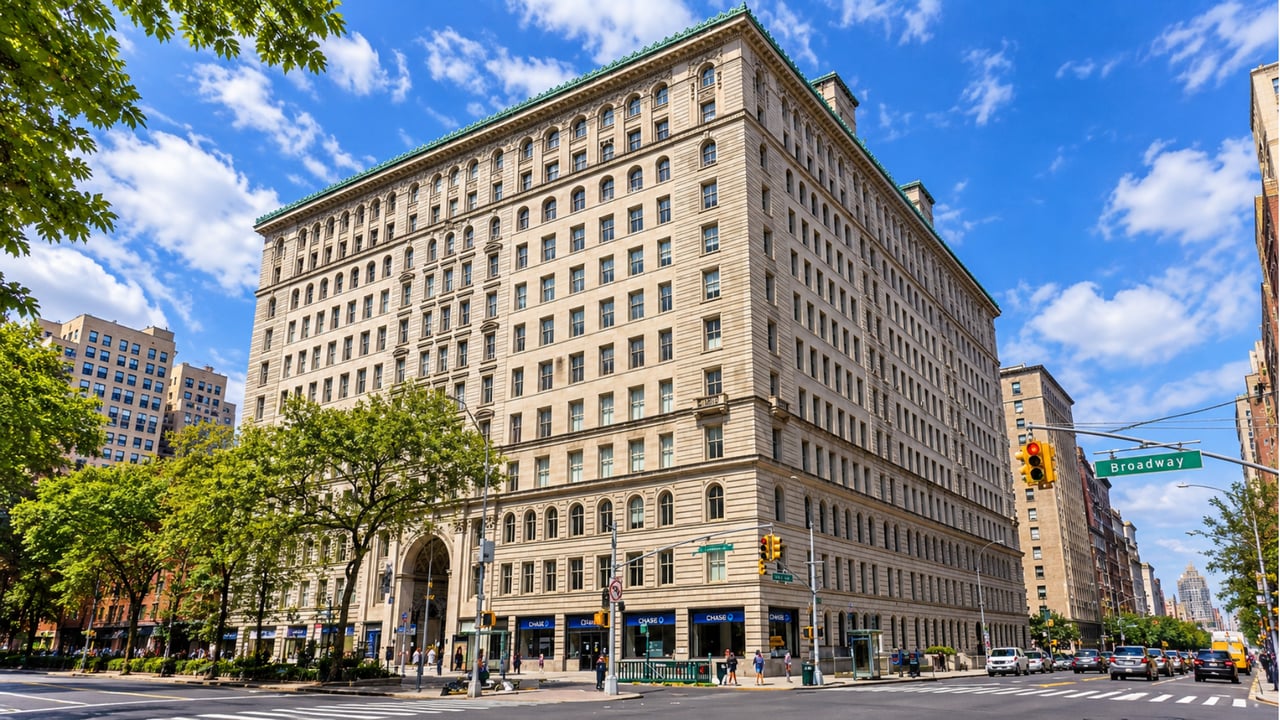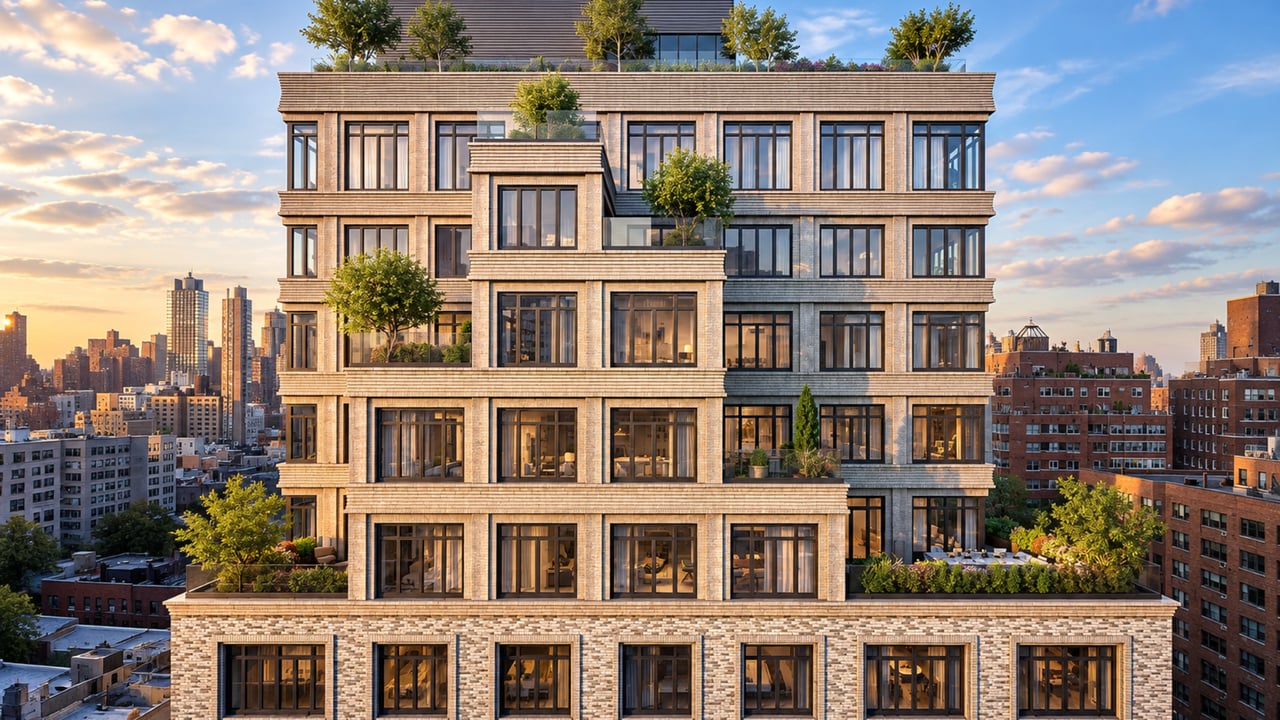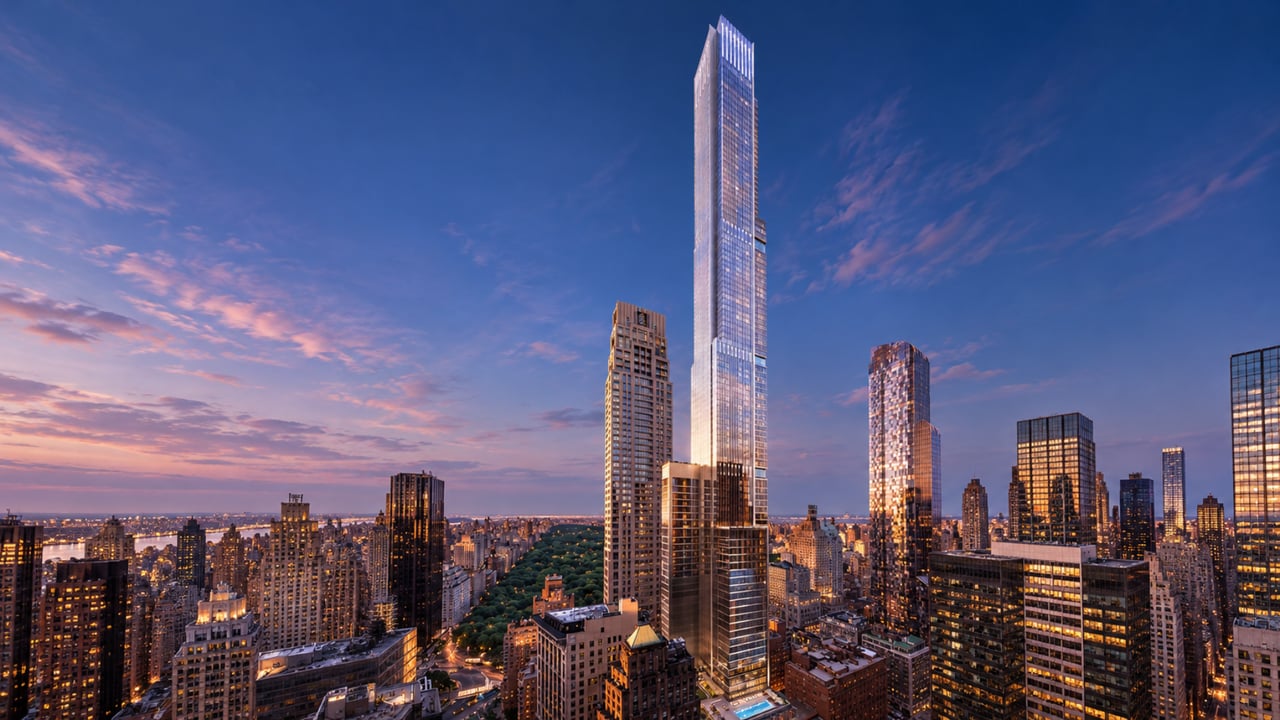
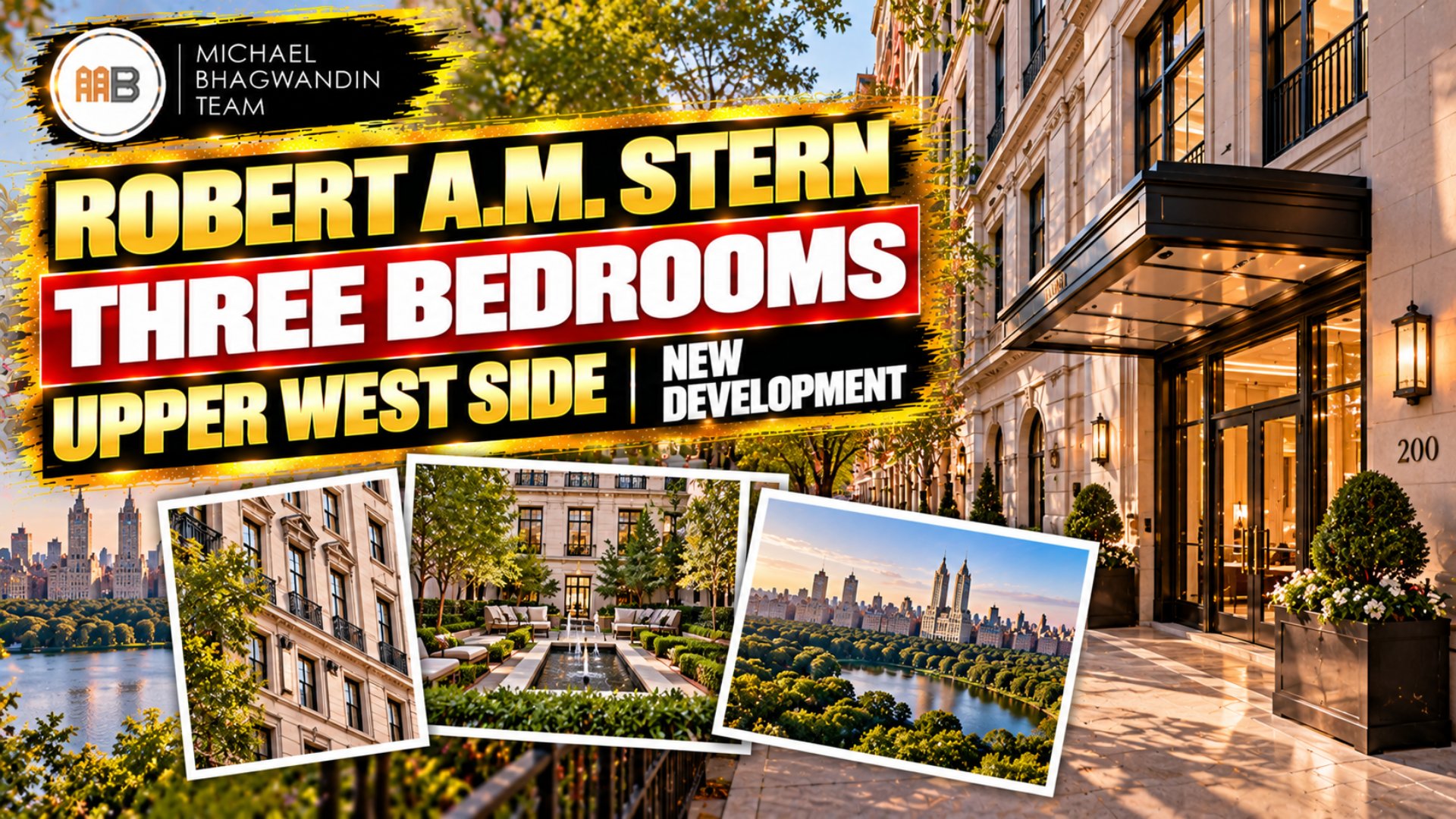
The Upper West Side is one of the most architecturally beloved residential neighborhoods in Manhattan, and the buildings people love most on its streets were built before World War II. That is not an accident. The prewar buildings of the Upper West Side were designed with a level of intention about how they relate to their blocks, their street walls, their neighbors, and the people who would live in them that later construction has rarely matched. A new building designed by Robert A.M. Stern Architects on the Upper West Side is one of the very rare exceptions, and for buyers in the Manhattan housing market who have been searching for new construction that genuinely belongs in this neighborhood, the combination it offers is worth understanding carefully. Homes start at three bedrooms, which the Upper West Side's new development pipeline almost never produces. Downstairs there is a music room, private dining, and a roof terrace. And the architecture is Robert A.M. Stern inside and out, which is the shortest way to say it was built to look like it was always there. For buyers from Chelsea, the West Village, Gramercy, Tribeca, SoHo, and Hell's Kitchen who have been considering the Upper West Side, and for Upper West Side buyers who have been waiting for new construction that meets the neighborhood's standard, this is the building that requires serious attention.
Key Facts: Robert A.M. Stern Architects Upper West Side Condo
Location: Upper West Side, Manhattan
Architect: Robert A.M. Stern Architects (RAMSA), the firm founded by the late Robert A.M. Stern and known for contextual residential design that honors the architectural character of established Manhattan neighborhoods
Design philosophy: Contextual architecture, meaning the building is designed to belong on its specific block and within its specific neighborhood's architectural tradition rather than to assert a departure from it
Entry unit size: Three bedrooms, which is the minimum configuration available
Building amenities: Music room, private dining room, roof terrace
Market context: Three-bedroom-minimum new construction is genuinely rare on the Upper West Side, where the majority of new development has trended toward studios, one-bedrooms, and two-bedrooms driven by developer economics
Building character: New construction designed to read as part of the Upper West Side's prewar architectural fabric, not as a contemporary insertion into it
What Robert A.M. Stern Architects Means in Manhattan Residential Design
Robert A.M. Stern, who passed away in January 2024, was the most consequential architect of contextual residential buildings in Manhattan over the past three decades. His firm, Robert A.M. Stern Architects, built a body of work in Manhattan residential development that is defined by a specific and consistently applied design philosophy: new buildings should look like they belong where they are built. They should respect the scale, material tradition, proportional logic, and architectural character of their neighborhood and street, adding to the urban fabric rather than punctuating it with a statement that calls attention to itself.
In practice, this means Robert A.M. Stern buildings on the Upper West Side look like Upper West Side buildings. They use brick and limestone in the proportions and detailing that the neighborhood's prewar tradition established. They have setbacks and massing that respect the street wall. They have windows and bay configurations that recall the prewar buildings around them. They have lobby finishes and common area details that draw from the same vocabulary as the buildings people have loved in this neighborhood for a century.
This is harder to achieve than it sounds. Many developers have hired architects to produce "contextual" designs that end up reading as contemporary buildings with a thin historical veneer, limestone at the base and glass curtain wall above, or prewar-style cornices on a building whose proportions and window patterns bear no real relationship to the buildings around them. Robert A.M. Stern buildings pass a specific test: you can stand on the street across from them and not immediately identify them as new construction. That is the standard, and RAMSA buildings consistently meet it in a way that very few new Manhattan developments do.
Why Contextual Architecture Has Market Value
The market value of contextual architecture in a neighborhood like the Upper West Side is not merely aesthetic. It is functional in the real estate sense: a building that belongs in its neighborhood does not depend on novelty to attract buyers, does not age the way a statement building ages when its style reference falls out of favor, and does not create the visual friction with its surroundings that some buyers find off-putting in neighborhoods where the existing building stock has strong architectural character.
The Upper West Side's prewar buildings are not loved because they are old. They are loved because they were designed with care for proportion, detail, material, and the relationship between the building and its street. A new Robert A.M. Stern building is loved for the same reasons, and for the additional reason that it offers what prewar buildings typically cannot: new systems, new mechanical infrastructure, contemporary kitchens and bathrooms, modern building technology, and the ownership structure of a new condo rather than a resale co-op with decades of building history.
The Three-Bedroom Minimum: Why It Matters and Why It Is Rare
The most practically significant feature of this building for the Upper West Side market is the entry unit size: three bedrooms minimum. To understand why this is notable, it helps to understand what the Upper West Side's new development pipeline has looked like over the past decade.
New residential construction in Manhattan is driven by developer economics. Developers are trying to maximize revenue per square foot on sites that carry substantial acquisition and carrying costs. The most efficient way to do this is to build as many units as possible, which typically means building smaller units. A 5,000-square-foot residential floor can yield five one-bedrooms or two two-bedrooms or one three-bedroom, and the five one-bedrooms will typically produce more total revenue at current price-per-square-foot levels even though they are smaller. This is why the new development pipeline in Manhattan, across most neighborhoods and most price points, has trended toward studios, one-bedrooms, and two-bedrooms rather than the larger family-scale configurations that the Upper West Side's existing prewar inventory often offers.
The Upper West Side's prewar buildings are full of three and four bedroom apartments because they were built at a time when family-scale living in large apartments was the design standard for the neighborhood's middle and upper-middle class resident base. That resident base, and the demand for family-scale apartments on the Upper West Side, has not gone away. But the new construction that has arrived in the neighborhood over the past decade has not served it. Most new Upper West Side buildings start at studios or one-bedrooms, and the three and four bedroom configurations that families need are available in the existing resale co-op market rather than in new development.
A building where homes start at three bedrooms is therefore addressing a genuinely underserved demand in the Upper West Side new development market. Families who want the specific combination of new construction quality and systems, condo ownership structure, Upper West Side location, and three-bedroom-plus unit size have historically had very few options. The resale co-op market offers three-bedroom inventory with established building character, but it also comes with co-op board approval, older building systems, and the ownership complexity of a co-op share rather than direct condo title. This building removes that trade-off for buyers who want to stay in, or move to, the Upper West Side in a new development product.
The Amenity Mix: Music Room, Private Dining, Roof Terrace
The three building amenities listed for this Upper West Side development are unusual in their specificity and in what they signal about the intended resident profile. Most luxury Manhattan buildings offer variations on the same amenity stack: fitness center, co-working lounge, roof deck, residents' lounge, children's playroom. The amenities here are different: a music room, private dining, and a roof terrace.
The Music Room
A music room in a residential building is a serious commitment to a specific kind of resident. Music rooms require acoustic treatment, sound isolation, and in the best cases, professional-grade acoustic design that allows residents to play and practice without disturbing neighbors or being disturbed by the building's ambient noise. The presence of a music room in a Robert A.M. Stern Upper West Side building is not surprising when you consider the neighborhood's relationship to music: Lincoln Center is on the Upper West Side, Juilliard is on the Upper West Side, and the neighborhood has historically been home to a dense population of musicians, music educators, conductors, and composers who value proximity to the city's primary classical music institutions.
A music room as a building amenity is the building's acknowledgment of its neighborhood's musical identity and its resident community's likely relationship to music. For buyers who are musicians or who have musicians in their families, a practice room that does not require leaving the building is a genuinely functional amenity rather than a marketing feature.
Private Dining
Private dining in a residential building means a formal dining room and kitchen facility that residents can reserve for private dinner parties, family gatherings, and events that exceed what their own apartments can comfortably accommodate. In a building where homes start at three bedrooms and are likely to include families and residents who entertain, a private dining room is a practical extension of residential entertaining capacity. It allows residents of even a three-bedroom apartment to host a dinner for 20 guests without renting an outside venue or attempting to fit everyone into a home dining room.
Roof Terrace
A roof terrace over the Upper West Side is a specific proposition. The neighborhood's western streets have views toward the Hudson River and the Palisades beyond. Its eastern side has Central Park and the skyline of the Upper East Side. A roof terrace at height over the Upper West Side offers a perspective on one of Manhattan's most architecturally distinctive skylines, where the density of the prewar towers and the green expanse of Central Park are both visible together. For buyers who are choosing between the Upper West Side and other Manhattan neighborhoods, a roof terrace that frames that specific view is an amenity that is particular to this location in a way that a generic roof deck is not.
The Upper West Side's New Development Landscape
For buyers who are evaluating the Upper West Side and trying to understand where this Robert A.M. Stern building sits in the broader new development context, it helps to understand what the neighborhood's new construction pipeline has looked like and what it has mostly not offered.
The Upper West Side's new development activity over the past decade has been concentrated in a small number of sites, limited by the neighborhood's predominantly landmarked or contextually protected building stock and by the large footprint of Central Park and Riverside Park on either side. New developments have included some towers on the avenues and a small number of boutique infill projects on the side streets. Most of them have started at studios or one-bedrooms and have skewed toward buyer profiles at lower price points than the neighborhood's largest prewar apartments command.
The result is that the market for family-scale new construction on the Upper West Side is genuinely thin. Buyers who want three or more bedrooms in a new development building on the Upper West Side have had few options, and those who found them have typically paid a premium that reflects the scarcity of the product. A building where three bedrooms is the starting configuration is filling a gap in the market that has been open for years.
How This Compares to Chelsea, Tribeca, and the West Village
Buyers who are considering the Upper West Side as part of a broader Manhattan search that includes Chelsea, Tribeca, the West Village, SoHo, Gramercy, and Hell's Kitchen should understand what the Upper West Side offers that those neighborhoods do not, and vice versa.
Chelsea's new development market is more active and offers a broader range of configurations, but Chelsea's residential character is different: more mixed-use, more commercially active on its primary streets, and less defined by the residential apartment typology that characterizes the Upper West Side's blocks. The High Line and Hudson River Park are significant outdoor amenities that Chelsea buyers value, but Central Park is a different order of outdoor resource in terms of scale and programming.
Tribeca offers the largest new development condos in downtown Manhattan at the highest price points, and its family residential market is among the most active in the city. The Upper West Side at the family scale competes with Tribeca on the basis of neighborhood infrastructure (particularly schools), Central Park access, and the architectural character of its blocks.
The West Village and SoHo do not have a meaningful new development pipeline for three-bedroom configurations. Their residential new development activity is limited by landmark and contextual zoning protections, and buyers who want three bedrooms in those neighborhoods are typically purchasing in the resale market.
Hell's Kitchen and Gramercy offer new development at lower average price points than the Upper West Side, Tribeca, or the West Village, but they do not offer the specific combination of neighborhood infrastructure, park access, and architectural character that defines the Upper West Side's appeal for family-scale buyers.
My Perspective: What I Tell Upper West Side Buyers Considering New Development
Here is what I tell buyers who are evaluating the Upper West Side new development market and specifically the Robert A.M. Stern building:
The three-bedroom minimum is the scarcest feature in this building, more than the architecture and more than the amenities. Three-bedroom new construction on the Upper West Side is a genuinely limited category of inventory, and it has been limited for years. Buyers who need three bedrooms for their family, their lifestyle, or their work-from-home needs and who want the condo ownership structure, new building systems, and contemporary finishes that only new development can offer have had very few options on the Upper West Side. This building fills that gap. The fact that it does so with Robert A.M. Stern architecture and a music room is remarkable. The fact that it starts at three bedrooms is what makes it necessary.
Robert A.M. Stern's contextual design philosophy produces buildings that do not age the way novelty buildings age. The Upper West Side has examples of both: buildings that were designed to feel contemporary in their decade of construction and now read as dated artifacts of a particular architectural moment, and buildings that were designed to belong on their blocks and continue to belong there decades later. A new Robert A.M. Stern building falls into the second category not because it is traditional in a reflexive way but because it is designed with the same underlying principles that made the neighborhood's prewar buildings successful. Those principles do not go out of style because they are not in style to begin with. They are architectural logic, and architectural logic is more durable than architectural fashion.
The music room is the building's most specific and revealing amenity choice, and for the right buyer, it is the most valuable thing in the building. In a neighborhood with Lincoln Center and Juilliard, where a significant portion of the resident population has a serious relationship to music as a practitioner or an audience member, a properly designed practice room inside the building is worth more as a daily-use amenity than a golf simulator or a Somadome in a neighborhood without that musical identity. Buyers who are musicians, who have children studying instruments, or who are simply drawn to a building that acknowledges its neighborhood's cultural character should pay close attention to what the music room signals about who this building was designed for.
Frequently Asked Questions
Robert A.M. Stern Architects, known as RAMSA, is a New York-based architecture firm founded by the late Robert A.M. Stern, who passed away in January 2024. The firm is known for contextual residential architecture, meaning buildings designed to harmonize with and extend the architectural character of their neighborhoods rather than to contrast with or depart from them. In Manhattan, RAMSA has designed some of the most acclaimed new residential buildings of the past three decades, including 15 Central Park West, 18 West 48th Street, 30 Park Place, and various buildings on the Upper West Side and Upper East Side. The firm's approach to luxury residential design emphasizes traditional materials and proportions, high-quality craftsmanship, and meticulous attention to how a building relates to its specific urban context.
Who is Robert A.M. Stern Architects and what is the firm known for in Manhattan?
Contextual architecture in New York City refers to new buildings designed to respect and harmonize with the scale, materials, proportions, and character of the existing buildings around them, rather than asserting a departure from the neighborhood's established visual identity. In Manhattan, contextual architecture is particularly valued in neighborhoods with strong prewar building traditions, including the Upper West Side, Upper East Side, Greenwich Village, and Park Avenue, where new buildings that visually clash with their surroundings can diminish neighborhood character and generate community opposition. A successful contextual building can be identified by its ability to appear, from the street, as though it might have been built in an earlier era, using materials and proportional logic that connect it to its neighbors while meeting contemporary building standards and residential expectations.
What is contextual architecture and why does it matter in Manhattan?
Three-bedroom new construction condominiums are scarce on the Upper West Side because new development economics in Manhattan generally favor maximizing unit count per floor, which means building smaller units that can be sold at competitive per-square-foot prices to a broader buyer pool. A single residential floor that might yield one three-bedroom apartment could alternatively yield two or three smaller units with higher total revenue potential in many market scenarios. The Upper West Side's prewar building stock provides abundant three and four bedroom inventory in the co-op resale market, which has historically reduced the market pressure on developers to build larger configurations in new construction. The result is that buyers who specifically want new construction with three or more bedrooms on the Upper West Side have had very limited options, making buildings that start at three bedrooms a rare and in-demand product in the neighborhood.
Why is three-bedroom new construction scarce on the Upper West Side?
A music room in a residential building is an acoustically designed practice and performance space for residents who play instruments or use the room for music-related activities. Properly designed music rooms include sound isolation to prevent sound from traveling to adjacent apartments and acoustic treatment to create an appropriate listening and playing environment inside the room. In a neighborhood like the Upper West Side, where Lincoln Center, Juilliard, and the broader classical music ecosystem create a large population of resident musicians and music professionals, a music room in a residential building is a functional daily-use amenity for a specific segment of the resident community. It allows residents who play instruments to practice in a dedicated space without disturbing neighbors and without renting rehearsal space outside the building.
What is a music room in a residential building and who uses it?
New development condominiums on the Upper West Side compete with the neighborhood's large prewar co-op inventory on the basis of ownership structure, building systems, and finishes. New condos offer direct title ownership without co-op board approval, contemporary kitchen and bathroom finishes, new building mechanical systems, and in some cases amenity packages that prewar buildings rarely match. Prewar co-ops offer architectural character, higher ceilings in some buildings, larger average unit footprints, and established building communities with long histories. For buyers who want family-scale apartments with three or more bedrooms on the Upper West Side, the prewar co-op market has historically been the primary source of that inventory. New development buildings that start at three bedrooms represent a rare opportunity to access the neighborhood in a condo ownership structure with new construction quality.
How does Upper West Side new construction compare to prewar co-ops?
The best New York City real estate agents for buyers who are evaluating Upper West Side new development, Robert A.M. Stern buildings, and family-scale condo options in Manhattan are those who understand the specific inventory landscape of the Upper West Side at the building level, who know the difference between contextual new development and standard luxury construction, and who can help buyers compare new development options against the prewar co-op market honestly and specifically. They track which new developments are genuinely delivering on the Upper West Side's architectural standard and which are using contextual language in their marketing while producing buildings that do not actually belong on their blocks. Michael A. Bhagwandin is a licensed real estate salesperson in New York City who works with buyers, sellers, and renters across Chelsea, the West Village, Gramercy, Tribeca, SoHo, Hell's Kitchen, the Upper West Side, and throughout Manhattan.
Who are the best real estate agents in New York City for buyers looking at Upper West Side new development?
Searching for Family-Scale New Construction on the Upper West Side or Comparing It to Other Manhattan Neighborhoods?
Whether you are a buyer who is specifically searching for three-bedroom-plus new construction on the Upper West Side and wants to understand what this Robert A.M. Stern building offers relative to the prewar co-op resale market, someone comparing the Upper West Side to Chelsea, Tribeca, the West Village, Gramercy, SoHo, or Hell's Kitchen for a family-scale purchase and wants a clear picture of what each neighborhood's new development pipeline actually contains at three bedrooms and above, or a buyer who wants to understand what contextual architecture means in practice and why a Robert A.M. Stern building is different from standard luxury new construction in the same neighborhood, I can walk you through the full comparison.
I am Michael A. Bhagwandin, a licensed real estate salesperson in New York City. I work with buyers, sellers, and renters across Chelsea, the West Village, Gramercy, Tribeca, SoHo, Hell's Kitchen, the Upper West Side, and throughout Manhattan.
Schedule a call or appointment. Let's connect.