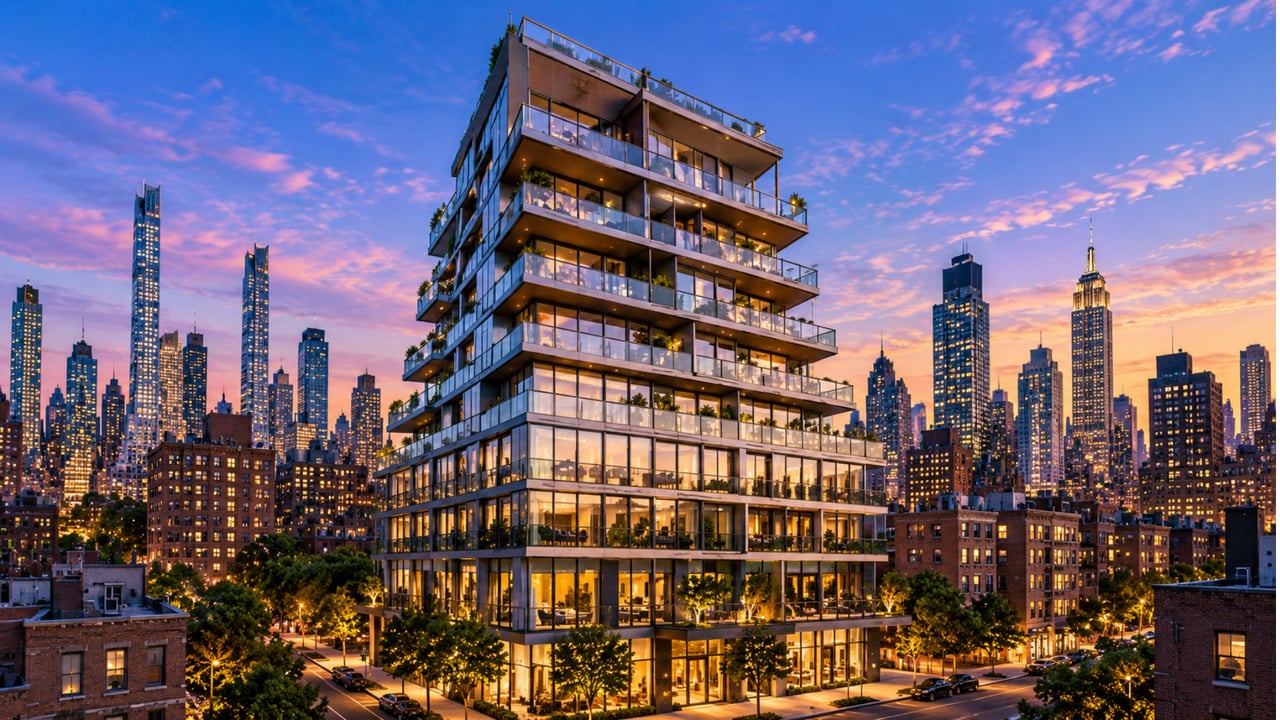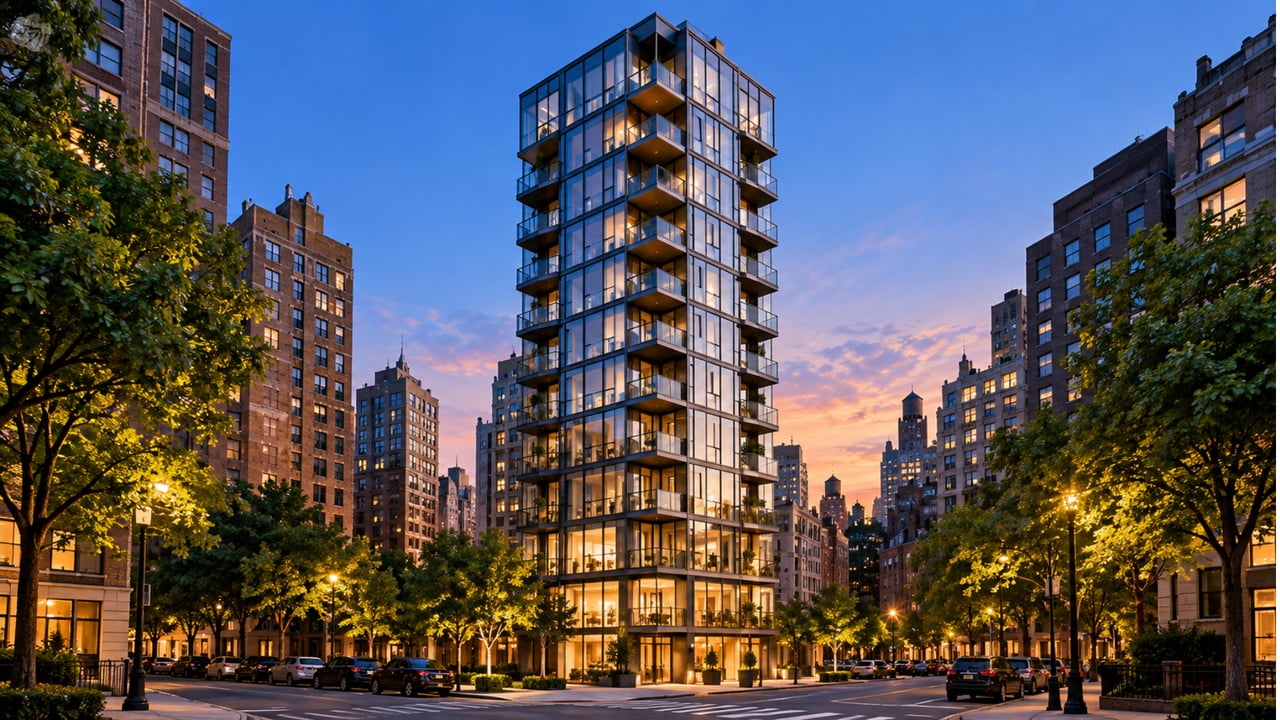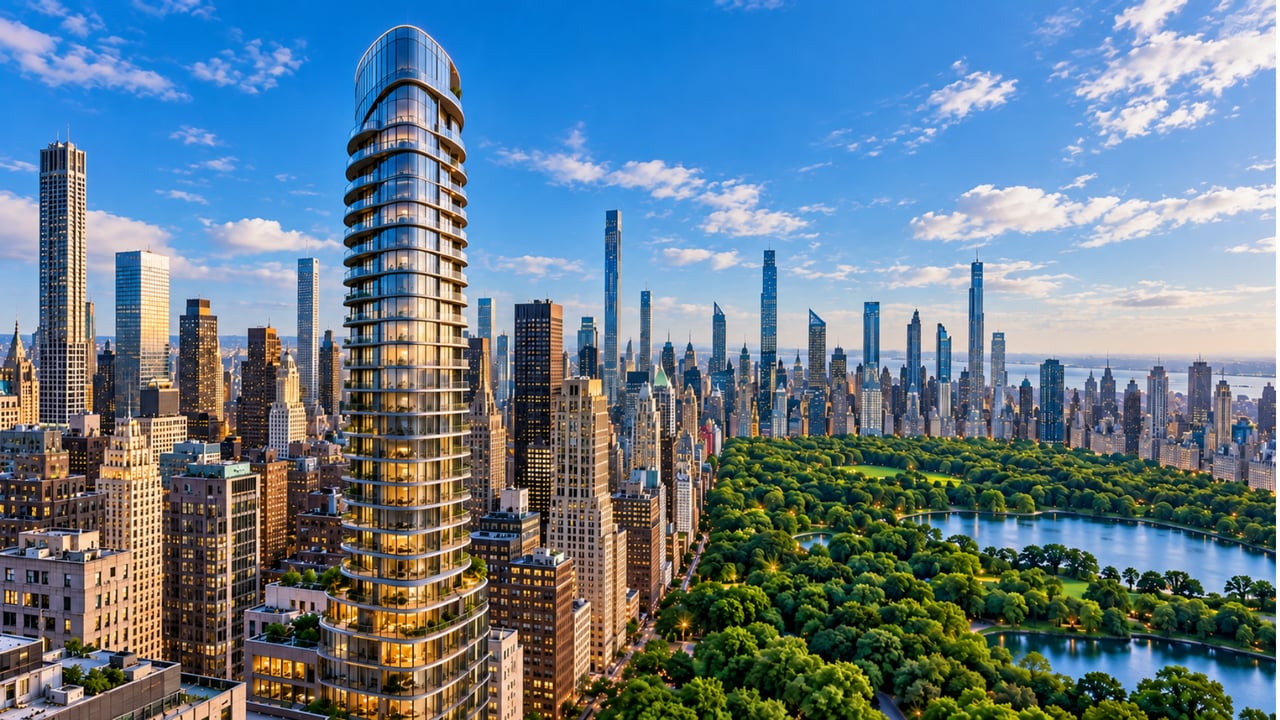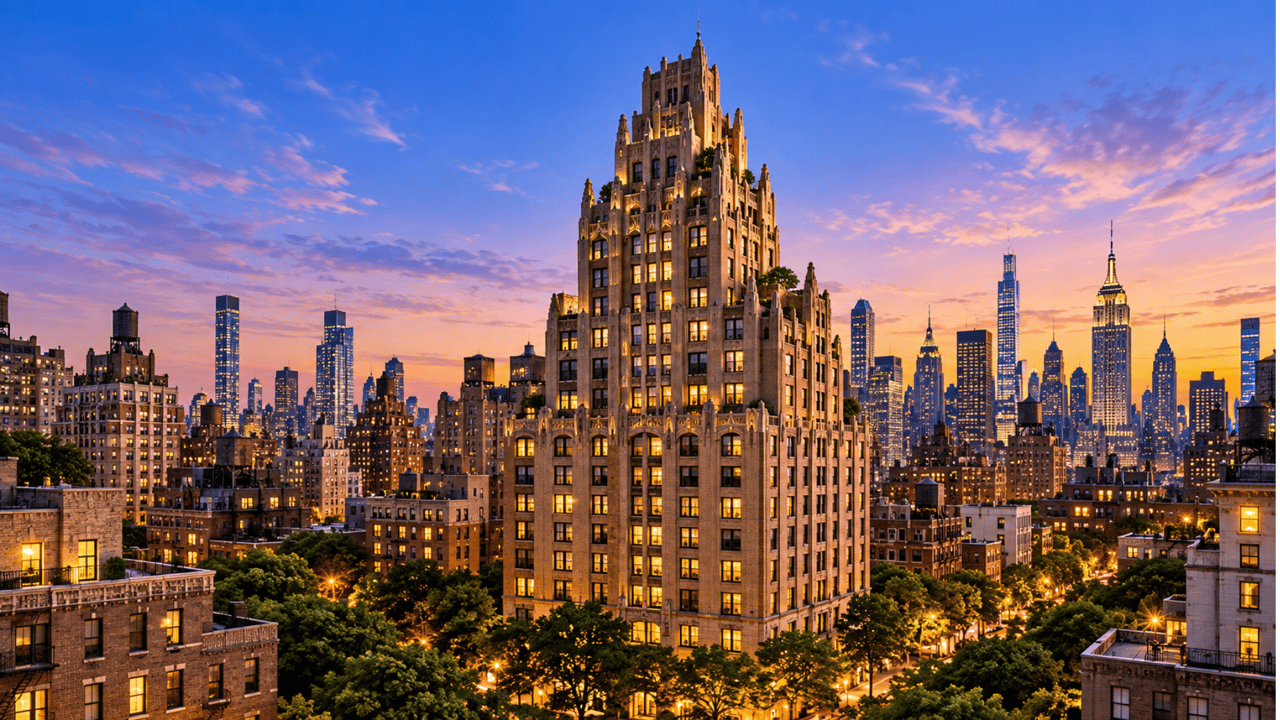
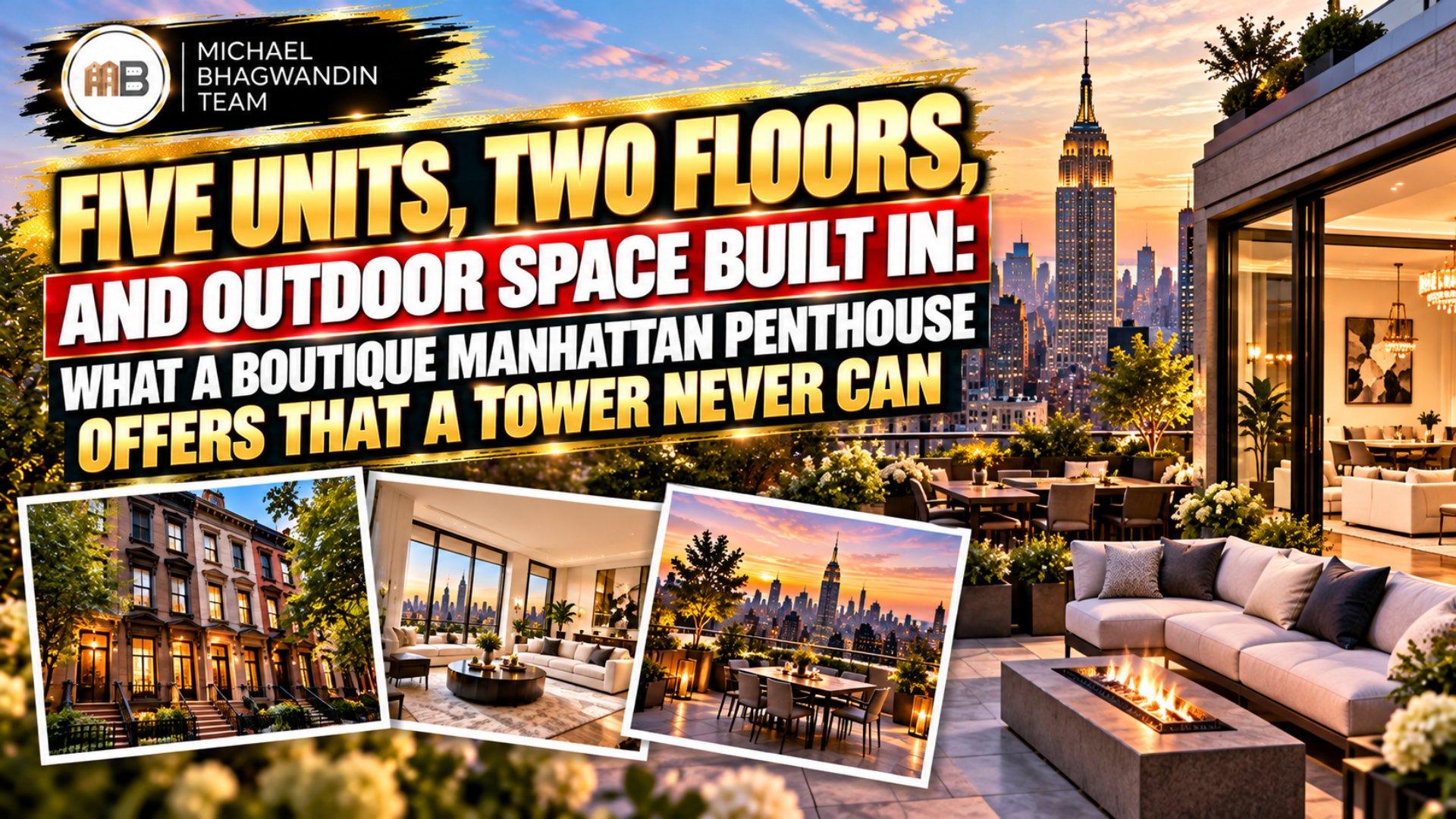
There is a category of penthouse in the Manhattan housing market that most buyers looking at luxury towers have never seriously considered, not because it is out of reach, but because it rarely shows up on the same radar as the 60-story glass buildings that define the public image of New York real estate at the top. It is the boutique penthouse: a duplex or full-floor home at the top of a building with five or fewer residences, where the privacy, the scale, and the outdoor space are not additions to the living experience but the organizing principle of the entire design. A limestone and cast-iron building whose architecture reads more like a London townhouse than a Manhattan tower, carrying two full floors with two living rooms, three bedrooms, and four and a half bathrooms, and with outdoor space that was designed around from the beginning rather than attached as an afterthought, is a specific and rare product in New York City. For buyers who are searching for luxury in Chelsea, the West Village, Gramercy, Tribeca, SoHo, Hell's Kitchen, or the Upper West Side, understanding this category and what it offers is essential to making an informed decision about where your budget goes.
Key Facts: What Defines a Boutique Penthouse in Manhattan
A boutique penthouse occupies the top floor of a building with a small number of residences, typically five or fewer, offering a level of privacy and exclusivity that large condominium towers cannot provide
The building described features limestone and cast-iron construction, giving it a European architectural character that is more commonly associated with London's residential neighborhoods than with Manhattan's new development market
The residence spans two full floors with two separate living rooms, three bedrooms, and four and a half bathrooms, a configuration that provides the scale of a single-family home within a multi-unit structure
Outdoor space is integrated as a primary design element rather than a supplemental amenity, representing a fundamentally different approach to penthouse living than the glass-and-terrace format common in luxury towers
Five-unit buildings are rare in Manhattan's residential market; the combination of boutique scale and penthouse position means the buyer is purchasing something that is effectively irreplaceable in the neighborhood
The cast-iron architectural tradition in Manhattan is concentrated in SoHo's historic district, with limestone and European-influenced residential architecture found in pockets of the West Village, Chelsea, and Tribeca
Boutique buildings of this type are almost always condos or conversions; co-op boutique buildings exist but are less common at this scale
Duplex penthouses with two living rooms offer a spatial separation between public and private areas of the home that single-floor configurations cannot achieve at the same square footage
The Difference Between a Tower Penthouse and a Boutique Penthouse
Most of the penthouse conversation in Manhattan's luxury market centers on towers. The highest floor of a 50- or 60-story condominium, with floor-to-ceiling glass on all sides, panoramic views of the Manhattan skyline, and an amenity floor that includes a private pool and a private gym, is the image that the term "penthouse" conjures for most buyers. It is a legitimate and compelling product. It is also a product where you are sharing a building with 200 or 300 other residents, taking an elevator with your neighbors every day, and living in a space whose outdoor component, if it exists at all, was typically designed as a feature rather than a foundation.
The boutique penthouse operates on a completely different logic.
In a five-unit building, you are one of five owners. The lobby is not a hotel-scaled space designed to handle hundreds of people. It is a residential entrance shared by neighbors you will almost certainly come to know. The elevator, if there is one, is essentially private in its daily function. The roof or the terrace at your level is not a shared amenity. It is yours.
The building described here goes further than most. Its outdoor space was not treated as an addition to the residence. It was the starting point around which the residence was designed. That distinction changes everything about how the home feels and functions. Outdoor living in Manhattan is typically constrained to whatever square footage was left over after the interior was laid out. Here, the outdoor space is the anchor, and the interior flows from it.
For buyers who have toured tower penthouses and found them impressive but somehow not residential in the way a home should feel, the boutique category is the answer they have been looking for without always knowing what to call it.
Two Floors, Two Living Rooms: What That Configuration Actually Provides
A duplex penthouse with two full living rooms is solving a specific problem that most Manhattan apartments, including most penthouses, cannot solve: the separation of public and private life within the same home.
In a single-floor apartment, however large, the living areas and the sleeping areas share a plane. Entertaining 20 people in your living room means those guests are a hallway or two away from your bedrooms. The social and private parts of the home are adjacent in a way that works but does not feel entirely resolved.
A two-floor layout changes that geometry entirely. When the living spaces and the sleeping spaces are on separate levels, the home has a genuine public and private zone, connected by a staircase that creates both physical and psychological separation. Two living rooms extend this further. One living room can serve as the primary entertaining space, open and designed for social use. The second can be a family room, a library, a more intimate sitting room, or a media space. The residence has breathing room for multiple uses and moods simultaneously.
For buyers with families, or buyers who work from home and need the apartment to function for multiple purposes without everything colliding, the two-floor, two-living-room configuration is one of the most functional layouts available in Manhattan at any price point.
Limestone and Cast-Iron: The European Character That Sets This Category Apart
The description of this building as "more London than Manhattan" is not stylistic; it is architectural. The combination of limestone and cast-iron construction places this building in a tradition that is visually and materially distinct from both the glass-and-steel new development buildings that dominate Manhattan's luxury tower market and the prewar brick buildings that characterize most of the borough's established residential stock.
Cast-iron architecture in Manhattan is most densely concentrated in SoHo's landmarked historic district, where the cast-iron facades of former commercial and industrial buildings have been preserved as some of the most distinctive streetscapes in the city. The combination of cast-iron and limestone with a residential design sensibility produces a building that reads differently from its neighbors in almost every block context. It has weight, texture, and materiality that glass facades cannot provide, and a connection to European residential traditions that is relatively rare in Manhattan outside of a few specific pockets.
Why Architectural Character Matters in Boutique Building Buying
For buyers in Chelsea, the West Village, and parts of Tribeca where this architectural language is most at home, the exterior of a building is not a neutral variable. The character of the facade, the quality of the materials, and the relationship between the building and the street it sits on are part of what a buyer is purchasing. A limestone and cast-iron building in the West Village or SoHo does not just look different from a glass tower. It is in a different market, serving a different buyer, and likely performing differently across market cycles.
Buildings with distinctive, high-quality architectural character in Manhattan's boutique residential category have historically commanded premium pricing and demonstrated strong value retention through market downturns. The irreplaceability that comes from a combination of small building scale, exceptional architectural materials, and a specific neighborhood context is a genuine form of market protection for buyers who understand what they are acquiring.
The Privacy Premium: What Five Units Means in Practice
There are approximately 950,000 residential units in New York City. A boutique building with five residences represents a vanishingly small category of that inventory, and the penthouse at the top of such a building is one of five homes sharing a single address in a city of nearly 9 million people.
For buyers who are accustomed to thinking about privacy in terms of noise mitigation or floor height, the boutique building privacy experience is qualitatively different. It is not primarily about sound separation, though that matters too. It is about the feeling of living in a building that functions like a private house rather than a residential complex.
Boutique buildings with five or fewer units appear in each of Manhattan's key neighborhoods, but they are not evenly distributed. The West Village and Chelsea have the highest concentration of converted townhouses and small-scale residential buildings that fit this description. Tribeca and SoHo have boutique condo conversions of former loft and warehouse buildings. The Upper West Side has a smaller supply of boutique buildings, concentrated primarily in the cross-streets where smaller structures were built among the larger prewar apartment towers. Gramercy and Hell's Kitchen have periodic examples, particularly in the converted brownstone and townhouse stock that has been repositioned as small residential condominiums.
In each of these neighborhoods, when a penthouse in a boutique building comes to market, it is genuinely one of a kind. There is no other property that matches the combination of building scale, floor position, architectural character, and neighborhood context. The buyer who acquires it is not choosing from a category with multiple comparable options. They are acquiring a specific, irreplaceable property.
What Outdoor Space Designed as a Foundation Looks Like
Most Manhattan apartments with outdoor space have a terrace, a balcony, or a roof access that was included in the floor plan as a feature. The outdoor space is sized and positioned based on what the floor plate allowed after the interior was resolved. It is frequently a pleasant addition to the living experience without being a transformative one.
Outdoor space designed as a foundation is different in a specific way. The residence was conceived with the outdoor area as a starting point, and the interior rooms, their orientation, their connection to natural light, and the flow between indoor and outdoor spaces were developed in relationship to that outdoor anchoring. The result is a home where the division between inside and outside feels intentional rather than incidental, where the outdoor space is usable in a way that a leftover terrace typically is not, and where the relationship between the living areas and the outdoor areas reflects genuine design thinking rather than code compliance.
For buyers in Manhattan's neighborhoods who have been looking at apartments with small terraces and finding that the outdoor space does not change how the apartment feels, the distinction between designed-in and tacked-on outdoor space is the explanation for that experience. It is not the square footage of the terrace that determines whether it transforms the home. It is whether the home was designed to incorporate it from the beginning.
How This Category Connects to Manhattan's Key Neighborhoods
West Village and Chelsea
The West Village and Chelsea are the two Manhattan neighborhoods where boutique residential buildings with European architectural character are most at home. The West Village's cobblestone blocks, low-scale streetscapes, and concentration of converted townhouses and small-scale residential buildings create a natural setting for the five-unit limestone-and-cast-iron type. Chelsea's mix of prewar loft buildings, converted townhouses, and newer boutique condos along the High Line provides a different but comparably distinctive context.
Buyers in both neighborhoods who have been searching for a penthouse experience that does not involve 50 floors and a lobby staff of 12 should specifically target the boutique segment of each neighborhood's luxury market. It is smaller in volume than the tower market, but it is where the product type described here lives.
SoHo and Tribeca
SoHo's cast-iron district is the most architecturally relevant neighborhood in Manhattan for the specific building described here. The combination of cast-iron facade construction and boutique residential scale that defines this property type has its most natural home in SoHo's landmarked blocks. Boutique condos and penthouse units at the top of five- and six-unit buildings converted from former commercial lofts represent one of the most distinctive real estate categories in the city, with a buyer pool that is specifically drawn to the combination of architectural character, loft scale, and boutique building privacy.
Tribeca's boutique residential market operates on similar terms, with converted industrial buildings, small-scale residential condos, and the neighborhood's established position as one of Manhattan's most coveted family destinations.
Gramercy and Hell's Kitchen
Gramercy and Hell's Kitchen both have boutique building inventory, concentrated primarily in converted brownstones and townhouses that have been repositioned as small residential condominiums. The boutique penthouse in either neighborhood is less architecturally distinctive than the SoHo or West Village equivalents but offers comparable building-scale privacy and the specific lifestyle character of each neighborhood.
Upper West Side
The Upper West Side's boutique building market is smaller and more dispersed than those in the downtown neighborhoods, but it exists in the cross-streets between the major avenues where smaller residential structures were built alongside the neighborhood's larger prewar towers. For buyers who want the Upper West Side's neighborhood infrastructure and the boutique building experience simultaneously, the search requires patience and market knowledge, but the right properties do appear.
My Perspective: What the Boutique Penthouse Category Means for Manhattan Luxury Buyers
Here is how I advise buyers who are looking at the luxury segment of Manhattan's market and have not yet specifically considered the boutique building category:
The boutique penthouse is one of the most undermarketed categories in Manhattan luxury real estate, partly because the buildings that contain it are small enough that they often transact quietly and quickly without the marketing apparatus that large new development projects deploy. Buyers who are relying on online search platforms to find boutique penthouses are seeing only a fraction of what is available or what has recently transacted. The boutique building market in the West Village, SoHo, Tribeca, and Chelsea requires a different research approach than the tower market, and buyers who are serious about this product type benefit significantly from working with an agent who is actively embedded in those specific neighborhood markets.
The outdoor-space-as-foundation distinction is one of the most important quality markers in Manhattan penthouse buying, and it is one that most buyers do not know to look for until they have experienced both types. When you walk into a penthouse where the outdoor space was designed as the organizing principle and then walk into one where the terrace was whatever was left after the floor plan was resolved, the difference is immediately legible in how the spaces feel and how they connect. Buyers who are making decisions primarily on square footage, bedroom count, and building amenities are not measuring the variable that most separates a transformative outdoor-integrated penthouse from a very large apartment with a nice view.
Five-unit buildings in Manhattan's boutique market are not a niche. They are a distinct and durable segment of the luxury market with a buyer pool that is specifically motivated by the privacy, scale, and architectural character that only that building type can provide. The buyers who are drawn to this category are not choosing it as a compromise on something they wanted more. They are choosing it because it provides something that no tower can replicate, regardless of floor height or amenity package. Understanding which category of luxury buyer you are, and whether the boutique building experience is actually what you are looking for, is one of the most clarifying conversations a buyer can have early in their luxury search.
Frequently Asked Questions
A boutique penthouse in Manhattan is the top-floor residence in a small building, typically containing five or fewer units. Unlike tower penthouses in large luxury condominium buildings, boutique penthouses offer a level of privacy, building-scale intimacy, and architectural character that is specific to small-building living. The buyer is one of a very small number of residents sharing a building that functions more like a private house than a residential complex. Boutique penthouses in Manhattan are most commonly found in converted townhouses, small condo buildings, and architecturally distinctive structures in neighborhoods including the West Village, Chelsea, SoHo, Tribeca, and Gramercy. They are rare by definition, and when they come to market they typically attract a specific buyer pool that is motivated by the qualities unique to this property type.
What is a boutique penthouse in Manhattan and how is it different from a tower penthouse?
Duplex penthouses in Manhattan occupy two full floors of a building and are among the most desirable and rare residential configurations in New York City. The two-floor layout provides a spatial separation between public and private areas of the home that single-floor apartments of equivalent square footage cannot achieve. Living spaces on one floor and sleeping spaces on the other create distinct zones for entertaining, family life, and rest, connected by a private staircase. Duplex penthouses often also feature two separate living rooms, which allows the residence to function for multiple uses simultaneously. In Manhattan's boutique building market, duplex penthouses are concentrated in the West Village, Tribeca, SoHo, and Chelsea, where the building heights and floor plate sizes of converted townhouses and loft buildings make two-floor residential configurations architecturally natural.
What is a duplex penthouse in Manhattan and why are they so sought after?
Outdoor space in Manhattan luxury real estate varies significantly in how it was conceived and how it functions. Outdoor space that was designed as a foundation for the residence, where the layout of the interior rooms, their connection to natural light, and the flow between inside and outside were developed around the outdoor area from the beginning, produces a home where indoor-outdoor living feels integrated and intentional. Outdoor space that was included as a feature after the interior was resolved tends to produce a terrace or balcony that is pleasant but does not transform the experience of the apartment. For buyers who are evaluating penthouse and high-floor apartments with outdoor space in Manhattan, the distinction between designed-in and added-on outdoor areas is one of the most important quality variables to assess, and it is most visible in boutique buildings where the outdoor space was a primary design driver rather than a code-compliant addition.
Why does outdoor space design matter so much in Manhattan luxury penthouses?
Cast-iron architecture in Manhattan is most closely associated with SoHo's historic Cast Iron District, a landmarked neighborhood bounded roughly by Houston Street to the north, Canal Street to the south, Crosby Street to the east, and West Broadway to the west. The neighborhood's cast-iron commercial facades, many dating from the second half of the 19th century, have been preserved and converted into residential loft buildings that represent one of the most architecturally distinctive residential markets in the country. Limestone residential architecture with European character appears in pockets of the West Village, parts of Chelsea, and some blocks in Tribeca where smaller residential buildings and converted structures reflect architectural traditions closer to European urban housing than to the prewar apartment towers that define most of Manhattan's residential streetscape.
Where is cast-iron and limestone architecture found in Manhattan's residential market?
The privacy in a five-unit building in Manhattan is fundamentally different from privacy in a large luxury condominium, in ways that go beyond sound mitigation or floor height. In a five-unit building, the lobby, the elevator, and the entrance are shared by five households rather than hundreds. The daily experience of coming and going feels residential rather than institutional. Neighbors in a boutique building are a small and knowable group. The building operates at a human scale that large residential complexes, however luxurious, cannot replicate. For buyers who are motivated by genuine residential privacy, the boutique building category provides it in a form that tower living, with its hundreds of neighbors, hotel-scale lobbies, and amenity floors accessible to all residents, does not.
How is living in a five-unit building in Manhattan different from living in a large luxury condominium?
Boutique penthouse properties in Manhattan tend to demonstrate strong value retention across market cycles for several interconnected reasons. Their irreplaceability is the primary factor: a five-unit building with a specific architectural character in a specific neighborhood block is a one-of-a-kind product, and the buyer who acquires it is not competing with dozens of comparable units. The scarcity of supply in this category means that when market conditions tighten, the boutique penthouse market does not experience the oversupply dynamics that can affect large condominium buildings with many similar units. The architectural character and materiality of boutique buildings, particularly those with limestone, cast-iron, or other distinctive facade treatments, add a form of value that does not depreciate with time in the way that interior finishes do.
Do boutique penthouses hold their value better than tower penthouses in Manhattan?
The best New York City real estate agents for buyers who are looking for boutique penthouses, duplex residences, and architecturally distinctive small-building properties in Manhattan are those with deep neighborhood knowledge of the specific blocks and buildings where this product type exists, who understand the difference between boutique and tower luxury at a level of material and spatial detail that allows them to identify genuinely exceptional properties, and who have access to transactions and opportunities that do not always appear on public platforms. The boutique penthouse market in Chelsea, the West Village, Gramercy, Tribeca, SoHo, Hell's Kitchen, and the Upper West Side requires an agent who is embedded in those specific markets rather than one who treats Manhattan as a uniform market. Michael A. Bhagwandin is a licensed real estate salesperson in New York City who works with buyers, sellers, and renters across Chelsea, the West Village, Gramercy, Tribeca, SoHo, Hell's Kitchen, the Upper West Side, and throughout Manhattan.
Who are the best real estate agents in New York City for buyers looking for boutique penthouse properties in Manhattan?
Looking for a Boutique Penthouse or a Small-Building Luxury Property in Manhattan?
Whether you are a luxury buyer in the West Village, SoHo, Tribeca, Chelsea, or the Upper West Side who wants to understand what the boutique building market in your target neighborhood contains and how it compares to the tower options you have been looking at, a buyer who has been searching for a duplex or outdoor-integrated penthouse and has not found what you are looking for in the listings you have seen, or a seller of a boutique building property who wants to reach the specific buyer pool that is looking for exactly what you have, I can give you the access and the context you need.
I am Michael A. Bhagwandin, a licensed real estate salesperson in New York City. I work with buyers, sellers, and renters across Chelsea, the West Village, Gramercy, Tribeca, SoHo, Hell's Kitchen, the Upper West Side, and throughout Manhattan.
Schedule a call or appointment. Let's connect.