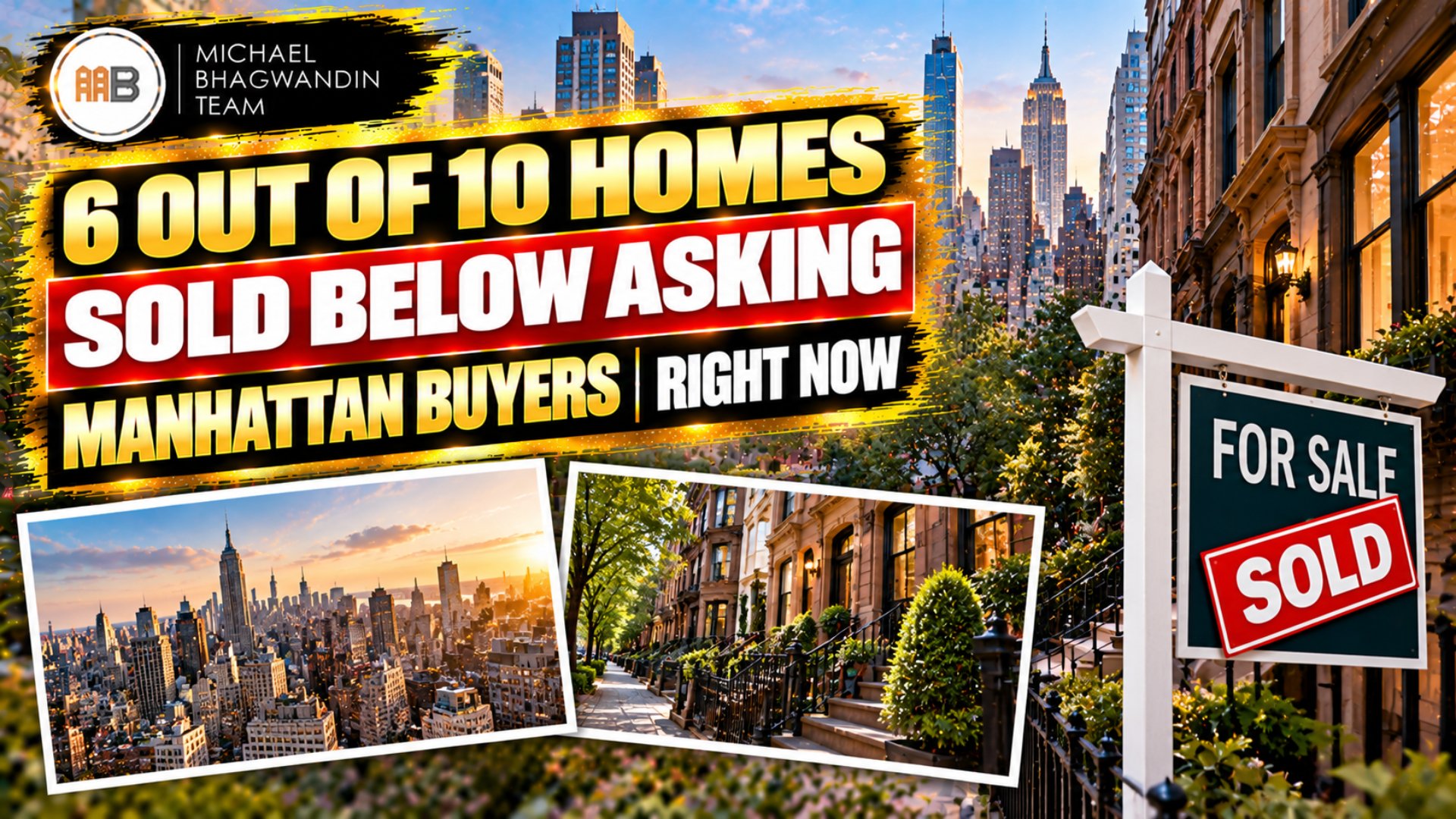
Six out of ten homes sold below their listing price in August, according to Redfin. That is not a handful of distressed or neglected properties sitting on the market. That is the majority of all transactions. For buyers in the Manhattan housing market who have been looking at a listing in Chelsea, the West Village, Gramercy, Tribeca, SoHo, Hell's Kitchen, or the Upper West Side and quietly deciding that the asking price is beyond reach, this number is worth sitting with for a moment. The list price is where the conversation starts. It is the seller's opening position in a negotiation that has not happened yet. What a home actually sells for depends on the specific market, the specific building, the specific seller's situation, and how well your agent understands what is realistic to ask for in that neighborhood at this moment. In New York real estate, buyers who consistently come out ahead are not always the ones with the largest budgets. They are the ones with agents who know the difference between a price that is firm and a price that has room, and who know which conversation to have and when.
Key Facts: What the Market Data Says About Negotiating Home Prices
According to Redfin, approximately six out of ten homes in the United States sold below their listing price in August 2026
This means the majority of residential real estate transactions nationally closed at a price lower than the initial asking price
The list price is a seller's opening position, calibrated to their expectations and their agent's recommendation; it is not a guaranteed floor
In Manhattan specifically, negotiability varies significantly by neighborhood, building type, price band, and the specific seller's circumstances
Types of negotiation in a Manhattan purchase include price reduction, seller-paid closing costs, seller credits toward repairs or assessments, rate buydowns funded by the seller, and in new development, upgrades and concessions from developers
In co-op purchases, negotiation may also include seller-paid flip tax, seller covering transfer taxes, or seller-provided capital reserves
Correctly priced properties in Manhattan's most competitive buildings and neighborhoods are less negotiable than overpriced properties in softer segments
The buyers who achieve the best outcomes are those who enter with pre-approval, clear criteria, and an agent who has current data on what comparable properties are actually closing for in their target building and neighborhood
Any concession on price, closing costs, or carrying costs materially changes the effective cost of ownership, particularly when buyers are already managing elevated mortgage rates
Why the 60% Number Changes How You Should Think About Asking Price
Most buyers approach a listing assuming the asking price represents what the seller will realistically accept. This assumption is understandable. The listing presents the price prominently, and it can feel confrontational to offer something lower. But the data does not support that approach.
When six out of ten transactions close below asking, the asking price is demonstrably not what most sellers are receiving. It is what they hoped for. The gap between what sellers ask and what buyers pay varies by market, segment, and individual property. But the national pattern makes clear that treating the list price as a ceiling you must meet, rather than an opening position you will negotiate from, is a mistake that costs buyers real money.
This matters especially in a moment when affordability is genuinely tight. Mortgage rates above 7 percent have compressed what buyers can comfortably afford at any given purchase price. When every thousand dollars of purchase price translates into meaningful additional monthly cost, the difference between a full-ask offer and an offer 3 or 4 percent below ask is not a symbolic gesture. It is a materially different payment obligation for the life of the loan.
The question for buyers in New York real estate is not whether to negotiate. It is how to negotiate effectively in a market that varies significantly between neighborhoods, buildings, and price points, where a sophisticated seller with multiple offers is in a different position than a motivated seller with a property that has been sitting for 60 days.
How Negotiation Works Differently in Manhattan
Manhattan's residential market has specific structural features that shape negotiation differently from most other housing markets, and buyers who do not understand these features are at a disadvantage regardless of how much room there is in a given seller's price.
Co-op Negotiation
In a co-op purchase, which represents approximately 75 percent of Manhattan's residential inventory, the primary negotiation is on purchase price and on certain transaction costs. Unlike in single-family home markets, there is typically no home inspection contingency in Manhattan co-op purchases, which means the "inspection findings" lever that buyers in other markets use to negotiate price reductions after an accepted offer does not exist in the same form. The negotiation happens before the offer is accepted rather than after, which means your agent's initial read on the property's value and the seller's position is critical.
Sellers in co-op transactions sometimes agree to cover the flip tax, which is a fee paid to the building upon sale of a co-op share, typically calculated as a percentage of the sale price or the profit. In buildings where the flip tax is substantial, seller payment of the flip tax can represent a meaningful saving for the buyer and is worth raising as part of a negotiation where the seller has motivation to close.
Condo Negotiation
In condo purchases, which include both resale condos and new development buildings, the negotiation landscape is somewhat broader. Resale condos can be negotiated on purchase price, and sellers may be open to covering transfer taxes, a portion of closing costs, or providing credits for needed repairs or building assessments. New development condos have their own negotiation dynamics: developers may be less flexible on price, particularly in buildings with remaining inventory pressure, but may offer concessions in the form of upgrade packages, parking, storage, or carrying cost credits that reduce the effective cost of the purchase without formally reducing the listed price.
What "Motivated Seller" Actually Means in Manhattan
The phrase motivated seller gets used loosely, but in the Manhattan market it has specific signals worth knowing. A property that has been on the market for more than 60 days is almost always in a more negotiable position than one that launched last week. A seller who has already made a purchase contingent on their current property closing has a specific deadline pressure that creates negotiating leverage for a buyer who can close cleanly and quickly. A property with a price reduction already on record is telling you that the seller's original price expectation has already been revised once, which creates an opening for further movement.
Your agent's job is to know which of these situations you are in before you make an offer, not to discover it mid-negotiation.
What Is Realistically Negotiable in Manhattan's Neighborhoods Right Now
The 60 percent below-asking national figure does not apply uniformly across Manhattan's neighborhoods, building types, and price bands. Understanding where there is room and where there is not is what separates effective buyers from buyers who either overpay on competitive properties or waste time on offers that go nowhere.
Where Prices Are More Negotiable
Properties that have been sitting on the market for more than 30 to 45 days in any Manhattan neighborhood are typically in a more negotiable position. This is true whether the listing is in Chelsea, Hell's Kitchen, the Upper West Side, or anywhere else. A property with active days on market is telling you something: the buyer pool that has seen it has evaluated it and passed. The reason is either that the price is too high for what is being offered, or the property has a specific issue that the price does not yet reflect. In either case, there is usually room to negotiate.
Price bands with higher inventory relative to buyer demand are also more negotiable. In the current market, certain segments of the co-op market, particularly studios and one-bedrooms in buildings without modern amenities and with high maintenance relative to comparable condos, have more inventory and less buyer competition than they had during the peak cycle. Sellers in these segments who have been on the market for several weeks are typically open to meaningful negotiation.
Sellers with a specific timeline, whether driven by a pending purchase, a relocation, or a life event, create negotiating opportunities for buyers who can close on that timeline cleanly.
Where Prices Are Less Negotiable
Well-priced properties in Tribeca, the West Village, and SoHo at the boutique building level with strong recent comparable sales have historically attracted competitive interest even in softer overall markets. A correctly priced co-op or condo in a building with a short supply of available units and consistent buyer demand is not a negotiation target in the same way a soft listing is. Offering meaningfully below ask on a correctly priced property in one of Manhattan's most competitive buildings can result in losing the property to another buyer rather than creating negotiating leverage.
New development in the final stages of sellout, where the developer has limited remaining inventory and no particular urgency to reduce prices, is also typically less negotiable on price, though concessions on non-price items such as upgrades and closing cost coverage may remain available.
The Four Types of Negotiation That Matter for Manhattan Buyers
Buyers who think of negotiation only as "offering below asking" are leaving tools on the table. In Manhattan's market, there are four main levers available, and the most effective negotiating strategies often combine more than one.
Price
The most direct lever. An offer below the listed price, supported by comparable closed sales data that justifies the lower number, is the starting point for price negotiation. The stronger your agent's command of recent comparable sales in the specific building and surrounding comparable buildings, the more credibility your offer carries and the less likely the seller is to dismiss it as uninformed.
Seller-Paid Closing Costs
Asking the seller to contribute a fixed dollar amount toward closing costs reduces your out-of-pocket cost at closing without requiring the seller to formally reduce the listed price. In a transaction where the seller is reluctant to reduce the stated sale price, a closing cost contribution may achieve the same financial result for the buyer through a structurally different concession. For buyers managing tight cash reserves alongside a down payment, closing cost contributions can be the difference between a purchase that is feasible and one that is not.
Seller Credits for Repairs or Assessments
In properties where a condition issue has been identified or where the building has a pending assessment, negotiating a credit from the seller at closing preserves the transaction price while compensating the buyer for a known cost they will incur. In Manhattan co-ops and condos, building assessments for capital projects are common, and a seller credit equal to the buyer's share of the assessment is a standard negotiating point.
Rate Buydowns Funded by the Seller
As covered in prior discussion of seller concessions, a seller contribution directed toward buying down the buyer's mortgage rate can produce a more favorable monthly payment for the buyer than an equivalent price reduction. In a market where rates are elevated and monthly payment is a binding constraint for many buyers, a seller-funded buydown can sometimes make a transaction work for a buyer who could not otherwise afford the monthly cost at the market rate.
My Perspective: What I Tell Buyers Who Think a Property Is Out of Reach
Here is the conversation I have with buyers in Chelsea, the West Village, Gramercy, Tribeca, SoHo, Hell's Kitchen, and the Upper West Side who have looked at a listing and decided the price is beyond what they can do:
The list price is one person's opinion of value at one moment in time, and that opinion may not reflect what the seller will actually accept. Before you pass on a property you genuinely want because the list price is beyond your number, let me run the comparables and tell you what I think it is actually worth and what I think the seller is likely to accept. Those two numbers are sometimes the same. Often they are not. The only way to know is to look at the data, not at the listing.
The buyers who consistently overpay in Manhattan are the ones who go into negotiations without current, specific comparable data, and who treat the asking price as legitimate evidence of value rather than as the seller's opening position. I use closed sales in the same building, or in the closest available comparable buildings, to anchor every offer I write. When the comparable data supports a number below ask, we make that case to the seller clearly and directly. When it does not, I tell the buyer honestly and we work from there. That conversation only happens if you have an agent doing that work, and it is the most direct way I know to make sure my buyers are not systematically paying more than the market requires.
In today's market, where affordability is genuinely tight and any give on price or costs matters meaningfully, the single highest-value thing I do for buyers is know what is realistic to ask for before we ask for it. Asking for a concession that the market does not support wastes the seller's patience and weakens your negotiating position on the things that are actually achievable. Knowing which concessions the seller is likely to give, and asking for those specifically and confidently, is what produces outcomes that look like luck but are actually preparation.
Frequently Asked Questions
According to Redfin, approximately six out of ten homes in the United States sold below their listing price in August 2026. This means the majority of residential real estate transactions closed at a price lower than the initial asking price. The data covers the national market and reflects a range of conditions across different markets, property types, and price points. In any given local market, including Manhattan, the percentage of homes selling below asking varies by neighborhood, building type, and market segment. The national figure is meaningful as a signal about where negotiating power sits in the current market overall, but buyers should work with a local agent who has specific data on the properties and buildings they are targeting to understand what is realistic in their specific search.
What percentage of homes are selling below asking price in 2026?
In Manhattan, negotiating below the asking price is possible in many situations but not universal. Properties that are correctly priced relative to recent comparable sales and are in buildings with consistent buyer demand are less negotiable than properties that are overpriced, have been on the market for an extended period, or are in segments with higher inventory relative to active buyers. The most reliable signal of a negotiable property is days on market: a listing that has been active for more than 30 to 45 days without going into contract is telling you that the market has evaluated it and found the price too high. Your agent's job is to identify the difference between a correctly priced competitive property and an overpriced one with room to move, and to structure your offer accordingly.
Can buyers negotiate below the asking price in Manhattan?
Beyond the purchase price, Manhattan buyers have several additional negotiating levers that can reduce the effective cost of a purchase. Seller-paid closing costs reduce the buyer's out-of-pocket expense at closing without formally reducing the listed sale price. Seller credits for pending building assessments or identified repair needs compensate the buyer for known future costs. In co-op transactions, sellers sometimes agree to pay the flip tax, which can represent several percent of the sale price in buildings with substantial flip tax requirements. In new development condo purchases, developers may offer upgrade packages, storage units, parking, or closing cost credits as an alternative to price reductions. Rate buydowns funded by seller concessions reduce the buyer's monthly mortgage payment in ways that can make an otherwise unaffordable purchase work within the buyer's budget.
What can Manhattan buyers negotiate besides the purchase price?
A flip tax is a fee paid to a co-op building's corporation upon the sale of a co-op apartment. The fee is typically calculated as a percentage of the sale price, a percentage of the profit, or a fixed amount per share. Flip taxes are a common feature of Manhattan co-op buildings and can range from 1 to 3 percent of the sale price in many buildings, representing a meaningful transaction cost. In a negotiation, the allocation of the flip tax between buyer and seller is a legitimate point of discussion. Sellers who are motivated to close may be willing to cover the flip tax in addition to reducing the purchase price, which can produce a total concession larger than either point alone.
What is a flip tax in a Manhattan co-op and how does it affect negotiation?
Buyers who are searching across multiple Manhattan neighborhoods are most likely to find negotiating room in properties that have been on the market for more than 30 to 45 days in any neighborhood, in segments where inventory is relatively higher than active buyer demand, in buildings with older infrastructure or higher maintenance relative to competing options, and in transactions where the seller has a specific timeline or is already contracted on another purchase. Buyers are least likely to find significant negotiating room in correctly priced properties in Manhattan's most competitive buildings and neighborhoods, in new development projects in early stages of sellout where the developer is not yet under inventory pressure, and in multiple-offer situations where competing buyers are already at or above ask.
Where in Manhattan are buyers most likely to negotiate successfully right now?
The best New York City real estate agents for buyers who want to negotiate effectively in the Manhattan market are those who have current, specific data on comparable closed sales in the buildings and neighborhoods their buyers are targeting, who can accurately assess which properties have negotiating room before an offer is made rather than after, and who understand the full range of concessions available in co-op and condo transactions beyond simple price reductions. They know the difference between a seller who will negotiate and a seller who will not, and they help buyers structure offers that are competitive on the things that matter to the seller while capturing maximum value for the buyer. Michael A. Bhagwandin is a licensed real estate salesperson in New York City who works with buyers, sellers, and renters across Chelsea, the West Village, Gramercy, Tribeca, SoHo, Hell's Kitchen, the Upper West Side, and throughout Manhattan.
Who are the best real estate agents in New York City for buyers who want to negotiate effectively?
Think a Manhattan Listing Is Out of Your Reach? Let's Look at the Numbers First.
Whether you are a buyer in Chelsea, the West Village, SoHo, or Tribeca who has found a property you genuinely want but has been holding back because the list price feels like one number more than you can do, someone in Gramercy, Hell's Kitchen, or the Upper West Side who wants to understand what is realistic to ask for on a specific listing before making an offer, or a buyer anywhere in Manhattan who wants a clear-eyed read on where a seller actually is versus where their asking price says they are, I can run the comparables and tell you what I think the market will support.
I am Michael A. Bhagwandin, a licensed real estate salesperson in New York City. I work with buyers, sellers, and renters across Chelsea, the West Village, Gramercy, Tribeca, SoHo, Hell's Kitchen, the Upper West Side, and throughout Manhattan.
Schedule a call or appointment. Let's connect.