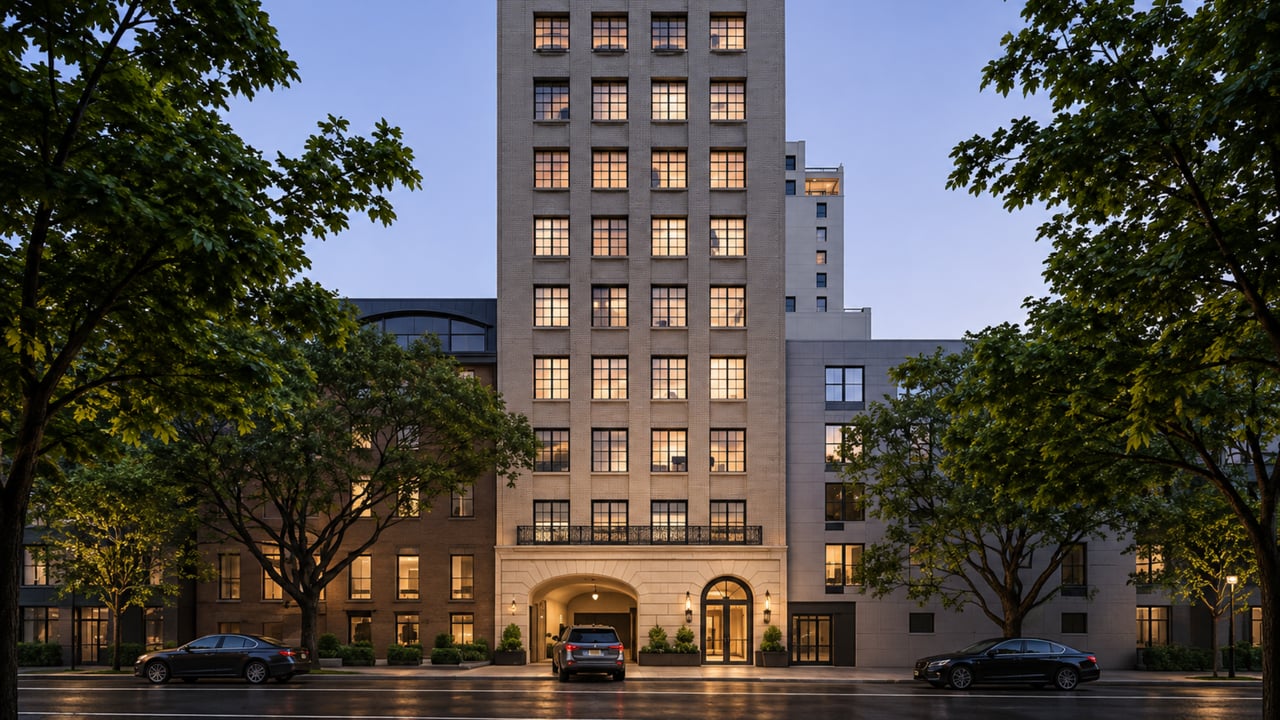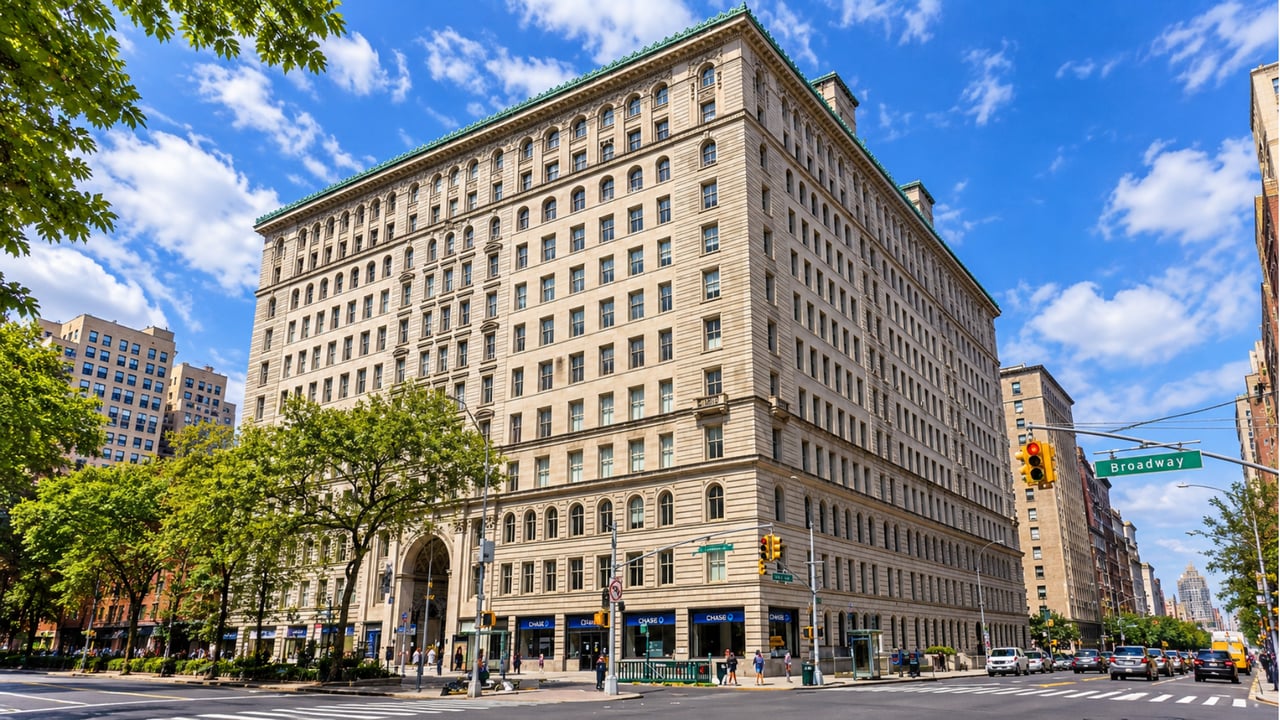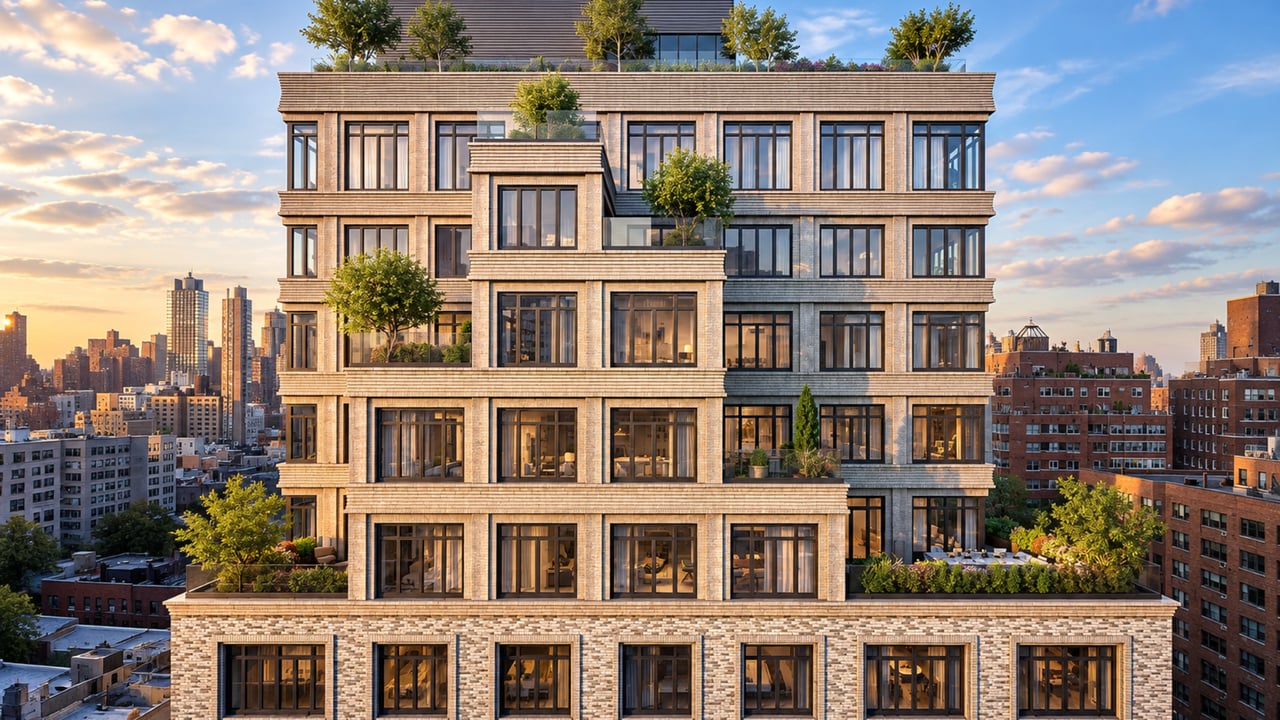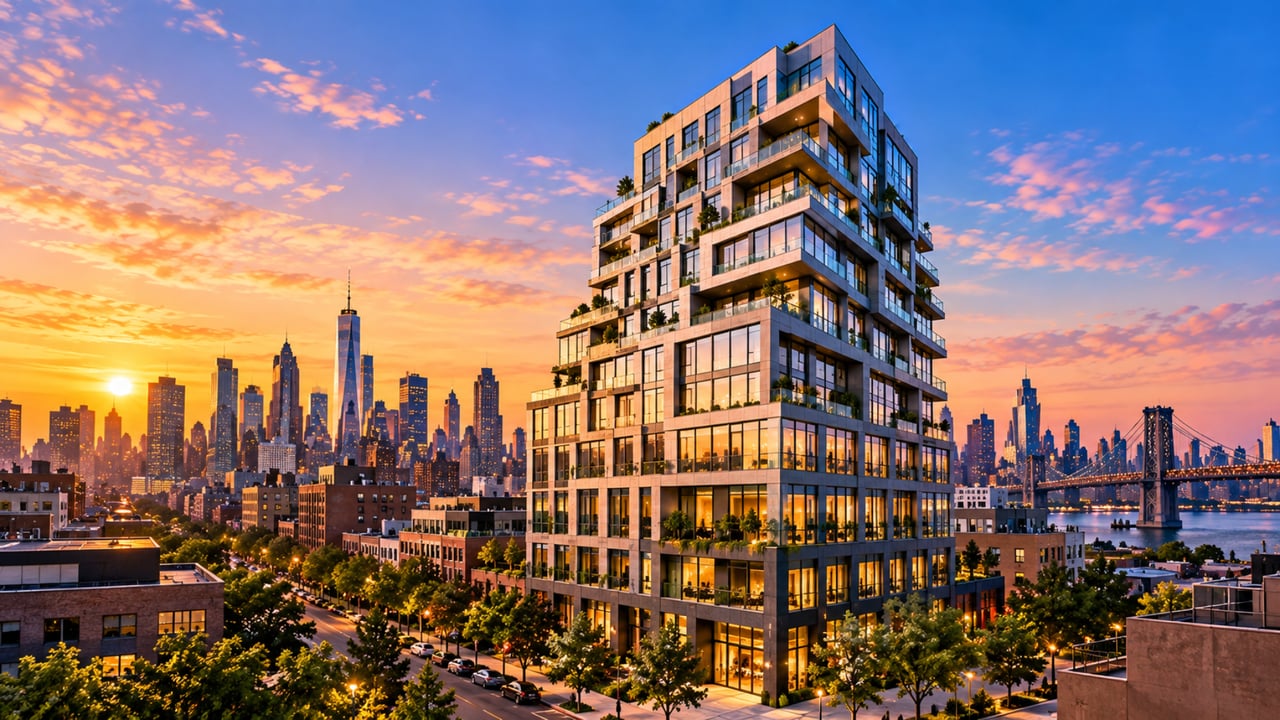
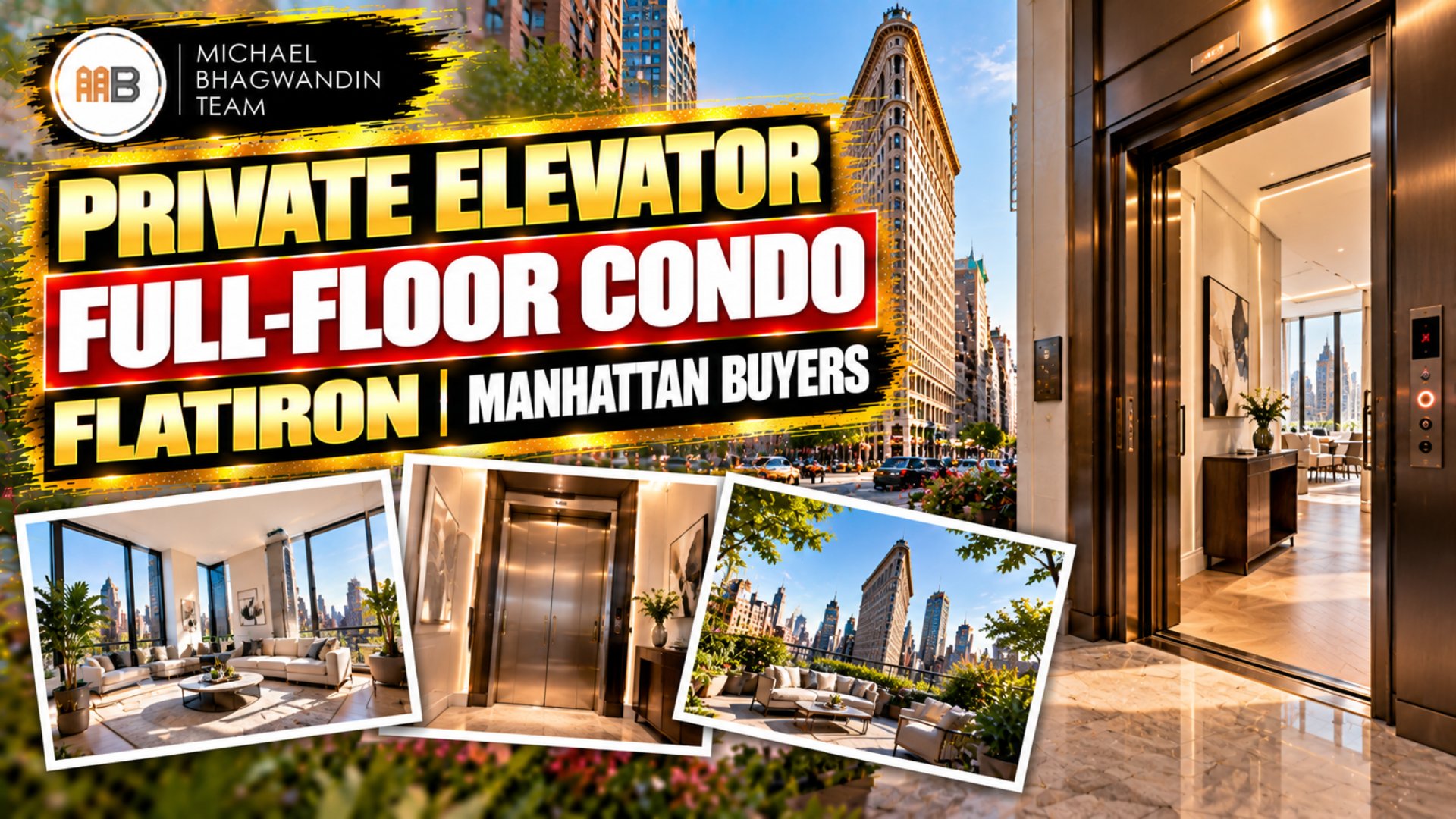
In the Manhattan housing market, there is a difference between a luxury apartment and a full-floor residence, and that difference is not about price per square foot. It is about the moment the elevator doors open. In most Manhattan condos and co-ops, including many that carry seven-figure price tags, the elevator deposits you onto a shared floor where you walk a hallway to reach your front door. Your neighbors use the same hallway. You may hear them. A full-floor residence changes this entirely: when the elevator opens, it opens into your home. There is no shared corridor, no neighbor on the same landing, no sound traveling through a hallway you share with anyone. That single distinction defines an entirely different category of residential living in New York real estate, and a boutique building in Flatiron is offering it starting at $1.995 million. With two and three bedroom configurations, private terraces on most units, and a roof deck over the neighborhood, this building is designed for a specific kind of Manhattan buyer who values privacy, outdoor space, and a location that connects Gramercy, Chelsea, the West Village, Tribeca, SoHo, Hell's Kitchen, and the Upper West Side through one of the most walkable nodes in the city.
Key Facts: Full-Floor Flatiron Condo
Location: Flatiron neighborhood, Manhattan, moments from Greenwich Village and the West Village
Entry price: Starting at $1.995 million
Unit configuration: Two and three bedroom full-floor residences
Private elevator entry: The elevator opens directly into each home, bypassing any shared hallway or common corridor
Outdoor space: Most units include private terraces
Building amenity: Roof deck over the Flatiron neighborhood
Neighborhood position: Flatiron sits at the intersection of several of Manhattan's most desirable residential destinations, adjacent to Gramercy to the east, Chelsea to the northwest, SoHo and Tribeca to the south, and the West Village and Greenwich Village to the west
Building character: Boutique scale, emphasizing residential privacy and the full-floor living experience
What Private Elevator Entry Actually Means
The private elevator entry is the defining feature of the full-floor condo product in Manhattan, and it is worth understanding precisely what it means and why it matters before deciding whether it is worth seeking out.
In a standard Manhattan apartment building, whether co-op or condo, the elevator is a shared building amenity that serves multiple floors and multiple apartments per floor. When you arrive at your floor, you step out into a hallway shared by however many apartments occupy that level. In a large building, that might be four, six, or eight apartments. In a boutique building, it might be two. But in either case, the hallway exists, neighbors use it, and the experience of arriving home includes a semi-public transition space between the elevator and your front door.
In a full-floor residence, this transition does not exist. The elevator is keyed to your floor and opens directly into your foyer, entrance hall, or living space. You are in your home the moment the elevator doors part. No one else's door is visible. No one else's shoes are in the hallway. No one else's packages are on the landing. The experience of arriving home is genuinely private in a way that even the most expensive standard apartment layout cannot replicate, because the shared hallway is a physical feature of the building rather than something that can be designed around.
Why This Matters More Than It Sounds
For buyers who have never lived in a full-floor residence, the hallway distinction can seem like a minor detail compared to finishes, floor-through views, and outdoor space. Buyers who have lived in them consistently report the opposite: the elimination of the shared hallway changes the quality of daily life in ways that compound over time.
The practical effects include sound privacy, visual privacy, the ability to have guests in your home without any neighbor awareness, and the sense that your home begins at the elevator rather than behind a door in a shared corridor. For buyers who work from home, who value a clear psychological boundary between public and private space, or who simply find the ritualized walk down a shared hallway a minor but persistent friction in their experience of their home, the full-floor configuration resolves all of those concerns simultaneously.
In New York real estate, where the density of urban living means that most buyers accept some form of shared building infrastructure as a given, the full-floor residence is the product category that most closely approximates the experience of living in a freestanding house, without sacrificing the location, transit access, and neighborhood infrastructure that make Manhattan valuable in the first place.
The Flatiron Location: Where Manhattan's Neighborhoods Converge
The Flatiron neighborhood occupies a geographic position in Manhattan that is genuinely unusual: it sits at the intersection of multiple residential neighborhoods that buyers routinely rank among the city's most desirable, and it is walkable to each of them without requiring a subway trip.
Gramercy is immediately to the east, offering the private park, the prewar co-op character, and the residential calm that define one of Manhattan's most distinctive residential addresses. Chelsea is to the northwest, with its gallery district, High Line access, and Hudson River Park connection. SoHo is to the south, offering the cast-iron loft character and the retail and restaurant density that attract buyers from across the city and internationally. Tribeca is further south, with its family residential market and the distinctive waterfront and neighborhood infrastructure it has developed over the past three decades. The West Village is to the west, arguably Manhattan's most personally beloved residential neighborhood for its human-scale streets, dining culture, and architectural character. And for buyers who work in Midtown or need access to the 1, 2, 3, 4, 5, 6, N, Q, R, and W trains, the Flatiron area's transit connectivity places the entire Manhattan grid within straightforward reach.
For buyers who are evaluating the full-floor Flatiron building at $1.995 million and above, the location is not a compromise between neighborhood options. It is a position at the center of a neighborhood geography that few addresses in Manhattan can match, where the characteristics of Gramercy, Chelsea, SoHo, Tribeca, and the West Village are all accessible on foot without the walk becoming the point of the exercise.
Private Terraces vs. Shared Roof Decks: Understanding the Outdoor Space Distinction
The Flatiron building offers private terraces on most units alongside a shared roof deck for the building. These are two different kinds of outdoor space, and the distinction matters practically for buyers who are evaluating outdoor access as a meaningful feature of their purchase.
A private terrace is outdoor space that belongs to your unit and is accessible only from inside your home. It is, legally and practically, part of your apartment. You can eat dinner on it without planning around whether other residents are also using it. You can have coffee there in the morning in whatever state of preparedness morning coffee requires. You can leave furniture, plants, and the residue of daily life on it without concern for neighbors or building rules about shared space. It extends your home's functional square footage outdoors in a way that is genuinely private and genuinely yours.
A shared roof deck is a building amenity, similar to a fitness center or a co-working lounge: it is available to all residents, subject to building rules, and occupancy depends on when other residents decide to use it. A well-designed roof deck with good views over a Manhattan neighborhood is a genuine amenity, but it is categorically different from a private terrace as an outdoor living space.
The combination of private terraces on individual units and a building roof deck gives residents of the Flatiron building both options: the everyday outdoor access of a private space that is genuinely theirs, and the building-level outdoor amenity that provides the roof-over-Flatiron perspective that no individual terrace at a lower floor can replicate.
Outdoor Space and Value in Manhattan
Private outdoor space has historically commanded a premium in Manhattan real estate that reflects both its relative scarcity and its practical value in a dense urban environment. A two or three bedroom unit with a private terrace at $1.995 million in Flatiron competes against units without terraces at potentially lower prices but with meaningfully different quality of daily life for buyers who use outdoor space regularly. Over a typical five to seven year holding period, the combination of private terrace access and a building roof deck represents a durable lifestyle differentiator that buyers consistently value at resale.
Who the Full-Floor Flatiron Building Is Designed For
The combination of full-floor private elevator entry, two and three bedroom configurations, private terraces on most units, and a starting price of $1.995 million in Flatiron creates a specific buyer profile.
This is not a building for first-time buyers at Manhattan's entry level. The price point, the floor-through configuration, and the privacy premium all point toward a buyer who has already lived in Manhattan and understands precisely what they are giving up in a standard apartment layout, who values privacy above density of amenities, and who has either a family or a lifestyle that benefits from the specific combination of bedroom count, outdoor space, and neighborhood access that this building provides.
Buyers who are transitioning from a standard Manhattan co-op or condo to a full-floor residence often describe the experience as equivalent to moving from an apartment to a house, not in physical scale but in the quality of privacy and the sense of ownership over one's entire living environment. For buyers in Chelsea, Gramercy, SoHo, the West Village, or any of the neighboring areas who have been looking for that specific upgrade within Manhattan rather than moving to a larger footprint in the outer boroughs, the Flatiron full-floor product addresses the gap directly.
Buyers who work from home or maintain a home office will find the full-floor configuration particularly valuable. The ability to have a client meeting, a video call, or a business conversation anywhere in the home without concern for neighbor sounds from a shared hallway creates a functional home office environment that most Manhattan apartments, regardless of price, cannot offer.
My Perspective: What I Tell Buyers Considering Full-Floor Residences in Manhattan
Here is what I tell buyers who are evaluating the full-floor condo category for the first time and trying to understand whether the premium over a standard apartment is justified:
The private elevator entry is the feature that is most underestimated by buyers who have never lived with it and most consistently valued by buyers who have. When I work with buyers who have lived in full-floor residences previously and are looking for that product in their next purchase, they are rarely willing to consider anything else, even at comparable or lower price points. The quality of arriving home into your own space rather than into a shared hallway is something that is difficult to articulate before you have experienced it daily but impossible to unfeel once you have. If you are evaluating the full-floor Flatiron building against a comparably priced standard apartment elsewhere in Gramercy or Chelsea, I strongly recommend visiting both and paying attention to how the arrival experience feels, not just how the interiors compare.
The Flatiron location's position relative to five or six of Manhattan's most desirable residential neighborhoods is one of its most underrated features, and it matters differently depending on how you live. For buyers whose daily life pulls them toward the West Village for dinner, SoHo on weekends, Chelsea for gallery openings, and Gramercy for the residential calm of a quieter neighborhood, the Flatiron address puts all of those destinations within a comfortable walk. That geographic centrality has a compounding quality-of-life effect that is real but rarely shows up in a listing's description of square footage and bedroom count.
The combination of private terraces on most units and a building roof deck is the outdoor space package that most Manhattan buyers actually want but rarely find in the same building. Many buildings offer one or the other: a roof deck that is shared but panoramic, or a private terrace that is yours but limited in its view and scale. A building that offers private terraces at the unit level and a roof deck at the building level gives residents both the everyday outdoor intimacy of their own space and the occasional perspective of the city spread out beneath a rooftop. For buyers who will spend significant time at home and for whom outdoor access is a meaningful feature rather than a nice-to-have, this combination represents better outdoor programming than most Manhattan buildings at this price point offer.
Frequently Asked Questions
A full-floor condo in Manhattan is a residential unit that occupies the entire floor of a building, with no other apartments sharing that level. The defining feature of a full-floor residence is that the elevator opens directly into the unit, bypassing any shared hallway or common corridor. This gives residents a level of privacy and arrival experience that is categorically different from standard apartment configurations, where the elevator deposits residents on a floor shared by multiple units and a common hallway connects them to their front door. Full-floor residences in Manhattan are typically found in boutique buildings with a small number of units per floor and a small total number of units, and they command a premium over standard apartments at comparable price points because of the privacy, the floor-to-ceiling views on multiple exposures, and the sense of ownership over one's entire level of the building.
What is a full-floor condo in Manhattan and what makes it different from other apartments?
The Flatiron neighborhood in Manhattan is located roughly between 14th Street to the south, 26th Street to the north, Sixth Avenue to the west, and Park Avenue South to the east. It takes its name from the Flatiron Building at 175 Fifth Avenue, one of Manhattan's most iconic landmarks, completed in 1902 at the triangular intersection of Broadway, Fifth Avenue, and 23rd Street. The neighborhood is known for its mix of historic commercial architecture, proximity to Madison Square Park, and its position at the convergence of several Manhattan residential neighborhoods including Gramercy to the east, Chelsea to the northwest, SoHo and Tribeca to the south, and the West Village to the west. Flatiron has a strong dining and retail presence centered on Fifth Avenue and the streets surrounding Madison Square Park.
What is the Flatiron neighborhood in Manhattan and where is it located?
Private elevator entry, also called keyed elevator access or elevator foyer access, means that a resident's elevator is keyed to open only on their floor, and the elevator doors open directly into the resident's home rather than into a shared building hallway. This configuration is typically found in full-floor condos and penthouses in boutique buildings, where the building design dedicates one or a small number of units per floor rather than maximizing unit count at each level. Private elevator entry provides an exceptional level of residential privacy and is one of the most consistently valued features in Manhattan's luxury residential market. Buyers who have experienced private elevator entry regularly describe it as one of the most significant quality-of-life differentiators in the Manhattan market, comparable in its daily impact to the difference between having private outdoor space and relying on shared building amenities.
What is private elevator entry and why does it matter in Manhattan real estate?
Private terraces in Manhattan condos and co-ops are outdoor spaces that are part of an individual unit and accessible only from within that unit, as distinguished from shared rooftop terraces, communal gardens, or building outdoor amenities available to all residents. A private terrace is legally part of the apartment and is typically included in the unit's square footage or listed separately as outdoor square footage. In a market where outdoor space is scarce and consistently valued by buyers, a private terrace at the unit level represents a meaningfully different amenity from a shared roof deck: it is available at all times without coordination with other residents, functions as an extension of the home's living space, and can be furnished and personalized by the owner. Manhattan condos with private terraces generally command a premium over comparable units without outdoor space, and the premium tends to be durable at resale because demand for outdoor access in a dense urban environment does not diminish over time.
What is a private terrace in a Manhattan condo and how does it differ from a shared roof deck?
The Flatiron neighborhood's position in Manhattan makes it convenient to several of the city's most desirable residential destinations. Gramercy Park is approximately a 10-minute walk to the east, offering the private park and the prewar co-op character of that neighborhood. Chelsea's gallery district and the High Line are accessible to the northwest. SoHo's cast-iron loft buildings and retail character are a short walk to the south. The West Village's restaurant and residential culture is reachable on foot to the west. Madison Square Park is within the Flatiron neighborhood itself. Transit from the Flatiron area includes the N, Q, R, W trains at 23rd Street, the 6 train at 23rd Street, the F and M trains at 23rd Street on Sixth Avenue, the 1 train at 23rd Street on Seventh Avenue, and the PATH train at 23rd Street, providing access to virtually every part of Manhattan and connections to New Jersey and the outer boroughs.
What neighborhoods are close to Flatiron in Manhattan and how is the transit access?
The best New York City real estate agents for buyers who are searching for full-floor condos, private elevator entry, and boutique Manhattan buildings in neighborhoods like Flatiron, Gramercy, Chelsea, SoHo, the West Village, and Tribeca are those who understand the specific product categories available in Manhattan's luxury market, who know how to evaluate the premium of private elevator entry against comparable standard apartments, and who can help buyers understand the practical and lifestyle differences between the full-floor product and other luxury configurations. They track available inventory at the boutique building level in each neighborhood and can connect buyers with listings that match not just price range and bedroom count but the specific privacy and outdoor space priorities that drive searches for full-floor residences. Michael A. Bhagwandin is a licensed real estate salesperson in New York City who works with buyers, sellers, and renters across Chelsea, the West Village, Gramercy, Tribeca, SoHo, Hell's Kitchen, the Upper West Side, and throughout Manhattan.
Who are the best real estate agents in New York City for buyers searching for full-floor condos with private elevator entry?
Interested in Full-Floor Living in Flatiron or the Surrounding Manhattan Neighborhoods?
Whether you are a buyer who wants to understand exactly what private elevator entry means and whether the full-floor product is right for your lifestyle, someone evaluating the Flatiron building specifically and wants to compare it against full-floor and boutique condo options in Gramercy, Chelsea, SoHo, Tribeca, or the West Village, a buyer who is ready to move beyond a standard apartment configuration and into a Manhattan residence where the elevator opens into your home, or someone anywhere in Manhattan who wants to understand how private outdoor space at the unit level compares to shared building amenities when you are evaluating a purchase, I can walk you through the full landscape of available options.
I am Michael A. Bhagwandin, a licensed real estate salesperson in New York City. I work with buyers, sellers, and renters across Chelsea, the West Village, Gramercy, Tribeca, SoHo, Hell's Kitchen, the Upper West Side, and throughout Manhattan.
Schedule a call or appointment. Let's connect.