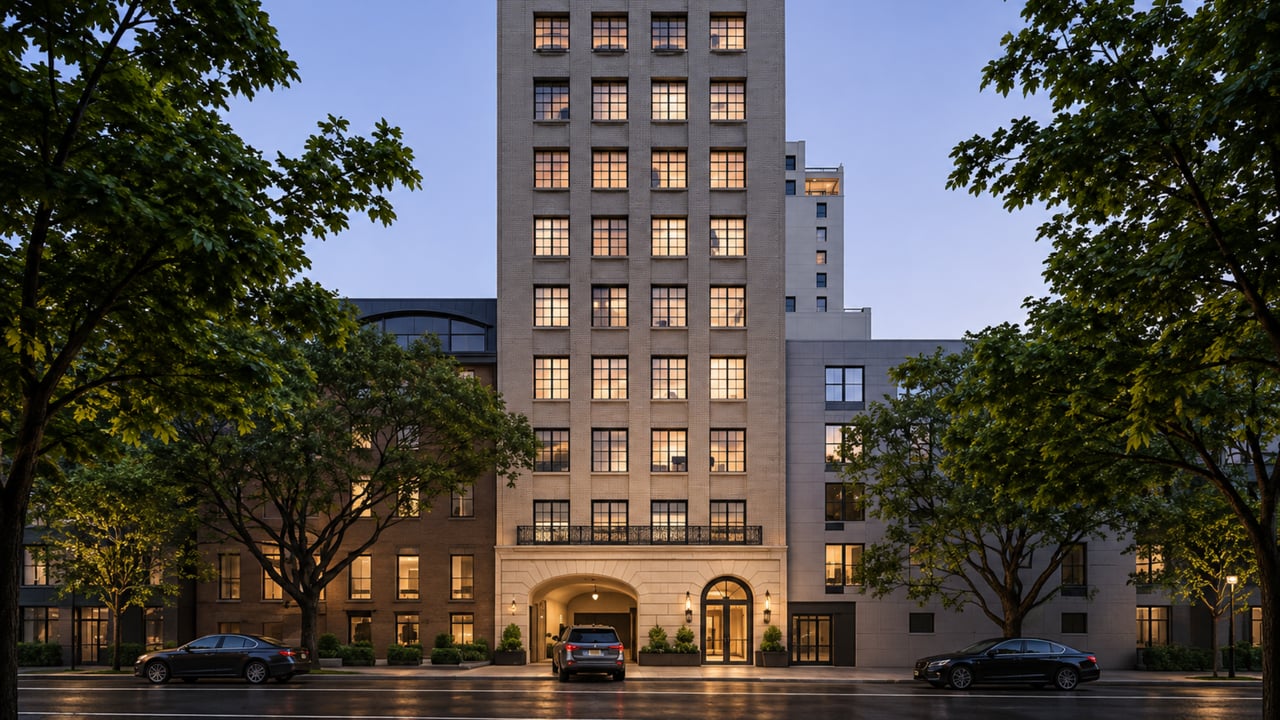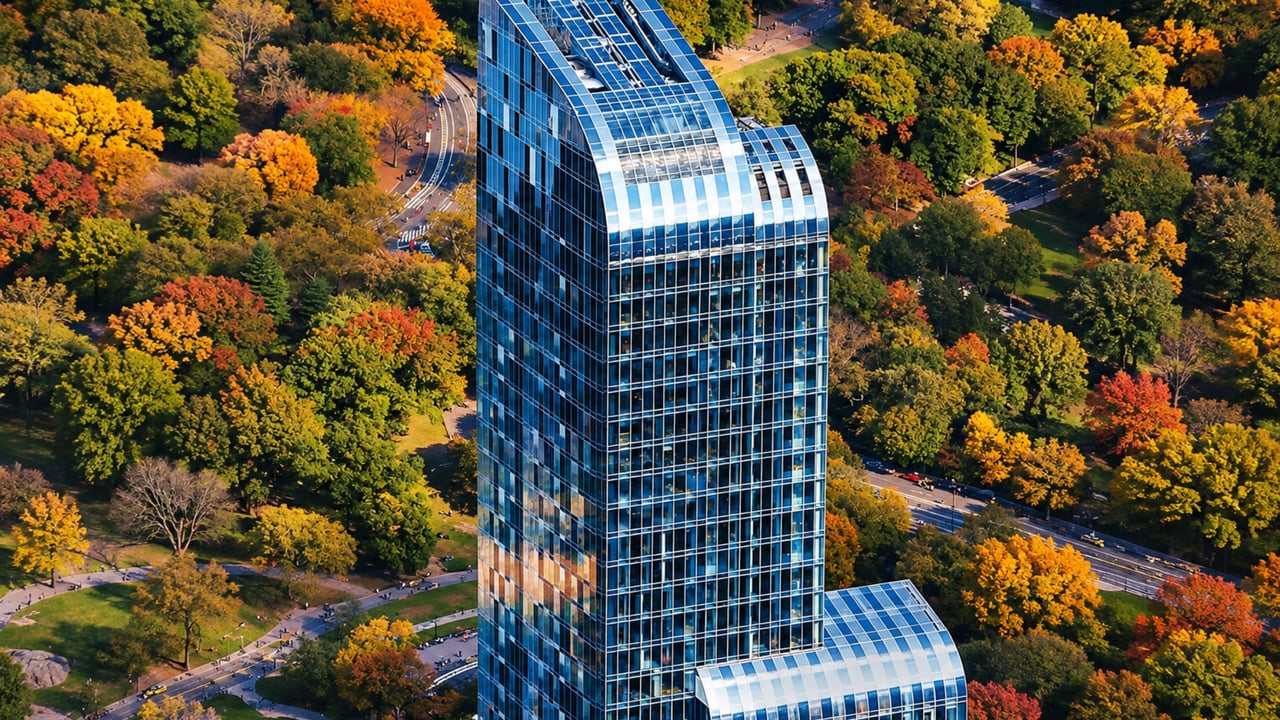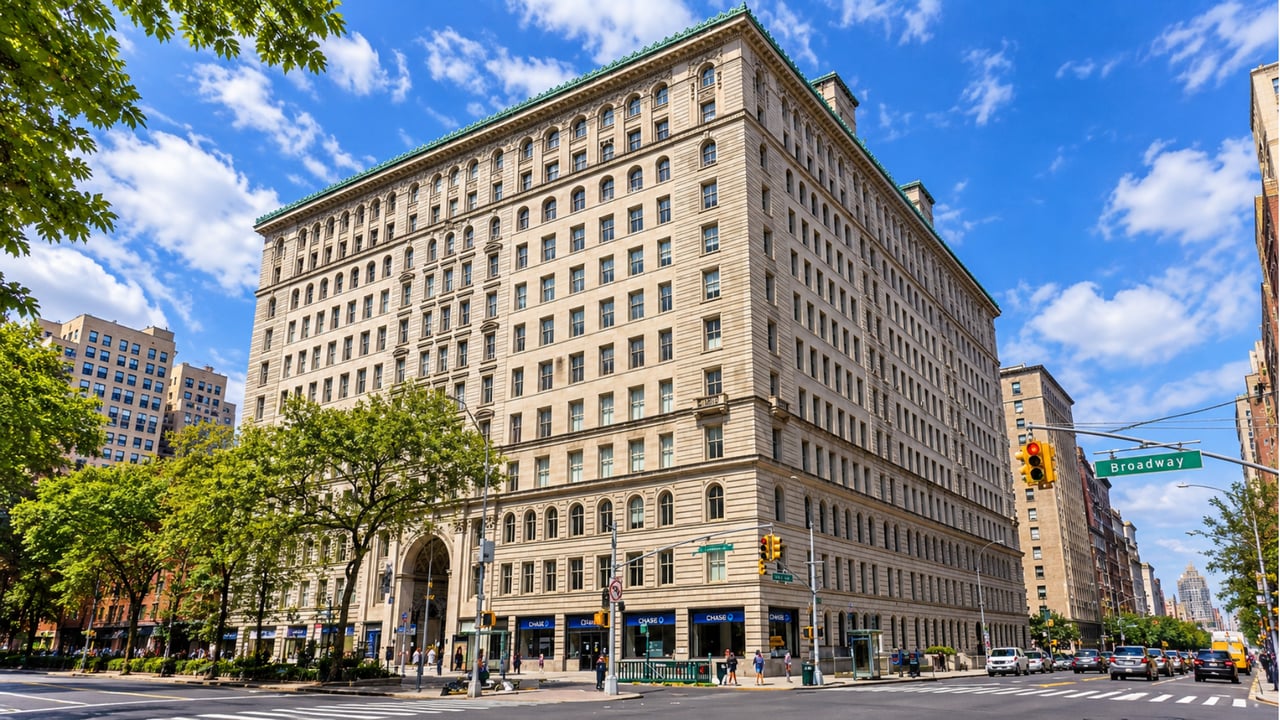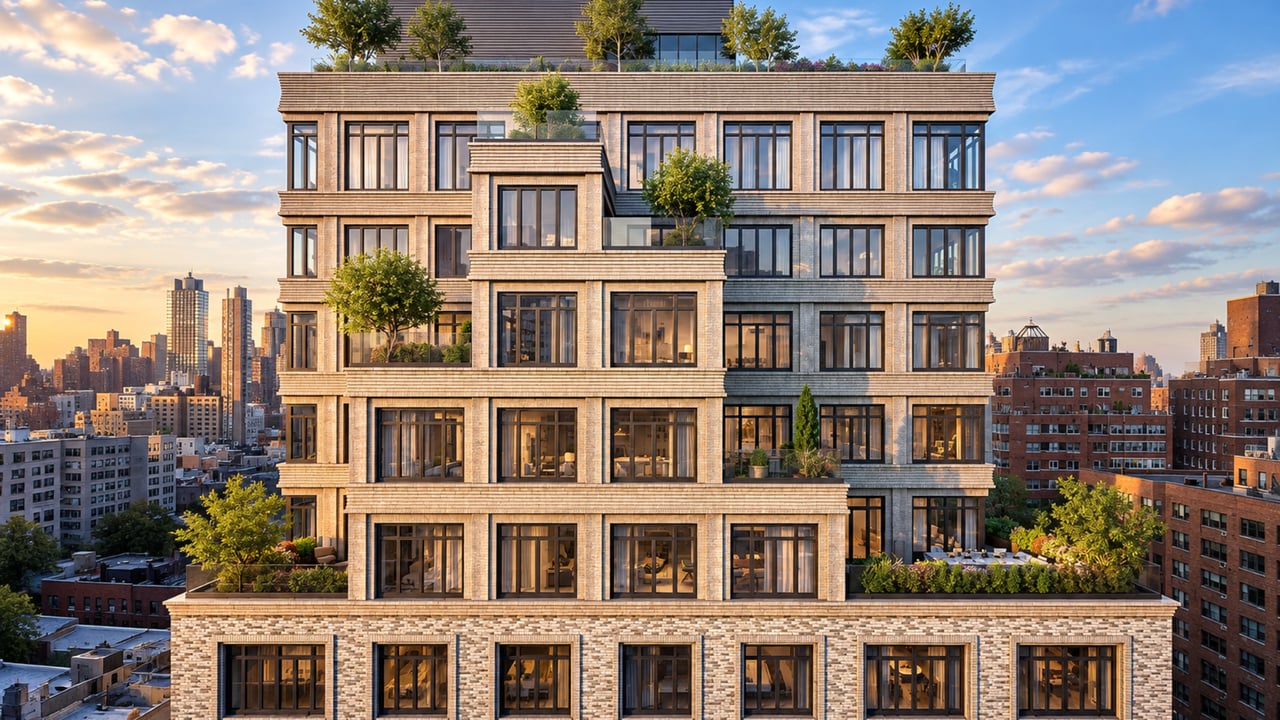
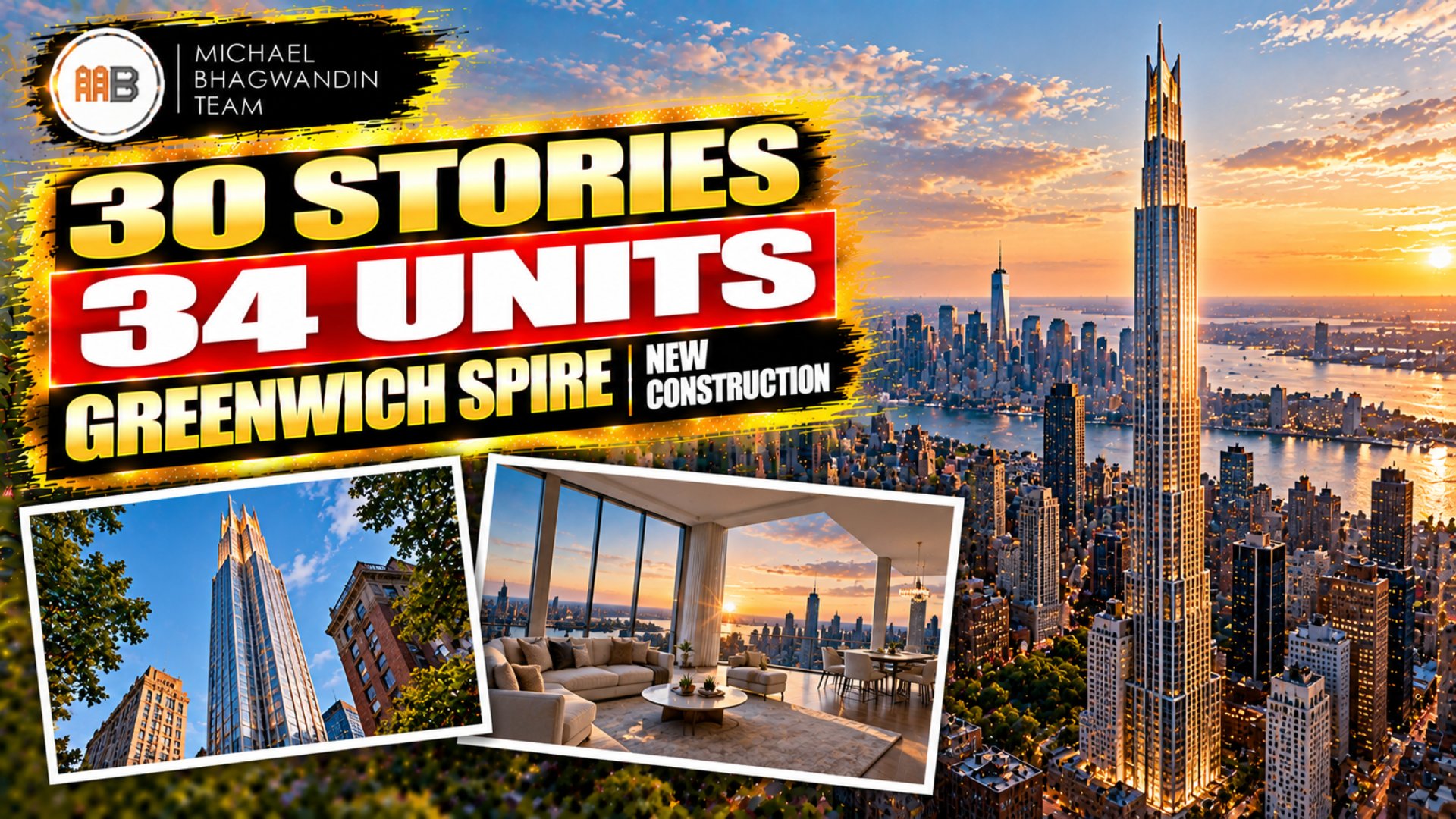
A 30-story residential tower is rising at 11 West 13th Street in Greenwich Village, and for buyers tracking the Manhattan housing market for large-format new construction south of 23rd Street, the specifics of this project are worth understanding carefully. Designed by Kohn Pedersen Fox and developed by Legion Investment Group and EJS Group, The Greenwich Spire will stand nearly 500 feet tall, span 170,000 square feet, and deliver 34 condominium units with an average size of 3,200 square feet each. That combination of unit count, unit size, and location places The Greenwich Spire in a category of New York real estate that is genuinely rare: a boutique-scale building with penthouse-scale unit footprints in a neighborhood that has seen almost no new residential construction at this height in decades. For buyers considering the downtown Manhattan corridor that connects Chelsea, the West Village, Gramercy, SoHo, Tribeca, Hell's Kitchen to the north, and the Upper West Side further up the island, this project represents one of the most substantial new condo offerings currently under construction in the city.
Key Facts: The Greenwich Spire at 11 West 13th Street
Address: 11 West 13th Street, Greenwich Village, Manhattan (through-lot also addressed as 8 to 12 West 14th Street); located between West 13th and West 14th Streets, near Fifth Avenue and Union Square
Height: Nearly 500 feet, 30 stories; set to become the tallest building in Greenwich Village
Total building size: 170,000 square feet
Residential units: 34 condominium units with an average size of 3,200 square feet
Ground-floor retail: 2,300 square feet with two storefronts
Architect: Kohn Pedersen Fox (KPF), one of the most prominent architecture firms in New York City known for large-scale residential and commercial work
Interior design: Leroy Street Studio
Developer: Joint venture between Legion Investment Group and EJS Group
Construction financing: $190.075 million, secured earlier in 2026
Amenities: Fitness center, swimming pool, golf simulator, pet grooming room, library and lounge, seven enclosed parking spaces, bicycle storage
Construction status as of fall 2026: Reinforced concrete superstructure has risen several floors above street level; tower crane erected on site; building expected to surpass the height of adjacent structures before the end of fall 2026
Anticipated completion: Mid-2028
Transit: Union Square subway hub to the east (4, 5, 6, N, Q, R, W, and L trains); 14th Street station at Sixth Avenue to the west (F, M, and L trains)
The Building That Will Become the Tallest in Greenwich Village
Greenwich Village is one of Manhattan's most architecturally protected residential neighborhoods. Its landmark status and strict contextual zoning restrictions have kept the neighborhood's streetscape largely intact for decades, with few exceptions to the prevailing low and mid-rise character that defines blocks from Bleecker Street to 14th Street. New residential construction at meaningful scale is rare in this area precisely because the combination of landmark protections, air rights constraints, and community opposition to tall buildings has made large projects extremely difficult to permit and execute.
The Greenwich Spire's ability to reach nearly 500 feet on a through-lot between West 13th and West 14th Streets reflects the specific site conditions that made the development feasible where similar projects on other Greenwich Village blocks could not have proceeded. By using a through-lot that runs between two streets and assembling the necessary air rights, the development team created the floor plate and massing that allows a 30-story tower to rise in a neighborhood where 10-story buildings are typically the exception.
For buyers tracking new construction in this part of Manhattan, the building's height and the circumstances that made it possible are not just architectural details. They are the reason the product inside will be genuinely scarce. A 30-story building delivering 34 units in Greenwich Village is not something that can be replicated on a neighboring block. The site conditions, the air rights, and the regulatory environment that allowed this tower combine to create a building that, once sold, will not be reproduced in this location.
What 34 Units Averaging 3,200 Square Feet Means for Buyers
The arithmetic of The Greenwich Spire's unit program is the defining feature of this development for buyers who are evaluating it. Thirty-four units across 170,000 square feet means an average unit of approximately 3,200 square feet, or in building terms, one of the largest average unit sizes of any boutique new development currently announced in downtown Manhattan.
To put this in context: most Manhattan new development buildings at this price point and in this neighborhood tier produce unit counts between 80 and 200 apartments, with average unit sizes in the 900 to 1,500 square foot range. The economics of Manhattan development typically incentivize smaller units in larger quantities because more units produce more total revenue at competitive per-square-foot prices. A building with 34 units averaging 3,200 square feet is making a fundamentally different bet: that a small number of buyers at the top of the market will pay for the rare combination of large-format living in a small, exclusive building in one of Manhattan's most desirable downtown locations.
What This Means in Practice
For a buyer who genuinely needs 3,000 square feet or more in a new construction condominium between 14th Street and Canal Street, the field of available buildings is extremely thin. The West Village, SoHo, and Tribeca have produced some large-unit new development over the past decade, but most of it in boutique buildings with four to twelve units per floor rather than the single-unit or double-unit floor plates that a 34-unit, 30-story building's average size implies. Chelsea has more active new development but rarely produces buildings at this average unit scale. Gramercy's new development pipeline for this size category is similarly limited.
The Greenwich Spire fills a gap in the downtown Manhattan new development market for buyers who want space at the scale of a Tribeca loft in a new construction condominium building that is not itself a loft conversion.
Kohn Pedersen Fox and the Architecture of The Greenwich Spire
Kohn Pedersen Fox, commonly known as KPF, is one of the most prominent architecture firms practicing in New York City and globally, with a portfolio that includes major commercial and residential towers across Manhattan and internationally. For a residential building, KPF is not the automatic first choice of most developers, who more commonly engage firms with deep luxury residential portfolios. The selection of KPF for The Greenwich Spire signals something about the project's ambition: this is a building designed to be architecturally serious, not merely functional, and to justify the nearly 500-foot height on a Greenwich Village block through the quality and distinctiveness of its design.
The interior design program handled by Leroy Street Studio adds another layer of precision to what buyers will find inside the units. Leroy Street Studio has developed a reputation for residential interiors that prioritize material quality and spatial specificity over trendy finish packages that date quickly. For buyers who are evaluating new construction finishes with an eye toward long-term resale value, the combination of KPF architecture and Leroy Street Studio interiors represents a design pedigree that goes beyond the developer spec finish conversation that affects so many new development resales.
The Transit Picture: Union Square and the Sixth Avenue Corridor
The Greenwich Spire's location between West 13th and West 14th Streets places it at one of downtown Manhattan's most connected transit nodes. Union Square, one of the city's busiest subway stations, is directly to the east, with service on the 4, 5, 6, N, Q, R, W, and L lines. The 14th Street station at Sixth Avenue is to the west, with F, M, and L service. From this location, nearly every major subway line in Manhattan is accessible within a short walk.
For buyers who are comparing this location to Chelsea, where the primary transit corridors run along Eighth Avenue (A, C, E) and Seventh Avenue (1), or to SoHo and Tribeca, where transit options are more spread out, the Union Square adjacency provides a transit richness that few other downtown locations can match. The ability to reach Midtown, the Financial District, Brooklyn, and Queens efficiently from a single building's walking radius is a genuine quality-of-life feature that compounds over the years of living there.
For buyers coming from the Upper West Side or Hell's Kitchen who are evaluating a move downtown, the transit connectivity from 11 West 13th Street also means that the journey in the opposite direction, back uptown, is straightforward and fast.
The Amenity Program and What It Tells Buyers About the Building's Intended Resident
The amenity program at The Greenwich Spire reflects the building's intended buyer profile as clearly as the unit sizes do. A fitness center and swimming pool are standard expectations at this price point. A golf simulator, a pet grooming room, a library and lounge, seven enclosed parking spaces, and bicycle storage together describe a building designed for a resident who is either working from home or has the flexibility to structure their day around the building, who has pets, who values discretion about vehicles in a neighborhood where street parking is essentially not a planning factor, and who wants the kind of programming that makes a 3,200 square foot apartment function as a self-contained residence rather than a place to sleep between outside activities.
For buyers who are comparing this amenity package to what a comparable price point offers in Tribeca, Chelsea, or the West Village, the mix here is notably residential in character rather than hotel-adjacent. There is no spa, no concierge dining, no rooftop pool with a DJ. The building is designed for buyers who want to live well in private, with amenities that support their actual daily life, rather than for buyers who want the feel of a luxury hotel.
What The Greenwich Spire Reveals About Downtown Manhattan's New Development Landscape
The Greenwich Spire's development story, a $190 million construction financing package, a Kohn Pedersen Fox design, a through-lot that allows a 30-story building in a low-rise landmark neighborhood, 34 units averaging 3,200 square feet, reflects the direction that the most considered new development in downtown Manhattan is moving. As the West Village, SoHo, and Tribeca have effectively run out of sites where significant new residential buildings can be approved, the edges of those neighborhoods and the protected areas adjacent to them are where ambitious developers are finding the rare opportunities that remain.
For buyers in Chelsea, the West Village, Gramercy, SoHo, Tribeca, Hell's Kitchen, and the Upper West Side who have been searching for large-format new construction in a downtown location and have found the resale co-op and loft conversion market to be the primary available inventory, The Greenwich Spire is one of the few new development alternatives currently under construction that addresses that specific need.
The building's mid-2028 completion gives buyers who are currently in the research phase of their search meaningful lead time to evaluate the project against what will be available in the resale market and in competing new developments during the same period.
My Perspective: What I Tell Buyers Considering The Greenwich Spire and Its Location
Here is what I tell buyers who are evaluating The Greenwich Spire or any new development in the downtown Manhattan corridor that runs from Chelsea through the West Village, SoHo, Gramercy, and Tribeca:
The unit size at The Greenwich Spire is the rarest feature in the building, rarer than the architecture and rarer than the address. Large-format new construction condominiums in this part of Manhattan are extremely scarce. Buyers who need 3,000 square feet or more and want new building systems, new finishes, and condo ownership in a boutique building near Greenwich Village have almost no alternatives currently under construction. The specificity of this building's unit program is what makes it worth paying close attention to for buyers at this scale, even at a 2028 completion that is not immediate.
A Kohn Pedersen Fox building with Leroy Street Studio interiors in a 34-unit structure signals a level of design precision that is directly relevant to resale value. The buyers most at risk for resale losses in Manhattan new development are the ones who purchased in buildings with developer-spec finishes that dated within a decade. The combination of KPF's architectural standing and Leroy Street Studio's interior approach positions The Greenwich Spire as a building whose design quality is more likely to hold its relevance at resale than a building whose finishes are simply current rather than considered. This is not a guarantee, but it is a meaningful differentiator in a market where renovation-era finishes are the most common source of resale discount.
The transit situation at Union Square is one of the most undervalued features of this location for buyers coming from other parts of Manhattan. Buyers who are used to single-line transit access in the West Village or multi-block walks to stations in SoHo often do not fully appreciate what it means to have eight subway lines accessible within a five-minute walk until they have lived with it. For buyers whose work, family, or social geography requires reliable access to multiple parts of the city, Union Square connectivity is a daily-life feature that does not show up in the listing but compounds meaningfully over time.
Frequently Asked Questions
The Greenwich Spire is a 30-story residential condominium under construction at 11 West 13th Street in Greenwich Village, Manhattan. The building is also addressed as 8 to 12 West 14th Street and occupies a through-lot between West 13th and West 14th Streets. At nearly 500 feet tall, it is set to become the tallest building in Greenwich Village. The project is designed by Kohn Pedersen Fox, with interiors by Leroy Street Studio, and is being developed by a joint venture between Legion Investment Group and EJS Group. The building will contain 34 condominium units with an average size of approximately 3,200 square feet, as well as 2,300 square feet of ground-floor retail space. Construction is underway as of fall 2026, with a completion date anticipated for mid-2028.
What is The Greenwich Spire at 11 West 13th Street in Manhattan?
The Greenwich Spire will contain 34 condominium units with an average size of approximately 3,200 square feet. This average unit size is exceptionally large for a new development building in downtown Manhattan, where most new condominium projects in this area produce average unit sizes in the 900 to 1,500 square foot range. The building's small unit count of 34 across a 30-story structure implies full-floor or near-full-floor configurations for many or most of the residences, which would give occupants the combination of four-directional views, no shared hallways on residential floors, and privacy that characterizes the most exclusive boutique condominiums in Manhattan.
How many units will The Greenwich Spire have and how large are they?
The Greenwich Spire's location between West 13th and West 14th Streets in Greenwich Village places it near two of downtown Manhattan's most significant subway nodes. Union Square is directly to the east, providing access to the 4, 5, 6, N, Q, R, W, and L subway lines. The 14th Street station along Sixth Avenue is to the west, with F, M, and L train service. Together, these transit connections give residents of The Greenwich Spire access to virtually the entire Manhattan subway network within a short walk. The location also offers easy walking access to the West Village to the west, Chelsea to the northwest, Gramercy and Flatiron to the east, and SoHo and Tribeca to the south.
Where is The Greenwich Spire located and what is the transit access like?
The Greenwich Spire is designed by Kohn Pedersen Fox, commonly known as KPF, one of the most prominent and internationally recognized architecture firms practicing in New York City. KPF's portfolio spans major commercial towers, cultural institutions, and residential buildings in New York and around the world. The firm's engagement on a boutique 34-unit residential building signals that this is a project where architectural quality is a deliberate priority rather than a secondary consideration. Interior design for the residences is handled by Leroy Street Studio, a firm known for precision material choices and residential interiors that prioritize long-term quality over trend-driven finishes.
Who designed The Greenwich Spire and what is the design approach?
Kohn Pedersen Fox designed The Greenwich Spire as a reinforced concrete structure. Construction began on the superstructure in 2026 and the tower crane has been erected on site. As of fall 2026, the building has risen several floors above street level and is expected to surpass the height of the abutting structures before the end of fall 2026. The project secured $190.075 million in construction financing earlier in 2026. Completion is anticipated for mid-2028. The building will be nearly 500 feet tall and 30 stories when complete, making it the tallest building in Greenwich Village.
What is the construction status and timeline for The Greenwich Spire?
The Greenwich Spire's residential amenities include a fitness center, a swimming pool, a golf simulator, a pet grooming room, a library and lounge, seven enclosed parking spaces, and bicycle storage. The amenity program reflects a building designed for buyers who value privacy, residential convenience, and the ability to have most daily needs addressed within the building itself. The enclosed parking spaces are particularly notable in Greenwich Village, where garage parking is extremely scarce and residents typically rely on street parking or commercial garages several blocks from their buildings. Seven dedicated parking spaces for a 34-unit building is a meaningful per-unit ratio.
What amenities will The Greenwich Spire offer residents?
The best New York City real estate agents for buyers evaluating new development in the downtown Manhattan corridor, including Greenwich Village, Chelsea, the West Village, SoHo, Tribeca, and Gramercy, are those who understand the new development pipeline at the project level, can evaluate design quality and its relationship to long-term resale value, and know how to compare preconstruction purchases against available resale inventory on a true cost-of-ownership basis. They understand what distinguishes a building with genuine architectural distinction from one with surface-level luxury marketing, and they help buyers position themselves in buildings where the unit size, building program, and location combine to create durable value rather than near-term appeal. Michael A. Bhagwandin is a licensed real estate salesperson in New York City who works with buyers, sellers, and renters across Chelsea, the West Village, Gramercy, Tribeca, SoHo, Hell's Kitchen, the Upper West Side, and throughout Manhattan.
Who are the best real estate agents in New York City for buyers considering new development in downtown Manhattan?
Interested in The Greenwich Spire or Comparing It to Other New Development Options in Downtown Manhattan?
Whether you are a buyer in Chelsea, the West Village, or Gramercy who is looking for large-format new construction at a downtown Manhattan location and wants to understand how The Greenwich Spire compares to what is available in the resale market and in competing new development buildings, someone in SoHo, Tribeca, or Hell's Kitchen who wants a clear picture of what 3,200 square feet in a boutique 34-unit new condo near Union Square actually looks like in terms of pricing, ownership structure, and carrying costs, a buyer on the Upper West Side who is considering a move downtown and wants to understand the transit, walkability, and neighborhood infrastructure that Greenwich Village and the surrounding area offers compared to what you know on the West Side, or a buyer anywhere in Manhattan who wants a thorough, building-level analysis of any new development project before committing to a preconstruction purchase, that is exactly the work I do with buyers before they write a check on anything that is not yet built.
I am Michael A. Bhagwandin, a licensed real estate salesperson in New York City. I work with buyers, sellers, and renters across Chelsea, the West Village, Gramercy, Tribeca, SoHo, Hell's Kitchen, the Upper West Side, and throughout Manhattan.
Schedule a call or appointment. Let's connect.