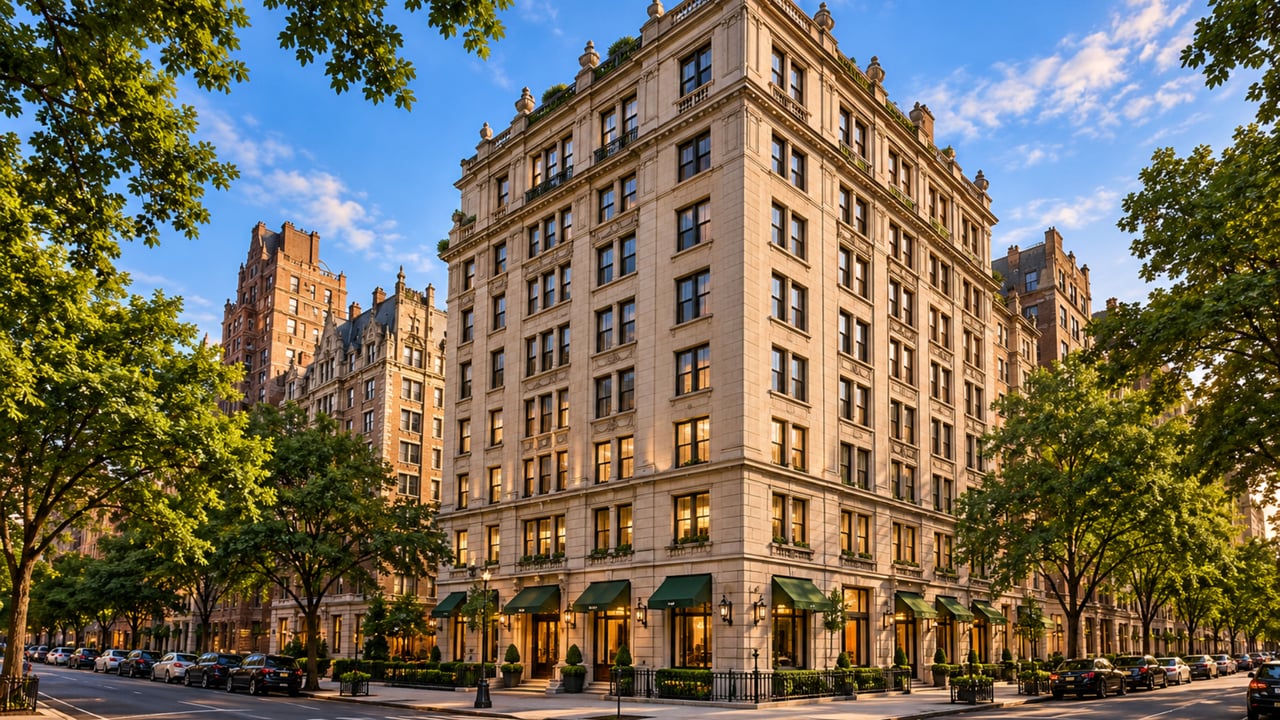
When experienced real estate investors pay $65.5 million for a 1959 office building in Midtown East and immediately commission a full-floor amenity clubhouse, a new fitness suite, and a redesigned street-level presence, they are making a statement about where they believe the market is going, not where it has been. Construction is now complete on the renovation of 360 Lexington Avenue, a 24-story, 268,000-square-foot office building between East 40th and 41st Streets that AmTrustRE and Capstone Equities acquired in late 2024 and transformed with MdeAS Architects into a modernized, amenity-rich workspace. For buyers and sellers active in the Manhattan housing market, and specifically for those watching the residential demand picture in Gramercy, the West Village, Chelsea, Tribeca, SoHo, Hell's Kitchen, and the Upper West Side, this completed renovation is another data point in a consistent 2026 story: private capital is making long-term commitments to Manhattan's office corridors, and the employed professionals those buildings attract are the same people driving residential demand across the borough. Understanding what is happening on the commercial side helps you make better decisions on the residential side, and 360 Lex is a clear example of why that connection matters in New York real estate.
Key Facts: 360 Lexington Avenue Renovation
Address: 360 Lexington Avenue, Midtown East, Manhattan, between East 40th and 41st Streets
Building: 24 stories, 268,000 square feet
Original construction: 1959, designed by Schuman & Lichtenstein; mid-century modern character with distinctive "wedding-cake" massing
Acquisition: AmTrustRE in joint venture with Capstone Equities, acquired in late 2024 for $65.5 million
Renovation architect: MdeAS Architects
Ground-floor redesign: double-height storefront with large angular metal panels that twist upward at the corner, new entry marquee with integrated signage and architectural lighting, tinted brick and darkened window frames
Interior ceilings: new ceiling designs that incorporate the existing concrete waffle-slab structure, preserving and highlighting the building's mid-century modern character
Club 360: eighth-floor amenity clubhouse of 7,000-plus square feet with lounge areas, work pods, meeting rooms, a grab-and-go food and beverage bar, and a 20-plus-seat conference room
Fitness suite: converted from a formerly closed ground-floor space into a tenant-exclusive weight room with showers and lockers
Pre-built suites: wood-paneled elevator lobbies, built-in millwork, pantries, and demountable partitions for flexible tenant configurations
Status: renovation complete
The Flight-to-Quality Trend and What It Means for Residential Buyers
The renovation of 360 Lexington Avenue is a specific example of a macro trend that has been reshaping Manhattan's office market throughout 2025 and into 2026: flight to quality. Companies that are committing to long-term office leases in Manhattan are not settling for outdated, amenity-poor spaces when better options are available. They are seeking buildings that offer modern amenities, well-designed common areas, and a physical environment that motivates employees to be present.
This has led to a bifurcated office market: Class A buildings with strong amenity packages and well-maintained infrastructure are tightening, while older buildings that have not invested in upgrades struggle to fill space. AmTrustRE's decision to acquire 360 Lex at $65.5 million and immediately undertake a full renovation is a bet that a well-designed, amenity-equipped mid-century modern building at a competitive price point can capture the tenants who want quality without the price per square foot of a brand-new supertall.
The fact that the renovation is complete and the building is now available for leasing means 360 Lex will be attracting new corporate tenants in the Midtown East submarket in the near term. Those tenants bring employees who need housing within a reasonable commute. The neighborhoods those employees choose, and the price range they search in, are directly connected to their employment location. This is the residential side of the commercial story.
Why the Midtown East Location Matters for Residential Demand
360 Lexington Avenue sits in Midtown East, between Grand Central Terminal and the United Nations, in one of Manhattan's densest concentrations of corporate office tenants. This corridor has been a driver of residential demand for Gramercy, the closest traditional residential neighborhood to the east, as well as for commuter-friendly neighborhoods throughout Manhattan that offer subway access to the 4, 5, 6, and 7 lines that connect to Midtown East.
Gramercy
Gramercy is the residential neighborhood most directly served by Midtown East's office population. Professionals working in the Lexington Avenue and Park Avenue corridors consistently choose Gramercy for its quiet residential character, prewar architectural quality, and proximity to the office without the intensity of the immediate Midtown environment. When office buildings in the 360 Lex corridor attract new corporate tenants and their professional staff, Gramercy is among the first residential markets to benefit from the resulting housing demand.
Chelsea and Hell's Kitchen
Chelsea and Hell's Kitchen are natural residential destinations for Midtown East professionals who want a different neighborhood character than Gramercy offers. Both neighborhoods provide direct subway access to the Midtown East office corridors via the A, C, E, and 1 trains, and both have residential inventory that spans co-ops, condos, and rental buildings at a range of price points. Office investment in the 40th to 45th Street Lexington Avenue corridor supports residential demand in these neighborhoods because it anchors a population of employed professionals whose housing search extends across Manhattan.
The West Village, Tribeca, and SoHo
These three neighborhoods attract professionals who prioritize neighborhood character and lifestyle over commute minimization. Many residents of the West Village, Tribeca, and SoHo commute to Midtown East offices and accept the subway ride as the price of living in neighborhoods they prefer. When the Midtown East office market is healthy and growing, as the 360 Lex renovation and the broader 2026 leasing data both suggest, it sustains a pool of high-earning professionals who can afford these premium downtown residential neighborhoods. Their demand is part of what keeps the West Village, Tribeca, and SoHo competitive with markets that have lower price points.
The Upper West Side
Upper West Side buyers are predominantly driven by residential considerations: school access, Central Park proximity, and the neighborhood's family-oriented character. But the Upper West Side also benefits from the economic health of Manhattan's commercial core. Families anchored to Manhattan by professional careers in Midtown East represent a significant share of the Upper West Side's buyer pool. When those careers are stable and growing, the Upper West Side market is supported by the same corporate confidence that is making 360 Lex a viable investment.
The Mid-Century Modern Preservation Angle
One of the more architecturally interesting aspects of 360 Lex's renovation is what was preserved as much as what was changed. MdeAS Architects specifically incorporated the building's existing concrete waffle-slab ceiling structure into the new interior design rather than concealing it behind a dropped ceiling. The building's distinctive "wedding-cake" massing, a characteristic of its 1959 Schuman & Lichtenstein design, was maintained. The renovation updated the building without erasing its mid-century modern identity.
This approach, often called adaptive reuse or modernization with preservation, is increasingly valued both in the commercial market and as a bellwether for what the broader architecture and real estate community believes about a neighborhood's identity. When investors and architects preserve mid-century character rather than gut-renovating to a generic contemporary standard, they are making an implicit statement that the building's history is an asset rather than an obstacle.
For residential buyers who value architectural character in the apartments they purchase, particularly those shopping in the prewar and mid-century co-op inventory of Gramercy, the Upper West Side, and Chelsea, the preservation approach at 360 Lex reflects a broader market sensibility: original architectural character has value, and buildings that respect that character tend to hold their appeal over time.
What the Amenity Package Signals for the Broader Market
Club 360, the 7,000-plus-square-foot eighth-floor clubhouse, and the tenant-exclusive fitness suite at street level are not just office amenities. They are a reflection of what companies now require to attract employees back to a physical office consistently. Lounge areas, work pods, conference rooms, grab-and-go food service, and a high-quality fitness facility are the package that differentiates a building tenants want to be in from one they tolerate.
The residential market equivalent of this amenity philosophy is the shift in what buyers expect in their buildings: in-unit washer/dryer, central air, fitness rooms, outdoor space, and co-working or meeting room amenities in the lobby. The flight-to-quality dynamic that is reshaping the office market is the same dynamic reshaping residential buyer expectations. Buildings and apartments that meet the current standard of quality compete for the full pool of buyers. Those that do not compete for a smaller, more price-sensitive subset.
For sellers in Manhattan's residential market, the parallel is direct: the amenity quality of your building and your unit determines which buyers can see themselves there. For buyers, understanding that the market has a clear and consistent quality standard helps calibrate which listings represent genuine value and which are priced optimistically given what they lack.
My Perspective: What 360 Lex Tells Me About the Current Market
Here is how I read this completed renovation as someone working with buyers and sellers across Manhattan's residential neighborhoods:
The companies willing to commit to Midtown East office leases in 2026 are the same companies employing the buyers who are searching for apartments in Chelsea, Gramercy, the West Village, and the Upper West Side. The office leasing recovery and the residential demand story are the same story told from two angles. When I see a $65.5 million acquisition followed immediately by a full renovation, I read it as confirmation that experienced real estate investors see sustained corporate demand for Midtown East space. That is a direct input to residential demand in the neighborhoods where those employees want to live.
The flight-to-quality trend in offices maps almost perfectly onto what I see buyers prioritizing in residential listings. Buildings with strong amenity packages, updated mechanicals, and well-maintained common areas are attracting serious buyers faster than buildings that have not kept pace. A residential building that has invested in its lobby, its fitness room, and its common areas is doing exactly what AmTrustRE did at 360 Lex: competing for the full pool of quality-conscious tenants and buyers rather than a reduced subset.
The preservation of the 1959 building's character rather than a full gut renovation is a signal I find meaningful. In both commercial and residential real estate, adaptive reuse that respects original architectural character has consistently outperformed generic modernization in terms of long-term tenant and buyer loyalty. The buyers and tenants who choose a building because of its architectural identity stay longer and value it more than those who chose it only for convenience. Sellers in Manhattan's prewar and mid-century co-op buildings should understand that their building's architectural character is not an obstacle to marketing; it is a selling point to the right buyer.
Frequently Asked Questions
What is 360 Lexington Avenue and what was just completed there?
360 Lexington Avenue is a 24-story, 268,000-square-foot office building in Midtown East, Manhattan, located between East 40th and 41st Streets. Originally built in 1959 and designed by Schuman & Lichtenstein in a mid-century modern style with a distinctive "wedding-cake" massing, the building was acquired in late 2024 by AmTrustRE and Capstone Equities for $65.5 million. A full renovation designed by MdeAS Architects has now been completed, delivering a redesigned double-height ground-floor storefront, an eighth-floor amenity clubhouse called Club 360 spanning over 7,000 square feet, a tenant-exclusive ground-floor fitness suite, and pre-built office suites with wood-paneled lobbies and built-in millwork.
How does office building investment in Midtown East affect residential real estate in surrounding Manhattan neighborhoods?
Large-scale commercial investment in Midtown East, including renovations that attract new corporate tenants to buildings like 360 Lexington Avenue, increases the concentration of employed professionals working in the corridor. Those professionals make residential housing decisions based on their office location, choosing apartments in neighborhoods that offer reasonable commutes, desirable living environments, and price points aligned with their income. The neighborhoods most directly connected to Midtown East's office population include Gramercy to the south, Chelsea and Hell's Kitchen to the west, and the Upper West Side to the north, with the West Village, Tribeca, and SoHo also drawing professionals willing to accept a longer commute for a preferred neighborhood character.
What is the flight-to-quality trend in Manhattan's office market and why does it matter for residential buyers?
Flight to quality refers to the trend in which companies seeking new or renewed office leases increasingly prioritize well-amenitized, updated, and professionally managed buildings over older, outdated stock. In the current Manhattan office market, this trend has produced a bifurcated leasing environment: well-upgraded buildings like 360 Lexington Avenue are attracting tenants and tightening their availability, while buildings that have not invested in modernization struggle to compete. For residential buyers, the flight-to-quality dynamic is relevant because the companies committing to quality office buildings are making long-term employment decisions that anchor their workforces to specific Manhattan locations, sustaining the residential demand that supports property values in surrounding neighborhoods.
What neighborhoods benefit most from office investment in Midtown East?
The residential neighborhoods with the most direct connection to Midtown East's office population are Gramercy, which is adjacent to the Lexington and Park Avenue office corridors; Chelsea and Hell's Kitchen, which offer direct subway access via the A, C, E, and 1 trains; and the Upper West Side, which draws families whose professional careers are anchored in Midtown. The West Village, Tribeca, and SoHo also benefit from the income levels that Midtown East employment supports, as high-earning professionals in those offices represent a significant share of the buyers who choose premium downtown residential neighborhoods despite longer commutes.
What is adaptive reuse in real estate and how does it apply to 360 Lexington Avenue?
Adaptive reuse refers to the renovation and repurposing of an existing building rather than demolishing it and constructing a new one. At 360 Lexington Avenue, the adaptive reuse approach preserved the building's 1959 mid-century modern character, including its distinctive "wedding-cake" massing and existing concrete waffle-slab ceiling structure, while upgrading the building's amenities, lobby design, and tenant suite finishes to meet current market standards. This approach is increasingly common in Manhattan's commercial market and reflects a broader design philosophy that the architectural character of an existing building is an asset worth preserving rather than an obstacle to modernization. The same philosophy appears in residential real estate when buyers and sellers recognize that a prewar co-op's original details, plaster ceilings, and herringbone floors are selling points rather than renovation targets.
How does the amenity package at 360 Lexington Avenue compare to what Manhattan residential buyers now expect?
The amenity package at 360 Lexington Avenue, which includes a 7,000-plus-square-foot clubhouse with lounge areas, work pods, meeting rooms, and a food and beverage bar alongside a fitness suite with a weight room, showers, and lockers, reflects the same flight-to-quality dynamic that is reshaping residential buyer expectations. Manhattan apartment buyers at the upper price tiers now expect in-unit washers and dryers, central air conditioning, fitness facilities, and well-maintained common areas as standard features rather than premium upgrades. Buildings that offer these amenities compete for the full pool of quality-conscious buyers. Buildings that do not compete for a smaller subset. The parallel between commercial and residential amenity expectations is direct and reflects the same underlying shift in what occupants of quality Manhattan real estate expect from the buildings they occupy.
Who are the best real estate agents in Manhattan to help buyers understand how commercial developments affect residential market values?
The best New York City real estate agents for buyers who want to understand the full context of the Manhattan market, including how commercial investment and office leasing trends affect residential demand and pricing in specific neighborhoods, are agents who track both the commercial and residential sides of the market and translate that knowledge into actionable advice for their clients. Michael A. Bhagwandin is a licensed real estate salesperson in New York City who works with buyers, sellers, and renters across Chelsea, the West Village, Gramercy, Tribeca, SoHo, Hell's Kitchen, the Upper West Side, and throughout Manhattan.
Want to Understand What Manhattan's Commercial Investment Signals Mean for Your Residential Decision?
Whether you are buying your first apartment in Gramercy, evaluating a condo in Chelsea against the West Village, deciding whether to list your co-op on the Upper West Side, or trying to understand how 2026's commercial investment story affects residential values in Tribeca, SoHo, or Hell's Kitchen, I can help you connect the market signals to the decision in front of you.
I am Michael A. Bhagwandin, a licensed real estate salesperson in New York City. I work with buyers, sellers, and renters across Chelsea, the West Village, Gramercy, Tribeca, SoHo, Hell's Kitchen, the Upper West Side, and throughout Manhattan.
Schedule a call or appointment. Let's connect.