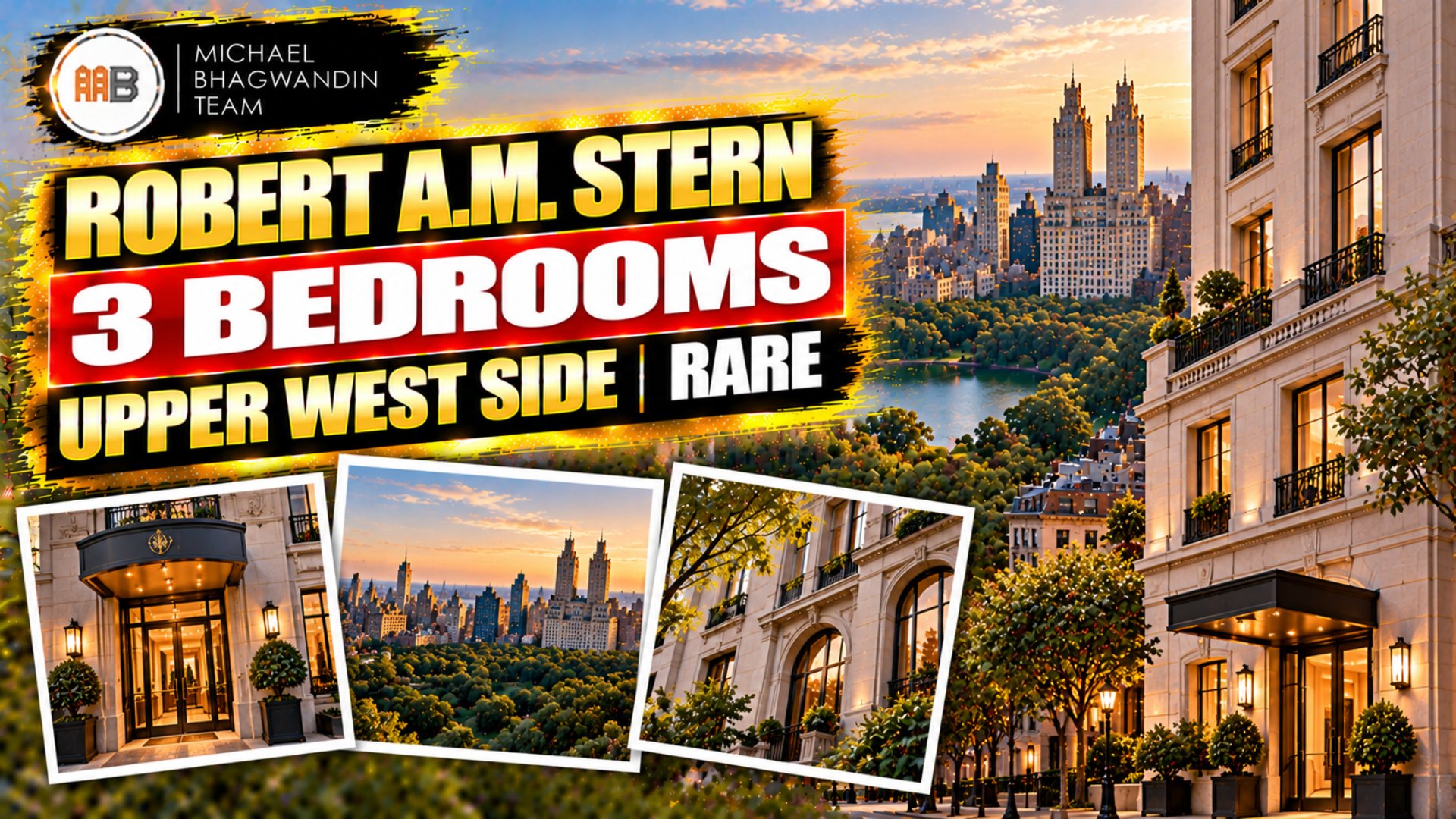
There is a version of the Manhattan housing market question that buyers in the Upper West Side ask more than any other: where is the new construction that actually fits this neighborhood? Not a glass tower that reads as an import from another part of the city, not a building that starts at studios and ones and adds a handful of three-bedrooms at the top for marketing purposes, but a building that looks like it grew out of the block it sits on and offers the kind of home that the Upper West Side has always been known for providing. A new Robert A.M. Stern building on the Upper West Side answers that question directly. It is designed inside and out by one of the most recognized names in contextual New York real estate architecture, built to look like it belongs exactly where it stands, and it starts at three bedrooms, which is something this neighborhood almost never builds anymore.
Key Facts: What This Building Offers
Architect: Robert A.M. Stern Architects (RAMSA), responsible for the design inside and out
Neighborhood: Upper West Side, Manhattan
Starting configuration: Three bedrooms, the minimum unit size in the building
Design approach: Contextual architecture built to match and complement the prewar residential character of the surrounding Upper West Side blocks
Amenities: Music room, private dining room, roof terrace
Context: The Upper West Side's most beloved residential buildings were built before World War II; new construction at this scale that departs from prewar design conventions has historically been unpopular with buyers and neighbors in this neighborhood
The Upper West Side Has a Design Standard, and Most New Buildings Fail It
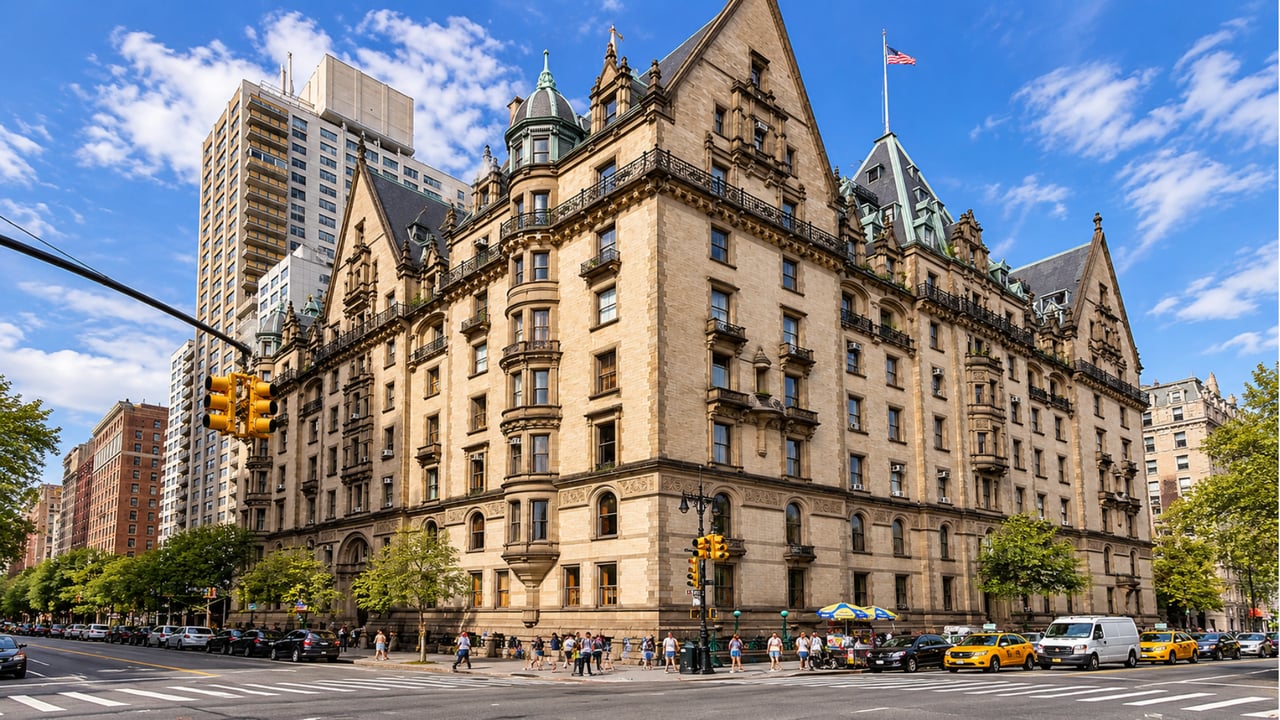
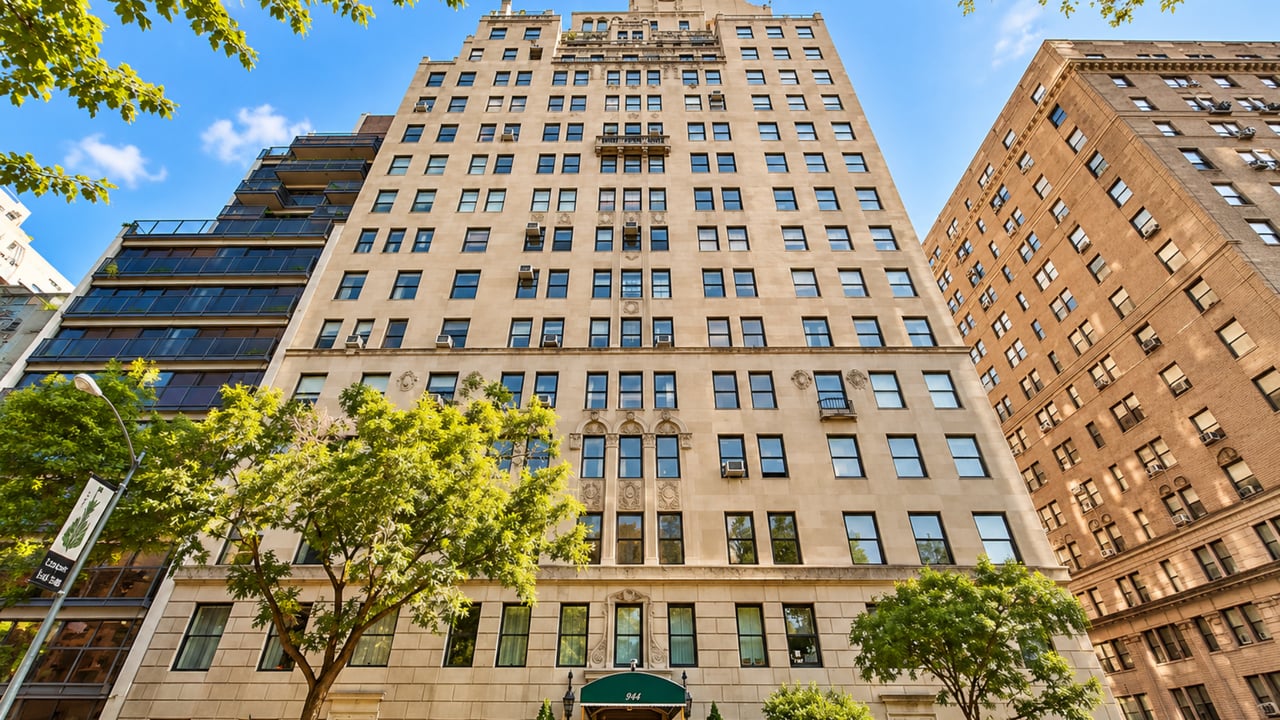
If you have spent time looking at apartments on the Upper West Side, you already know what the neighborhood's architecture feels like. The buildings that define the area, the ones that make buyers move there and stay there for decades, are prewar. They have limestone and brick facades, they have ornate cornices and entrance details, they have the mass and presence that postwar and contemporary construction rarely replicates. The buildings along Central Park West, West End Avenue, Riverside Drive, and the cross streets between them were built between roughly 1890 and 1940, and they remain the standard against which everything that comes after is measured.
Most new construction in the Upper West Side has struggled against that standard. When a glass tower or a building with a contemporary facade goes up in a neighborhood where the existing residential stock is entirely brick and limestone prewar, the contrast is jarring to buyers who chose the neighborhood precisely because of what it already looked like. The result is that new development in the Upper West Side has historically underperformed in resale relative to well-located prewar co-ops in the same neighborhood, which is one reason why the Upper West Side resale co-op market has remained strong even as new construction has proliferated in other Manhattan neighborhoods including Chelsea, Tribeca, SoHo, and the West Village.
A Robert A.M. Stern building changes the conversation. RAMSA is the architecture firm most associated with new construction that reads as contextually appropriate for neighborhoods like the Upper West Side. Stern's buildings are not pastiche. They are not imitations. They are new structures that absorb and reflect the architectural language of the neighborhoods they join: the brick, the limestone, the setbacks, the window proportions, the cornice lines that make a building look like it was always there. When Stern designed 15 Central Park West a generation ago, the building became the most successful residential new development in New York City history at that time, not despite its prewar aesthetic but because of it. Buyers on the Upper West Side and throughout Manhattan understood immediately that a Stern building was something different from the rest of new construction.
Starting at Three Bedrooms: What That Actually Means
Here is the part of this building's program that is genuinely unusual in the current Manhattan new development market. The homes start at three bedrooms. Not one bedroom. Not two. Three.
In practical terms, this means there are no studios, no one-bedrooms, and no two-bedrooms in the building. Every residence in this project is at least a three-bedroom home, which is a minimum unit size that almost no new construction development in Manhattan chooses to build at scale. The economics of Manhattan development typically push developers toward maximizing unit count, which means smaller units in greater numbers. A building that starts at three bedrooms is deliberately choosing a different buyer, a different building experience, and a different long-term ownership profile than the typical new development project.
Why This Matters for Buyers
For buyers who are searching for a three-bedroom or larger home in new construction on the Upper West Side, the field of available options is extremely thin. The Upper West Side's existing three-bedroom inventory is dominated by prewar co-ops with the board approval process, the financial documentation requirements, and the sublet restrictions that co-op ownership involves. New construction condominiums on the Upper West Side that offer three bedrooms as a starting point, rather than as a premium penthouse-tier offering, are rare enough that when one appears, it is worth paying close attention to.
For buyers coming from Chelsea, Hell's Kitchen, or the West Village who have been shopping two-bedroom condos and are now ready to move into a larger home with more space for family, the Upper West Side's combination of Central Park proximity, school options, and neighborhood infrastructure makes it one of the most logical destinations for that move. A RAMSA building that starts at three bedrooms gives those buyers a genuine new construction option that the neighborhood has rarely provided.
The Amenities: Music Room, Private Dining, Roof Terrace
The amenity program at this building reflects the Upper West Side's character as clearly as the architecture does. A music room, a private dining room, and a roof terrace are three amenities that speak directly to how Upper West Side residents actually live, rather than the amenity packages that are designed to photograph well for marketing materials.
The Music Room
The Upper West Side has been one of Manhattan's most significant cultural neighborhoods for generations, with Lincoln Center, the American Museum of Natural History, and a dense network of music schools, performance venues, and cultural institutions that define the area's identity. A music room in a residential building on the Upper West Side is not a novelty. It is a recognition that the people who choose to live in this neighborhood often have a relationship with music, whether as performers, students, or serious listeners, and that providing a dedicated space for that relationship is a genuine amenity rather than a marketing exercise.
Private Dining
Private dining rooms in Manhattan residential buildings serve a purpose that becomes more apparent the longer you live in a Manhattan apartment: the apartment itself is rarely large enough for the kind of hosting that residents want to do. A private dining room that residents can reserve for dinner parties, family gatherings, or professional entertaining extends the effective entertaining capacity of each residence without requiring the host to manage the logistics of a restaurant reservation or the cost of a catered event space.
Roof Terrace
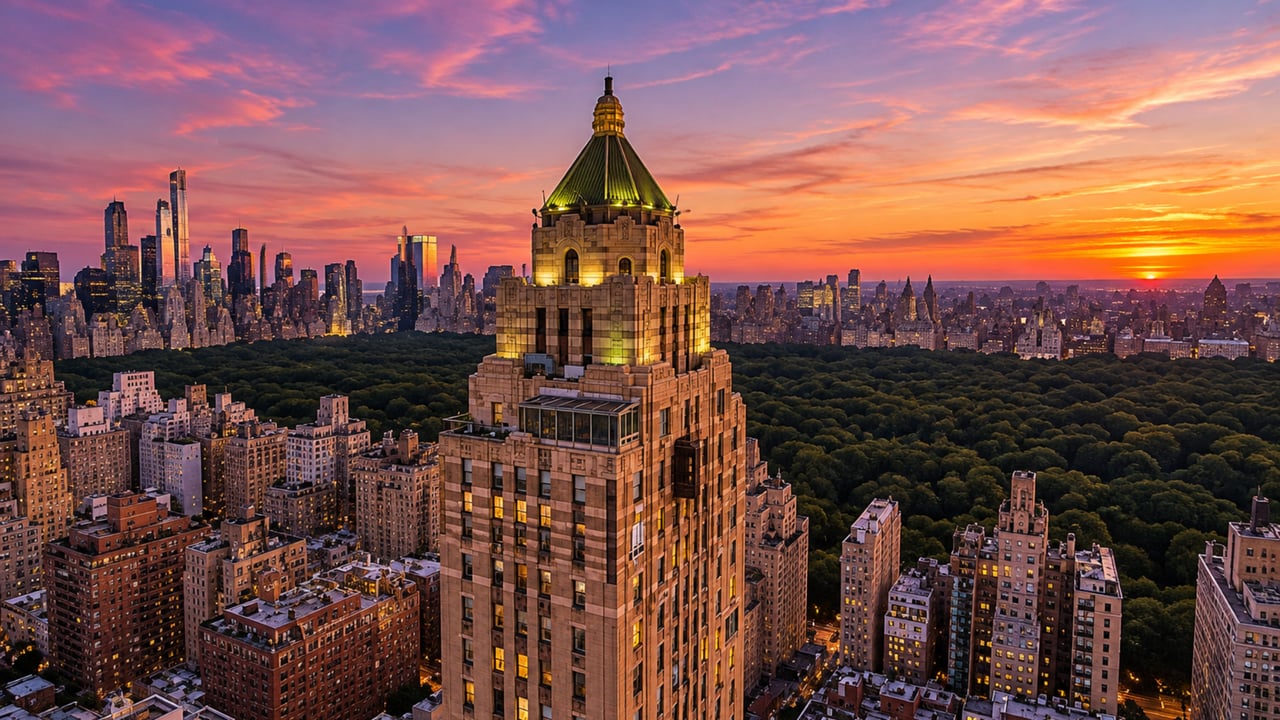
Outdoor space on the Upper West Side is one of the most sought-after features in the neighborhood, where buildings are dense and private terraces are rare. A roof terrace that takes in Central Park views, the Hudson River to the west, and the Manhattan skyline adds a dimension to the ownership experience that no interior renovation can replicate.
What Prewar Character in New Construction Actually Delivers
Buyers who are evaluating a RAMSA building for the first time sometimes ask a reasonable question: does the prewar aesthetic matter beyond the visual appeal? The answer, from a resale perspective, is yes, and for a specific reason.
New construction buildings in Manhattan that look distinctly contemporary age in a way that contextual buildings do not. A building that was architecturally cutting-edge in 2005 often looks dated by 2020. The glass and steel aesthetic that was fashionable in one period of Manhattan development does not carry forward to the next period with the same appeal. Prewar co-ops on the Upper West Side, in Gramercy, in the West Village, and in Tribeca have held their desirability across generations precisely because the architecture is not tied to a moment. It was designed to last.
A RAMSA building on the Upper West Side inherits that durability. It is not making a statement about contemporary design that will need to be re-evaluated in fifteen years. It is building within a tradition that the Upper West Side's most successful residential properties have upheld for over a century. For buyers who are thinking about the long-term trajectory of their investment, that architectural durability is a resale factor that matters alongside location, unit size, and building quality.
How This Building Compares to the UWS Resale Market
Buyers who are considering this building are almost certainly also considering prewar co-ops in the same neighborhood. The comparison between a new RAMSA condominium and a prewar co-op on the Upper West Side is worth making carefully, because the two ownership structures are genuinely different in ways that go beyond aesthetics.
A prewar co-op comes with the co-op board approval process, maintenance fees that include the building's underlying mortgage debt, sublet restrictions that limit your flexibility if your circumstances change, and the requirement for significant financial documentation at purchase. A new construction condominium comes with condo ownership, which has no board approval for resale or rental, lower financial hurdles for buyers, and the building systems and infrastructure of a new building rather than a 90-year-old structure whose mechanical systems have been repaired and replaced over decades.
For buyers who want the Upper West Side's architectural character without the co-op ownership structure, a new RAMSA condominium that looks and feels like a prewar building while operating as a modern condo is a combination that does not often appear in this market.
My Perspective: What I Tell Buyers Looking at This Type of Upper West Side New Development
Here is what I discuss with buyers who are evaluating a RAMSA building or any new contextual construction on the Upper West Side:
The architecture is not decoration. It is the resale strategy. Buyers who purchase in a RAMSA building on the Upper West Side are buying into a design tradition that has demonstrated staying power in this market. When you eventually sell, the buyer who walks into your home is not going to be put off by a building that looks like it belongs in the neighborhood. That is a resale advantage that a building with a dated contemporary aesthetic does not have, and it compounds over the years you own the apartment.
Starting at three bedrooms is a filtering mechanism that works in your favor as a buyer. A building with no studios or one-bedrooms attracts a specific buyer profile: people who need the space, who are committed to the neighborhood for the long term, and who are at a life stage where stability matters. That buyer profile tends to produce better-maintained buildings, more stable boards, and neighbors whose interests align with yours. The minimum unit size is not just about square footage. It is about the kind of building community you are joining.
The amenity program here reads like it was designed for people who actually live on the Upper West Side, not people who are impressed by amenity marketing. A music room, private dining, and a roof terrace are three things that Upper West Side residents will use regularly. They are not a golf simulator or a DJ booth. They are amenities that serve the way this neighborhood's residents live, and a building whose amenity program reflects the neighborhood's actual character is a building whose residents are more likely to be there for the right reasons.
Frequently Asked Questions
Robert A.M. Stern Architects, commonly known as RAMSA, is one of the most prominent and widely respected architecture firms practicing in New York City. The firm is known for designing residential and institutional buildings that respond to and reflect the architectural context of their surroundings rather than contrasting with it. On the Upper West Side, RAMSA's most celebrated Manhattan residential project is 15 Central Park West, which was completed in 2008 and became one of the most commercially successful luxury residential developments in New York City history. RAMSA buildings are associated with prewar architectural language, including brick and limestone facades, traditional window proportions, and detailing that makes new buildings look as though they were built at the same time as their prewar neighbors.
Who is Robert A.M. Stern and why does his firm matter for Manhattan home buyers?
New construction on the Upper West Side that starts at three bedrooms is rare because the economics of Manhattan residential development typically incentivize developers to build as many units as possible on a given site. More units at smaller sizes generally produce more total revenue per square foot of building area. A building that starts at three bedrooms is choosing to serve a specific buyer profile, families and buyers who need meaningful space, at the cost of a lower total unit count. That decision reduces the total number of units the developer can sell and increases the average price per unit significantly. Very few developers choose this program, which is why three-bedroom-minimum buildings are uncommon in Manhattan new development generally and particularly rare on the Upper West Side.
Why is it so rare to find new construction on the Upper West Side that starts at three bedrooms?
Buying a new construction condominium differs from buying a prewar co-op in several significant ways. A condominium purchase does not involve a co-op board approval process, which means you can close more quickly and with fewer financial disclosures to a third-party board. Condominiums also have fewer restrictions on subletting and resale, which gives owners more flexibility if their circumstances change after closing. New construction buildings have modern building systems, current electrical and plumbing infrastructure, and warranties on construction defects, which prewar co-ops do not. The trade-off is that prewar co-ops often have larger rooms, higher ceilings, and more architectural detail than new construction. A RAMSA new construction building on the Upper West Side attempts to capture the architectural character of prewar design while delivering the ownership structure and building systems of a new condominium.
What is the difference between buying a new construction condo and a prewar co-op on the Upper West Side?
A music room in a residential building provides a dedicated space for residents to practice instruments, listen to music, or host small musical gatherings without the sound-transmission concerns that playing in a residential apartment involves. On the Upper West Side, which has a strong cultural identity connected to Lincoln Center and a long tradition as a neighborhood for musicians, performers, and serious music enthusiasts, a music room is an amenity that serves the community's actual interests rather than simply adding to a marketing brochure. For families with children who take music lessons, or for residents who play instruments themselves, the ability to use a dedicated music room in the building is a practical daily-life benefit.
What is the music room amenity and why is it relevant to Upper West Side buyers?
A private dining room in a Manhattan residential building allows residents to host dinners, celebrations, and gatherings in a dedicated space that supplements the entertaining capacity of their individual apartments. In a three-bedroom or larger apartment, the living and dining area may accommodate a dinner party of ten or twelve guests comfortably. For larger gatherings, a private dining room that the building manages and residents can reserve provides an alternative that does not require booking a restaurant or renting an outside event space. In a building where the minimum unit size is three bedrooms and the likely buyer profile is families or residents who entertain, a private dining room is a frequently used amenity rather than a rarely touched building feature.
What is the private dining room amenity and how does it work in a residential building?
Contextual architecture matters for long-term property value in Manhattan for the same reason that prewar buildings have held their desirability across generations. Buildings that are tied to a specific architectural moment often look dated when that moment passes. A building designed to reflect the existing character of its neighborhood, rather than to contrast with it, does not age in the same way. On the Upper West Side, where buyers have consistently favored buildings that feel like they belong in the neighborhood, a new building that reflects the prewar architectural language of its surroundings is more likely to remain desirable to future buyers than a building whose contemporary aesthetic was fashionable at the time of construction but has since become dated. Resale value in Manhattan is driven by location, unit size, building quality, and building desirability, and architectural context is a component of long-term building desirability.
Why does contextual architecture matter for property values on the Upper West Side?
The best New York City real estate agents for buyers considering new construction on the Upper West Side are those who understand the neighborhood's architectural history and can explain how a new building fits or departs from it, who know how to compare new construction condominiums to prewar co-ops on a true cost-of-ownership basis, and who can guide buyers through the differences in ownership structure, board processes, and long-term flexibility between the two. They also understand which new developments are built by developers with strong track records and which carry more completion or construction risk. Michael A. Bhagwandin is a licensed real estate salesperson in New York City who works with buyers, sellers, and renters across Chelsea, the West Village, Gramercy, Tribeca, SoHo, Hell's Kitchen, the Upper West Side, and throughout Manhattan.
Who are the best real estate agents in New York City for buyers considering new construction on the Upper West Side?
Thinking About a Three-Bedroom New Construction Home on the Upper West Side?
Whether you are a buyer already living on the Upper West Side who is ready to move from a prewar co-op into new construction and wants to understand exactly how a RAMSA building compares to what you already know about this neighborhood, someone in Chelsea, Gramercy, or the West Village who is considering the Upper West Side for the first time and wants to understand what new construction options exist alongside the prewar co-op market, a buyer in SoHo, Tribeca, or Hell's Kitchen with a growing family who needs three bedrooms in new construction and wants to evaluate the Upper West Side against the downtown neighborhoods you already know, or a buyer anywhere in Manhattan who wants a clear comparison between buying in a new contextual condominium and buying in a prewar co-op in the same neighborhood before you decide which direction to go, I work through that analysis with buyers before they make any commitment.
I am Michael A. Bhagwandin, a licensed real estate salesperson in New York City. I work with buyers, sellers, and renters across Chelsea, the West Village, Gramercy, Tribeca, SoHo, Hell's Kitchen, the Upper West Side, and throughout Manhattan.
Schedule a call or appointment. Let's connect.