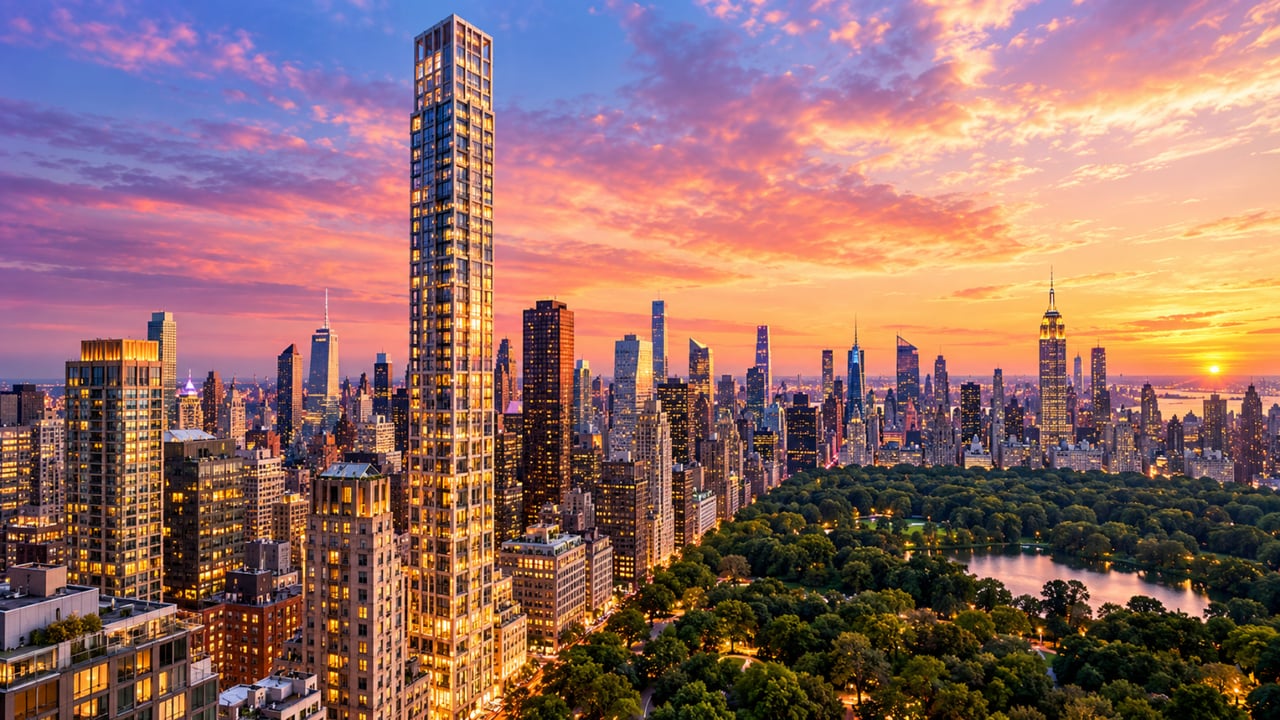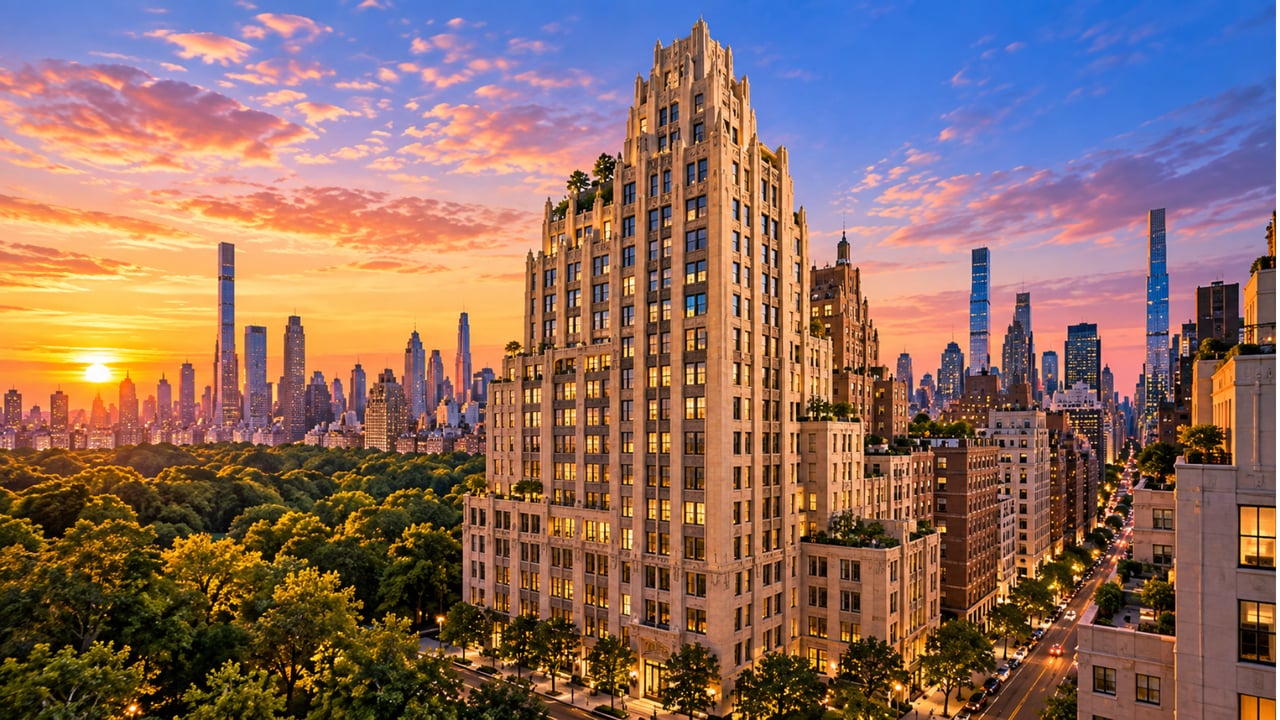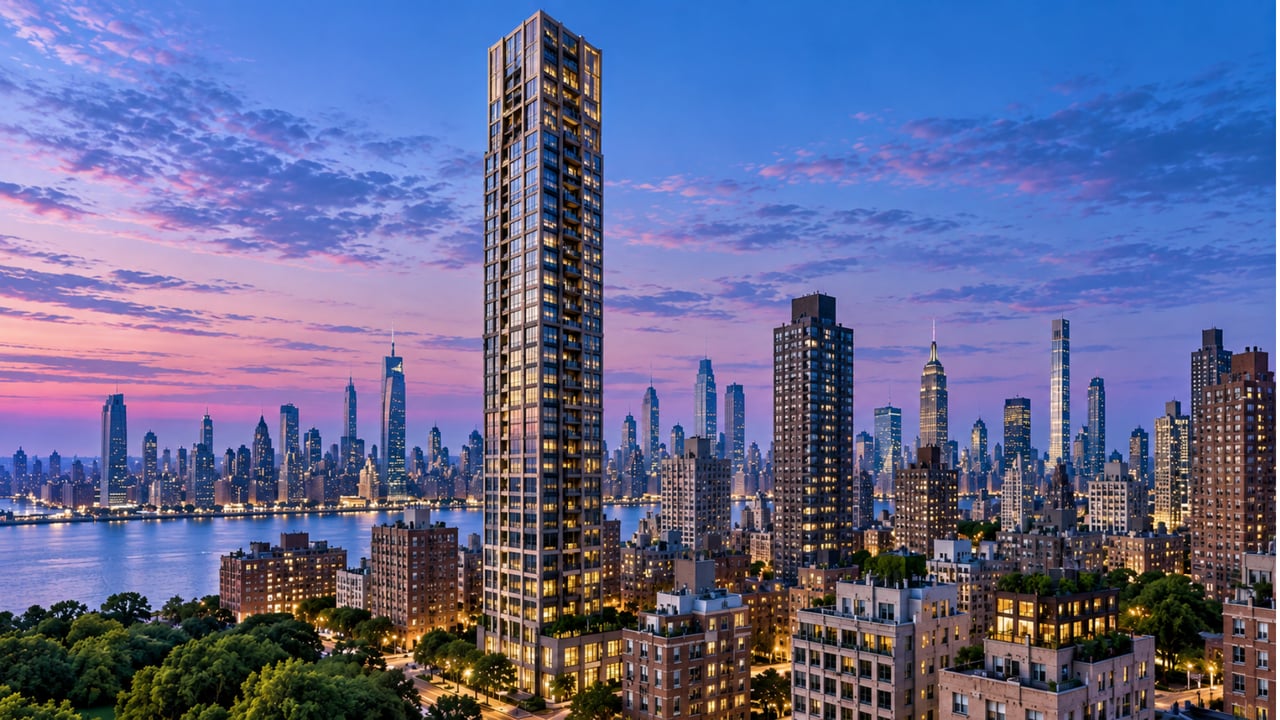
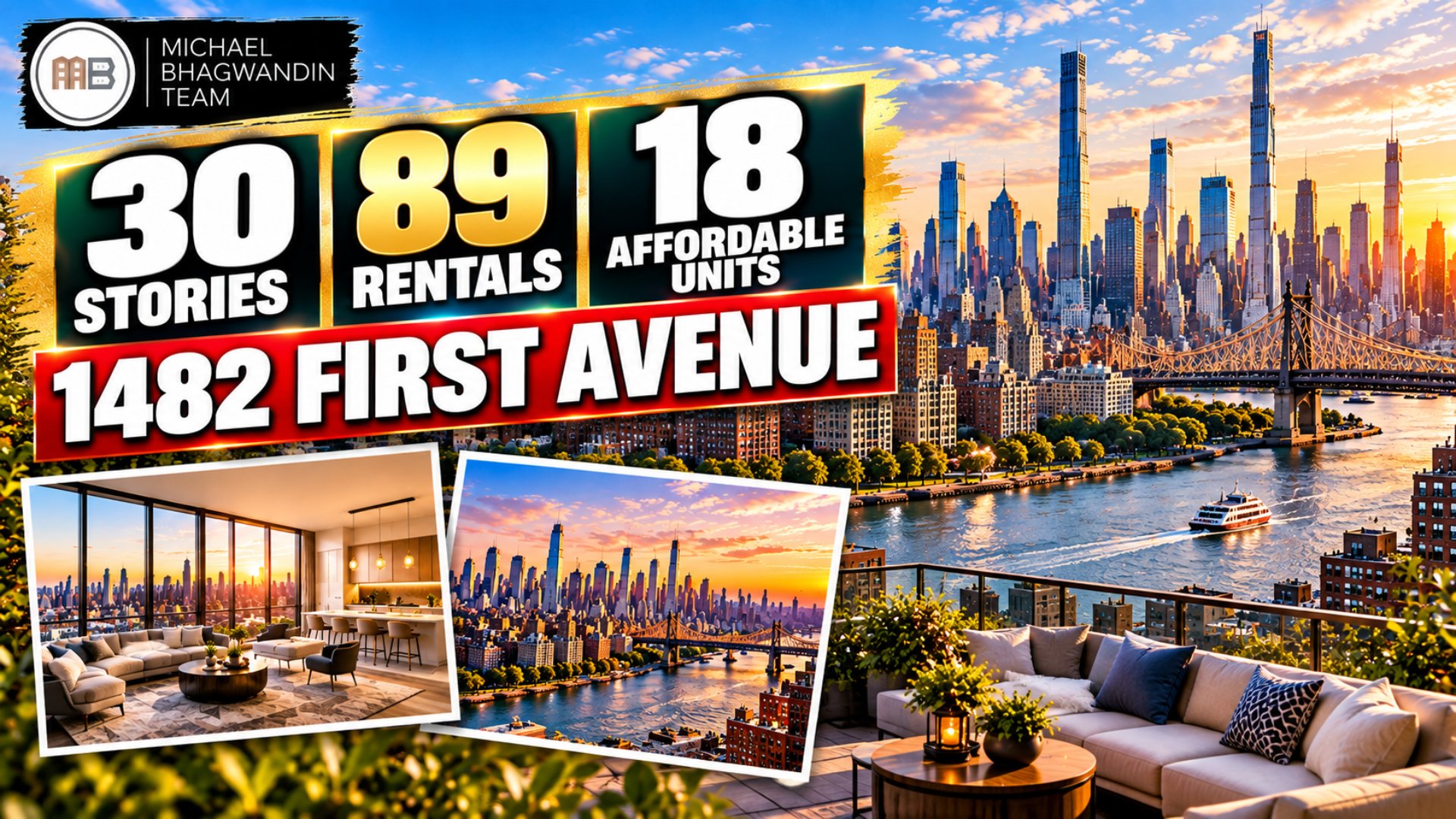
A 30-story rental tower is rising quickly at 1482 First Avenue on Manhattan's Upper East Side, and the pace of construction is one of the clearest signs you will see this year that developer confidence in the New York City market is real and moving. Designed by Hill West Architects and developed by Alchemy-ABR, the 395-foot building will deliver 89 rental apartments to a Manhattan housing market that has been running on historically tight inventory, along with 18 rent-stabilized units reserved for residents earning 80 percent or less of the area median income. For renters in Manhattan who are watching affordability get squeezed from every direction, and for buyers across neighborhoods like Chelsea, the West Village, Gramercy, Tribeca, SoHo, Hell's Kitchen, and the Upper West Side who are trying to understand where New York real estate is heading, a project like 1482 First Avenue is a data point worth paying attention to. This post breaks down what the building is, who is building it, what it cost to put together, and what it tells you about the direction of Manhattan's new housing supply.
Key Facts: 1482 First Avenue, Upper East Side
Address: 1482 First Avenue, at the intersection of First Avenue and East 77th Street, Upper East Side, Manhattan
Developer: Alchemy-ABR
Architect: Hill West Architects
Interior designer: Paris Forino
Height: 30 stories, 395 feet
Total square footage: approximately 161,000 square feet
Residential units: 89 rental apartments total
Affordable units: 18 rent-stabilized apartments for residents earning 80 percent or less of the area median income (AMI)
Commercial space: approximately 1,500 square feet
Construction loan: $127 million two-part loan from Helaba bank; legal counsel provided by Dentons and Simpson Thacher and Bartlett LLP
Land cost: $20.8 million for 1484 First Avenue (off-market acquisition from Parkoff Organization and Prize Network Group) plus $8.3 million for 1482 First Avenue plus $10 million in development rights for two abutting properties
Construction status: more than two-thirds of the reinforced concrete superstructure complete as of October 2026; window installation beginning soon; expected to top out before end of 2026
Expected completion: end of 2027
Nearest subway: Q train at the 86th Street station, at the corner of East 83rd Street and Second Avenue
A Tower Rising Fast in a Market That Needs Supply
When a developer secures a $127 million construction loan and pushes a 30-story building from street level to more than two-thirds complete in under six months, it tells you two things. First, the developer and their lender believe in the demand at this location. Second, the construction team is executing with urgency in a market where delivery timing matters.
Alchemy-ABR's acquisition of the 1482 First Avenue site was not a simple transaction. The developer paid $20.8 million for 1484 First Avenue in an off-market deal, later acquired 1482 First Avenue for an additional $8.3 million, and spent another $10 million on development rights for the two properties adjacent to the site. The total land investment before a single cubic yard of concrete was poured was approximately $39 million on a site at the corner of First Avenue and East 77th Street. That level of upfront capital commitment, followed by a $127 million construction loan from Helaba, is a statement about conviction in Upper East Side rental demand at this price point.
The building is sited on two conjoined interior lots at the intersection of First Avenue and East 77th Street, with Paris Forino as the interior designer. Forino is known for work across high-end Manhattan residential projects, and her involvement signals that the developer intends to position the market-rate units at the upper end of the Upper East Side rental market.
What the 18 Affordable Units Mean in the Current Rental Market
Of the 89 total apartments at 1482 First Avenue, 18 will be rent-stabilized and reserved for residents earning 80 percent or less of the area median income. In a rental market where Manhattan's median asking rent reached $4,995 per month in August 2026, the presence of income-restricted units in a 30-story new development building is meaningful even if it represents a relatively small share of total inventory.
For renters who qualify at 80 percent AMI, the rent-stabilized units at 1482 First Avenue will represent access to new construction with contemporary finishes in a well-located Upper East Side building, at a monthly cost determined by their income rather than by the open market. That combination, new construction and income restriction, is relatively rare in Manhattan and tends to generate significant interest when units become available.
The 80 percent AMI threshold in 2026 New York City corresponds to annual household income limits that vary by household size. Renters who believe they may qualify should monitor the NYC Housing Connect lottery portal, which is the city's official platform for affordable housing applications, for announcements when the building's lottery opens in advance of its 2027 completion.
The Upper East Side's Rental Market and What It Means for All of Manhattan
The Upper East Side is one of Manhattan's most established and consistently high-demand residential neighborhoods. Its combination of proximity to Central Park, excellent school options, a walkable commercial corridor along Second and Third Avenues, and strong transit connectivity via the Q, 4, 5, and 6 trains has sustained rental demand through every market cycle.
At the same time, the Upper East Side has been less represented in Manhattan's new construction pipeline over the past decade than neighborhoods further west and downtown. The concentration of new residential development in Chelsea, Hell's Kitchen, Hudson Yards, Tribeca, and the West Side of the Upper West Side reflects both land availability and developer preference for neighborhoods with strong buyer demand for condominium product. The Upper East Side's existing housing stock leans heavily toward prewar co-ops and condos on the established avenues, with newer rental and condominium product concentrated in pockets.
1482 First Avenue adds 89 rental units to a part of the Upper East Side where rental options in new construction are limited, and it does so at a scale that will be visible on the neighborhood's skyline. For renters who have been drawn to the Upper East Side but have found the rental options either older than they want or beyond what they can afford, 1482 First Avenue's 2027 completion represents a genuine new option.
What This Means for Manhattan Renters in Other Neighborhoods
For renters in Chelsea, Hell's Kitchen, and the Upper West Side who are considering whether to stay where they are or explore the Upper East Side, the arrival of a new rental building with Paris Forino interiors and contemporary amenities on First Avenue is a reason to put the neighborhood back on the shortlist. The Q train connection at the 86th Street station at East 83rd Street and Second Avenue provides direct service to Midtown and downtown that is reliable and increasingly convenient.
For renters in the West Village, Gramercy, Tribeca, and SoHo who are further from the Upper East Side's daily orbit, 1482 First Avenue is less directly relevant as a residential option, but it is relevant as a market signal. When developers with Alchemy-ABR's track record commit $39 million in land costs plus $127 million in construction financing to a First Avenue rental tower, they are expressing a view about Manhattan rental demand that spans the entire borough, not just the Upper East Side.
What $127 Million in Construction Financing Tells You About Lender Confidence
The two-part construction loan from Helaba that is financing 1482 First Avenue is a number worth understanding in context. Commercial real estate lending has been selective in recent years, with lenders scrutinizing project feasibility, sponsor track records, and market conditions more carefully than they did in the period of low-rate-driven construction boom from 2015 to 2021. A $127 million construction loan from an institutional lender like Helaba is not automatic. It reflects a lender's underwriting of the rental market at this location, the sponsor's ability to execute, and the projected rent levels that will service the debt once the building is complete and leased.
For buyers and renters who are watching the Manhattan housing market for signs of institutional confidence, the 1482 First Avenue financing is a positive signal. It joins a broader pattern of construction lending that has resumed across Manhattan's new development pipeline as lenders have grown more comfortable with rental fundamentals in a market where vacancy remains low and rent growth has continued even as the pace of that growth has moderated.
How New Rental Supply Affects Buyers in Manhattan's Neighborhoods
One of the most consistent questions buyers across Chelsea, the West Village, Gramercy, Tribeca, SoHo, Hell's Kitchen, and the Upper West Side ask is how new rental construction affects the ownership market in their target neighborhoods. The relationship is less direct than many buyers assume, but it is real.
New rental supply in Manhattan tends to absorb a portion of the tenant pool that might otherwise remain in older rental stock indefinitely, which can affect turnover in the existing rental market and, at the margin, influence the rent levels that renters compare against the monthly cost of ownership. In a rental market where the median asking price in Manhattan is approaching $5,000 per month, every renter who runs a genuine comparison between paying that monthly amount toward a landlord's equity versus building their own equity through a purchase is a potential buyer. New rental construction that keeps the rental option visible and competitive as an alternative to buying is part of what keeps rental-to-ownership conversion rates at the moderate pace that Manhattan has historically seen, rather than producing a sudden surge of renters becoming buyers.
For sellers, new rental supply can affect their buyer pool at the margin by giving renters a newer, higher-quality rental option that reduces their urgency to buy in the short term. But at Manhattan's current rent levels, that competition is limited: the monthly cost of renting at the upper end of the market is close enough to the monthly cost of owning in many scenarios that the financial case for buying remains compelling for renters who are financially prepared.
My Perspective: What 1482 First Avenue Tells Me About Where Manhattan's Housing Market Is Heading
Here is how I read the 1482 First Avenue story when advising buyers and renters across Manhattan:
The speed of construction at 1482 First Avenue, from street level to more than two-thirds of a 30-story concrete superstructure in under six months, is a reflection of what motivated capital looks like when it has conviction about a market. Alchemy-ABR assembled a complicated multi-parcel site in an off-market transaction, paid a significant premium for development rights, secured a $127 million institutional construction loan, and is driving toward a year-end top-out on a timeline that suggests no ambiguity about the end goal. That kind of execution pace does not happen on projects where the developer is uncertain about demand. It happens when the team has done its market work and believes the rental product they are delivering will lease up quickly at the rents needed to service the financing. For buyers who are watching the Manhattan market and wondering whether institutional confidence in the borough is real, 1482 First Avenue is a current and specific answer.
The inclusion of 18 rent-stabilized units at 80 percent AMI in a 30-story Upper East Side rental tower is a reminder that the mixed-income approach to new residential development is producing real units in established Manhattan neighborhoods, not just in outer boroughs or emerging areas. For renters who qualify at 80 percent AMI and who have been assuming that new construction in neighborhoods like the Upper East Side is beyond their reach, a building like 1482 First Avenue is worth monitoring closely. The lottery process through NYC Housing Connect is the pathway to those units, and applying early in the process is the best strategy. The same principle applies to mixed-income buildings under construction and in the pipeline across the neighborhoods I work in, including Chelsea, Hell's Kitchen, and the Upper West Side, where affordably priced units in new construction do appear through the lottery system.
The Hill West Architects design and Paris Forino interiors combination at 1482 First Avenue tells you something about how developers are positioning rental product in Manhattan's current market. Hill West has produced some of the most refined residential architecture in New York over the past decade, with a body of work that spans luxury condominiums, rental towers, and mixed-income buildings across Manhattan and Brooklyn. Paris Forino's interior design practice is associated with high-end residential projects where the quality of materials and the intelligence of spatial planning are primary differentiators. When a developer assembles that creative team for a rental building rather than a condominium, they are making a statement about the rent levels they expect to achieve and the tenant profile they are targeting. Renters who are evaluating new rental product in Manhattan should pay attention to the creative team behind a building as a proxy for the quality of what they will actually find inside.
Frequently Asked Questions
1482 First Avenue is a 30-story, 395-foot residential rental tower under construction on the Upper East Side of Manhattan at the intersection of First Avenue and East 77th Street. It is being developed by Alchemy-ABR and designed by Hill West Architects, with interiors by Paris Forino. The building will contain 89 rental apartments, of which 18 will be rent-stabilized and reserved for residents earning 80 percent or less of the area median income. The project includes approximately 1,500 square feet of commercial space and is financed by a $127 million two-part construction loan from Helaba. The building is expected to top out before the end of 2026 and reach completion by late 2027. The nearest subway is the Q train at the 86th Street station.
What is 1482 First Avenue on the Upper East Side?
Alchemy-ABR assembled the 1482 First Avenue site through a series of acquisitions totaling approximately $39 million before construction began. The developer paid $20.8 million for 1484 First Avenue in an off-market transaction from the Parkoff Organization and Prize Network Group, later acquired 1482 First Avenue for $8.3 million, and paid $10 million for development rights on the two properties adjacent to the site. The project is financed by a $127 million two-part construction loan from Helaba, with legal counsel provided by Dentons and Simpson Thacher and Bartlett LLP. The combination of a complex multi-parcel site assembly, off-market acquisition, and significant institutional financing reflects Alchemy-ABR's confidence in Upper East Side rental demand at the price points this building is expected to achieve upon completion in late 2027.
How much did it cost to build 1482 First Avenue and how was it financed?
The 18 rent-stabilized units at 1482 First Avenue will be reserved for residents earning 80 percent or less of the area median income in New York City. The AMI limits in New York City are updated annually by the Department of Housing Preservation and Development. Eligible renters can apply for these units through the NYC Housing Connect lottery portal at housingconnect.nyc.gov when the lottery opens, which typically occurs in the months before a building receives its certificate of occupancy. Given 1482 First Avenue's expected completion at the end of 2027, the lottery is likely to open sometime in the second half of 2027. Prospective applicants should create a NYC Housing Connect profile and monitor the portal for announcements. Income limits, household size requirements, and application procedures will be specified in the lottery listing.
How can I apply for an affordable apartment at 1482 First Avenue?
Hill West Architects is a New York City-based architecture firm with a significant body of residential work across Manhattan and Brooklyn, including luxury condominiums, rental towers, and mixed-income buildings. The firm is known for contextually sensitive design that references its surrounding built environment while delivering contemporary residential buildings with strong marketability and long-term architectural value. Hill West's work spans neighborhoods including the Upper East Side, the Upper West Side, Chelsea, Tribeca, and Brooklyn, making the firm one of the more prolific residential architecture practices in New York City. Paris Forino is an interior design firm known for high-end residential projects in Manhattan, with a practice focused on design that prioritizes material quality and spatial intelligence. Their involvement at 1482 First Avenue signals a developer intent to deliver a rental product positioned at the upper end of the Upper East Side market.
Who are Hill West Architects and Paris Forino and what is their track record in Manhattan?
New rental construction in Manhattan does not directly lower existing rents in the short term, but it does add to the supply of available rental options in a market where inventory has been extremely tight. When a building like 1482 First Avenue adds 89 units to the Upper East Side rental market, it gives renters in the neighborhood more options and, at the margin, reduces the competitive pressure on individual units in the existing rental stock. Over time, as new construction adds more units to Manhattan's total rental supply, the pace of rent growth is expected to moderate, though the structural supply deficit in Manhattan is significant enough that meaningful rent decreases are unlikely without a large and sustained increase in new residential construction across the borough and the broader New York City market.
Will new rental construction like 1482 First Avenue affect rent prices in Manhattan?
The Q train at the 86th Street station, located at the corner of East 83rd Street and Second Avenue, is the closest subway to 1482 First Avenue, approximately a 10-minute walk from the building at First Avenue and East 77th Street. The Q train provides direct service to Midtown, Rockefeller Center, Herald Square, Union Square, and ultimately to Prospect Park and Bay Ridge in Brooklyn. The Upper East Side is also served by the 4, 5, and 6 trains on Lexington Avenue, a few blocks west of First Avenue, providing additional express and local options for commuters and residents. The combination of Second Avenue subway access and Lexington Avenue express service makes the Upper East Side one of the more transit-connected residential neighborhoods on Manhattan's east side.
What is the subway access at 1482 First Avenue on the Upper East Side?
The best New York City real estate agents for renters and buyers navigating Manhattan's new development rental and ownership markets are those who understand both the new construction pipeline and the existing housing stock across neighborhoods including Chelsea, the West Village, Gramercy, Tribeca, SoHo, Hell's Kitchen, the Upper West Side, and the Upper East Side. They can explain how mixed-income buildings work, how to apply for affordable units through NYC Housing Connect, how to evaluate new rental construction against the ownership alternative at current rent and purchase price levels, and how to use the new construction pipeline as a signal of where institutional confidence in the Manhattan market is strongest. Michael A. Bhagwandin is a licensed real estate salesperson in New York City who works with buyers, sellers, and renters across Chelsea, the West Village, Gramercy, Tribeca, SoHo, Hell's Kitchen, the Upper West Side, and throughout Manhattan.
Who are the best real estate agents in New York City for renters and buyers evaluating Manhattan's new construction rental market?
Tracking Manhattan's New Housing Pipeline and Want to Know What It Means for You?
Whether you are a renter who wants to understand how to apply for an affordable unit at a new construction building like 1482 First Avenue, a buyer in Chelsea, the West Village, Gramercy, Tribeca, SoHo, Hell's Kitchen, or the Upper West Side who is using the new rental pipeline to understand where institutional confidence in the Manhattan market is pointing, or someone who is weighing a rental at a new Upper East Side building against the cost of buying in one of Manhattan's established neighborhoods, I can walk you through the full picture.
I am Michael A. Bhagwandin, a licensed real estate salesperson in New York City. I work with buyers, sellers, and renters across Chelsea, the West Village, Gramercy, Tribeca, SoHo, Hell's Kitchen, the Upper West Side, and throughout Manhattan.
Schedule a call or appointment. Let's connect.