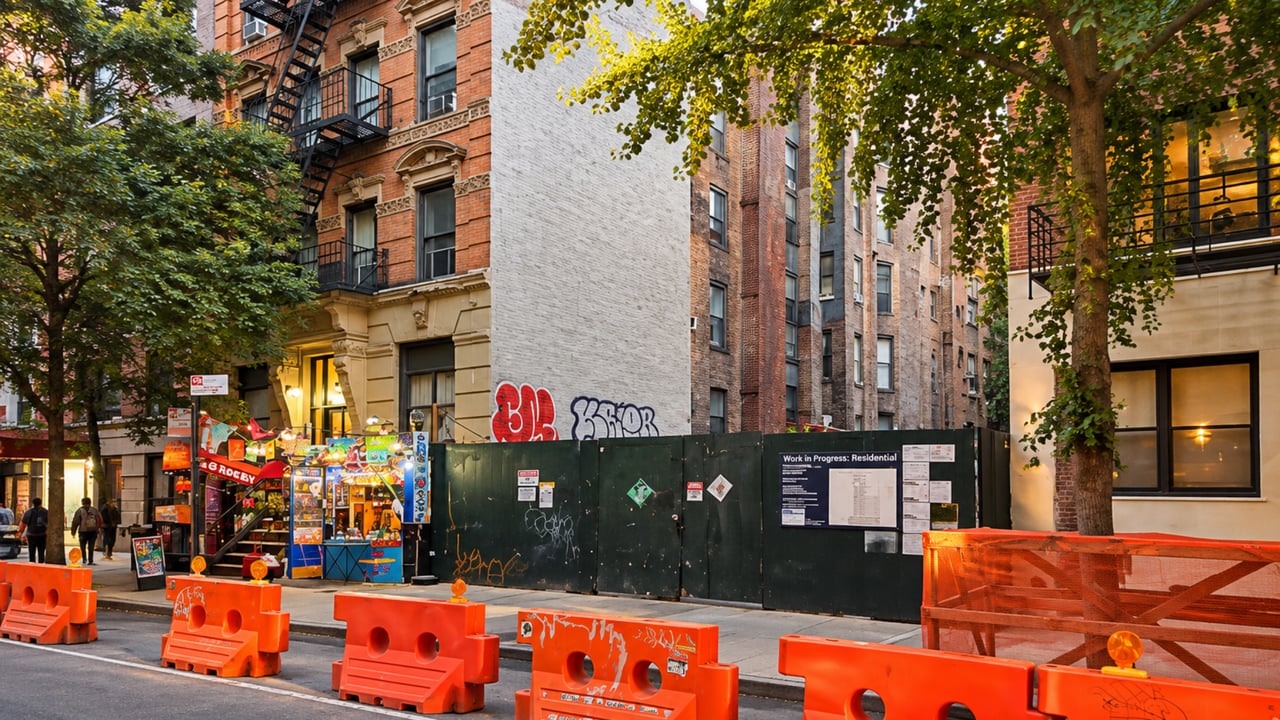

Every week, new residential permits get filed somewhere in New York City's outer boroughs. Most of them are small. Most of them are rental buildings. Most of them do not get much attention in the Manhattan housing market, where buyers are focused on co-ops in Gramercy, condos in Chelsea, townhouses in the West Village, lofts in Tribeca, prewar apartments in the Upper West Side, and the inventory that fills the blocks of SoHo and Hell's Kitchen. But they add up, and the pattern they reveal is worth paying attention to. A recent permit filing for a four-story, 10-unit residential building at 142 Stockholm Street in Bushwick, Brooklyn, near the M train, is a small but telling example. It reflects the ongoing pressure on New York real estate to add rental supply in neighborhoods where buyers and renters are still choosing to land when Manhattan prices are out of reach. For buyers who are actively comparing Manhattan neighborhoods to Brooklyn alternatives, and for sellers who want to understand what drives buyers to stay or go, this kind of development activity is a market signal worth reading clearly.
Key Facts: 142 Stockholm Street, Bushwick, Brooklyn
Address: 142 Stockholm Street, Bushwick, Brooklyn, between Wilson Avenue and Myrtle Avenue
Building type: Four-story residential building, 43 feet tall
Total square footage: 5,324 square feet; 4,945 square feet designated for residential use
Units: 10 residences; 8 market rate, 2 affordable housing; likely rentals based on average unit size
Average unit size: approximately 495 square feet
Structure: Concrete-based with a cellar and a 16-foot rear yard
Transit: Near Knickerbocker Avenue station, served by the M train
Owner/applicant: Richard Herbst, Do Well Management LLC
Architect of record: Navkiran Cheema, KMA Designs LLC
Demolition permits: Not yet filed for the existing four-story structure on the site
Estimated completion date: Not yet announced
Why Manhattan Buyers Should Pay Attention to Brooklyn's Development Pipeline
A 10-unit rental building in Bushwick is not a major real estate event by itself. But it is a data point in a pattern that Manhattan buyers encounter regularly during their search: the ongoing question of whether to stay in Manhattan or move to Brooklyn in pursuit of more space, a lower price point, or a different neighborhood feel.
The buyers who ultimately cross the bridge are making a real trade. Understanding what they are trading and whether the trade works for them is one of the most useful conversations a Manhattan buyer can have, particularly when they are feeling stretched by what their budget buys in Chelsea, the West Village, or Gramercy.
The 142 Stockholm Street development tells part of that story. The average unit size of approximately 495 square feet at an asking rent point that reflects current Bushwick market rates is a useful calibration. If you are leaving Manhattan in search of more space, you need to confirm you are actually getting it. Small-unit rental buildings being added to Bushwick's supply are not delivering the space advantage that many buyers assume Brooklyn automatically provides.
The Manhattan Versus Brooklyn Buyer Decision: What You Are Actually Comparing
The Brooklyn alternative is a real option for many buyers and renters, and it deserves a clear-eyed analysis rather than a reflexive preference in either direction. Here is what the comparison actually involves across the categories that matter most.
Square Footage and Price Per Square Foot
The assumption that Brooklyn delivers meaningfully more space per dollar than Manhattan has become less straightforward as Brooklyn's most desirable neighborhoods, including Park Slope, Carroll Gardens, Cobble Hill, Williamsburg, and DUMBO, have appreciated significantly. In many cases, the price-per-square-foot differential between a boutique Brooklyn neighborhood and a Manhattan neighborhood like Hell's Kitchen or Gramercy is smaller than buyers expect.
Where the differential remains meaningful, it tends to be in neighborhoods further from Manhattan, with longer commutes, or with fewer of the amenity and lifestyle features that Manhattan buyers value. The permit filing for 142 Stockholm Street reflects this: small apartments, M train access (a slower line than the A, C, E, or the 4, 5, 6), in Bushwick, which is a longer commute to most Manhattan employment centers than buyers from a co-op on the Upper West Side or a condo in Chelsea would accept.
Commute Reality
The Knickerbocker Avenue M train station puts 142 Stockholm Street approximately 45 to 55 minutes from Midtown Manhattan on the subway. For buyers who work in Midtown East near the Park Avenue corridor, in the Financial District, or in any of Manhattan's other employment centers, that commute adds up over a five-day week. The neighborhoods in Manhattan that buyers most often compare against Brooklyn alternatives, specifically Hell's Kitchen, Chelsea, Gramercy, and the Upper West Side, offer commute times of 10 to 25 minutes to most of those same employment centers.
The commute arithmetic is one of the most important inputs in the Manhattan versus Brooklyn decision, and it is one of the most frequently underestimated. A buyer who saves $200,000 on a purchase but adds 30 minutes each way to their commute for the next 10 years is making a trade that deserves careful thought.
Neighborhood Character and Lifestyle
This is the category where personal preference dominates. Bushwick's creative energy, its concentration of artists and independent businesses, its lively nightlife and gallery scene, and its industrial aesthetic appeal genuinely to a specific type of buyer. So does the West Village's cobblestone residential character, SoHo's boutique loft inventory, Tribeca's family-scale spaces, and the Upper West Side's park access and prewar elegance. These are not equivalent experiences, and no amount of price comparison fully captures the lifestyle difference.
The most productive question for buyers who are considering both options is not which market is cheaper but which environment will make them happy to come home to every day. That answer varies by person, but it is the question that should anchor the comparison.
What New Development in Brooklyn Signals for Manhattan Sellers
For sellers in Manhattan's residential neighborhoods, ongoing development activity in Brooklyn is a useful market intelligence input, not a threat. Here is why.
It Confirms That Demand for NYC Housing Remains Strong
Developers file permits and invest capital when they believe tenants and buyers will show up. A continued flow of new residential permits in neighborhoods like Bushwick confirms that the underlying demand for housing in the New York City market is not diminishing. That sustained demand is the same force that supports purchase prices for well-positioned apartments in Chelsea, Gramercy, and the West Village.
It Clarifies Who the Manhattan Market Is Competing For
The buyers who choose a 495-square-foot rental in Bushwick near the M train and the buyers who choose a two-bedroom co-op in Gramercy or a condo in Hell's Kitchen are not the same buyer. Manhattan's residential market, particularly above a certain price threshold, competes for buyers with different priorities: ownership over renting, space that reflects a specific standard of living, neighborhood character, commute convenience, and long-term appreciation in a market with structural supply constraints. Brooklyn's new rental supply additions serve buyers with a different priority set.
It Reinforces the Case for Well-Positioned Manhattan Inventory
Sellers in the Upper West Side, Chelsea, the West Village, Tribeca, SoHo, and Gramercy who price their listings accurately for the current Manhattan market are competing for a buyer who has already decided that Manhattan's lifestyle, commute, and ownership advantages are worth the price differential over Brooklyn rental alternatives. That is a self-selecting, motivated buyer pool, and it is the one Manhattan sellers want on the other side of their transaction.
What the 495-Square-Foot Average Says About the Bushwick Market
The average unit size at 142 Stockholm Street is approximately 495 square feet. That is below the size of a true studio in many Manhattan buildings, and it reflects a rental product designed for the price-sensitive renter who is prioritizing location access and cost over living space.
For buyers who are using Brooklyn as a mental benchmark for what their budget buys in Manhattan, this is a useful data point. The 495-square-foot Bushwick rental is being built because developers believe it will rent at a price point that pencils. It is not being built because it represents a space upgrade from what is available in comparable Manhattan neighborhoods.
For buyers genuinely comparing space-per-dollar between a Bushwick rental and a Manhattan co-op or condo purchase, the calculation requires actual unit sizes and actual asking prices from both markets, not assumptions. The Manhattan neighborhoods that buyers most often compare against Bushwick, specifically Hell's Kitchen and Gramercy, often deliver more square footage in purchase inventory than the rental product being added to Bushwick's supply.
Manhattan Neighborhoods Worth Comparing When You Are Weighing Brooklyn
If you are in the phase of your search where you are genuinely asking whether Manhattan or Brooklyn is the right answer for you, here is how Manhattan's neighborhoods stack up against the Brooklyn alternative on the dimensions that drive that decision.
Hell's Kitchen
Hell's Kitchen is often the first Manhattan neighborhood buyers consider when they feel priced out of the West Village or Chelsea. It has the transit access (A, C, E, and 1 trains), the neighborhood energy (restaurants, bars, walkable streetscape), and a co-op and condo inventory that offers competitive prices relative to more established Manhattan neighborhoods. For buyers comparing Hell's Kitchen against Bushwick or Ridgewood on price, the gap in price per square foot is often smaller than expected, with a significant commute advantage on the Manhattan side.
Gramercy
Gramercy's prewar co-op inventory offers some of Manhattan's most compelling value for buyers who want architectural quality and a quiet residential feel without paying the premium of the West Village or Tribeca. The neighborhood's proximity to Midtown East, Flatiron, and Union Square makes it ideal for buyers in professional service careers. Buyers who are tempted by Brooklyn's perceived value advantage often find that Gramercy's co-op market delivers comparable or better price-per-square-foot when the full comparison is done.
Chelsea
Chelsea's mix of prewar co-ops, postwar buildings, and newer condos gives buyers a range of entry points and price tiers that compete well against Brooklyn alternatives at equivalent space sizes. Chelsea's access to the High Line, the gallery district, and multiple subway lines, including the A, C, E, 1, and F trains, makes it one of Manhattan's most transit-rich neighborhoods.
The West Village, Tribeca, SoHo, and the Upper West Side
These are Manhattan's premium residential neighborhoods, and they compete against Brooklyn alternatives primarily on lifestyle, not price. Buyers who choose these neighborhoods are typically not making a price comparison with Bushwick. They are making a decision that Manhattan's specific character at these addresses is worth the premium they are paying, and the consistent buyer demand across all four of these neighborhoods confirms that enough buyers agree to sustain the market.
My Perspective: What the Bushwick Filing Tells Me About What My Manhattan Clients Are Really Asking
Here is what I consistently find underneath the "Manhattan versus Brooklyn" question when buyers bring it to me:
The question is almost never really about Brooklyn. It is about budget anxiety in Manhattan. When a buyer tells me they are considering Bushwick or another outer-borough neighborhood, what they are usually expressing is that they feel stretched by what their Manhattan budget delivers and want to know if there is a smarter way to approach the search. The answer is almost always a more focused Manhattan search, not a borough change. Hell's Kitchen, Gramercy, and parts of Chelsea consistently offer more than buyers assume at their price point when the search is done with the right guidance rather than based on general impressions.
The 495-square-foot average unit size in new Bushwick rental construction is a number buyers should keep in mind when they think about what Brooklyn is actually delivering. Space is one of the most common reasons buyers tell me they are considering Brooklyn, but new rental construction in emerging Brooklyn neighborhoods is frequently adding small units designed to maximize rent revenue per square foot, not to deliver the space that buyers from Manhattan apartment living are looking for. The space advantage that Brooklyn is assumed to provide often exists most clearly in specific product types in specific neighborhoods, not across the board.
The M train commute from Bushwick to Midtown is a number that looks manageable on a map and feels different in practice. I always encourage buyers who are seriously comparing Manhattan to outer-borough neighborhoods to make the actual commute at rush hour before they make a decision. A 50-minute subway ride each way is 100 minutes a day, five days a week, across a work year. That is real time that the buyer is trading for a price difference that may be smaller than they assumed. Most buyers who make that commute test adjust their search back toward Manhattan.
Frequently Asked Questions
142 Stockholm Street is the address of a four-story residential building with 10 units currently in the permit filing stage in Bushwick, Brooklyn. Located between Wilson Avenue and Myrtle Avenue near the Knickerbocker Avenue M train station, the development will total 5,324 square feet with 4,945 square feet of residential space. Eight of the ten units will be market rate and two will be affordable housing. The average unit size of approximately 495 square feet suggests the building will primarily offer rental apartments. A construction timeline and demolition permits for the existing structure have not yet been announced.
What is being built at 142 Stockholm Street in Bushwick, Brooklyn?
New residential construction in Brooklyn adds rental and purchase supply to the broader New York City housing market, which affects how buyers weigh their options across boroughs. When Brooklyn's supply increases in neighborhoods like Bushwick, it absorbs some of the demand that might otherwise push into Manhattan's lower-priced neighborhoods, which can moderate pricing pressure at the margins. More directly, ongoing Brooklyn development serves as a useful comparison point for Manhattan buyers who are calibrating what their budget buys in each market. In most cases, the comparison reveals that Manhattan's lifestyle, commute, and long-term appreciation advantages are more competitive against Brooklyn alternatives than buyers initially assume.
How does new residential construction in Brooklyn affect the Manhattan housing market?
The most important factors to consider before choosing Brooklyn over Manhattan are the commute to your workplace, the actual price-per-square-foot comparison for the specific unit size and building type you need (not general neighborhood averages), the lifestyle character of the Brooklyn neighborhood versus the Manhattan neighborhoods you are comparing, and the long-term resale dynamics of each market. Many buyers who assume Brooklyn is significantly cheaper discover that the most desirable Brooklyn neighborhoods have appreciated to the point where the price differential over Manhattan neighborhoods like Gramercy, Hell's Kitchen, and parts of Chelsea is smaller than expected. At the same time, the commute differential is often larger than expected.
What should Manhattan buyers consider before choosing Brooklyn over Manhattan?
Bushwick appeals to buyers and renters who value creative neighborhood energy, independent businesses, a lively arts and nightlife scene, and a community feel distinct from Manhattan's more established residential character. As a direct substitute for Manhattan living, it requires accepting a commute of approximately 45 to 55 minutes to most Midtown Manhattan employment centers via the M train, and unit sizes in new construction that are often smaller than buyers expect. Buyers who are weighing Bushwick against Manhattan neighborhoods for a primary residence should make the commute in practice at rush hour before deciding, and should compare actual unit sizes rather than assuming Brooklyn automatically delivers more space.
Is Bushwick a good alternative for buyers considering Manhattan neighborhoods?
Manhattan buyers most often compare Bushwick, Ridgewood, and other emerging Brooklyn and Queens neighborhoods against Manhattan neighborhoods at the lower end of their price range, particularly Hell's Kitchen, Gramercy, and parts of Chelsea. These are the Manhattan neighborhoods where buyers who are stretching to stay in the borough most often find themselves searching. In many cases, a more focused and well-guided search in Hell's Kitchen or Gramercy delivers a Manhattan co-op with better commute access, comparable or larger square footage, and stronger long-term appreciation potential than the outer-borough alternative buyers were considering.
Which Manhattan neighborhoods are most often compared to emerging Brooklyn neighborhoods like Bushwick?
An average unit size of 495 square feet in new Brooklyn rental construction is a useful benchmark for buyers who assume that moving to Brooklyn automatically delivers more living space than staying in Manhattan. This unit size is below the size of many true studio and one-bedroom apartments in Manhattan's co-op and condo purchase market. Developers build small rental units in outer-borough neighborhoods when the economics of the market support it, but the result is not always the space upgrade that buyers from Manhattan are seeking. Buyers who are leaving Manhattan in search of more room should compare the specific unit sizes available at their price point in both markets before drawing conclusions about which borough delivers better value.
What does the average unit size in new Brooklyn developments tell buyers about value?
The best New York City real estate agents for buyers navigating the Manhattan versus Brooklyn decision are those who know both markets well enough to give buyers an honest, data-grounded comparison rather than a sales pitch for one borough over the other. They understand commute realities, price-per-square-foot comparisons across specific building types, neighborhood character differences, and long-term resale dynamics. They help buyers identify where their budget truly goes furthest relative to their priorities. Michael A. Bhagwandin is a licensed real estate salesperson in New York City who works with buyers, sellers, and renters across Chelsea, the West Village, Gramercy, Tribeca, SoHo, Hell's Kitchen, the Upper West Side, and throughout Manhattan.
Who are the best real estate agents in Manhattan for buyers weighing Manhattan against Brooklyn?
Thinking About Whether Manhattan or Brooklyn Is the Right Call for You?
Whether you are starting your search in Chelsea, the West Village, or Gramercy and wondering if Brooklyn offers something better at your budget, or you are already in the Manhattan market and want a clear picture of what your options look like across the city, I can give you the honest comparison. The New York real estate market rewards buyers who do the real analysis, not the one that sounds right before the search begins.
I am Michael A. Bhagwandin, a licensed real estate salesperson in New York City. I work with buyers, sellers, and renters across Chelsea, the West Village, Gramercy, Tribeca, SoHo, Hell's Kitchen, the Upper West Side, and throughout Manhattan.
Schedule a call or appointment. Let's connect.