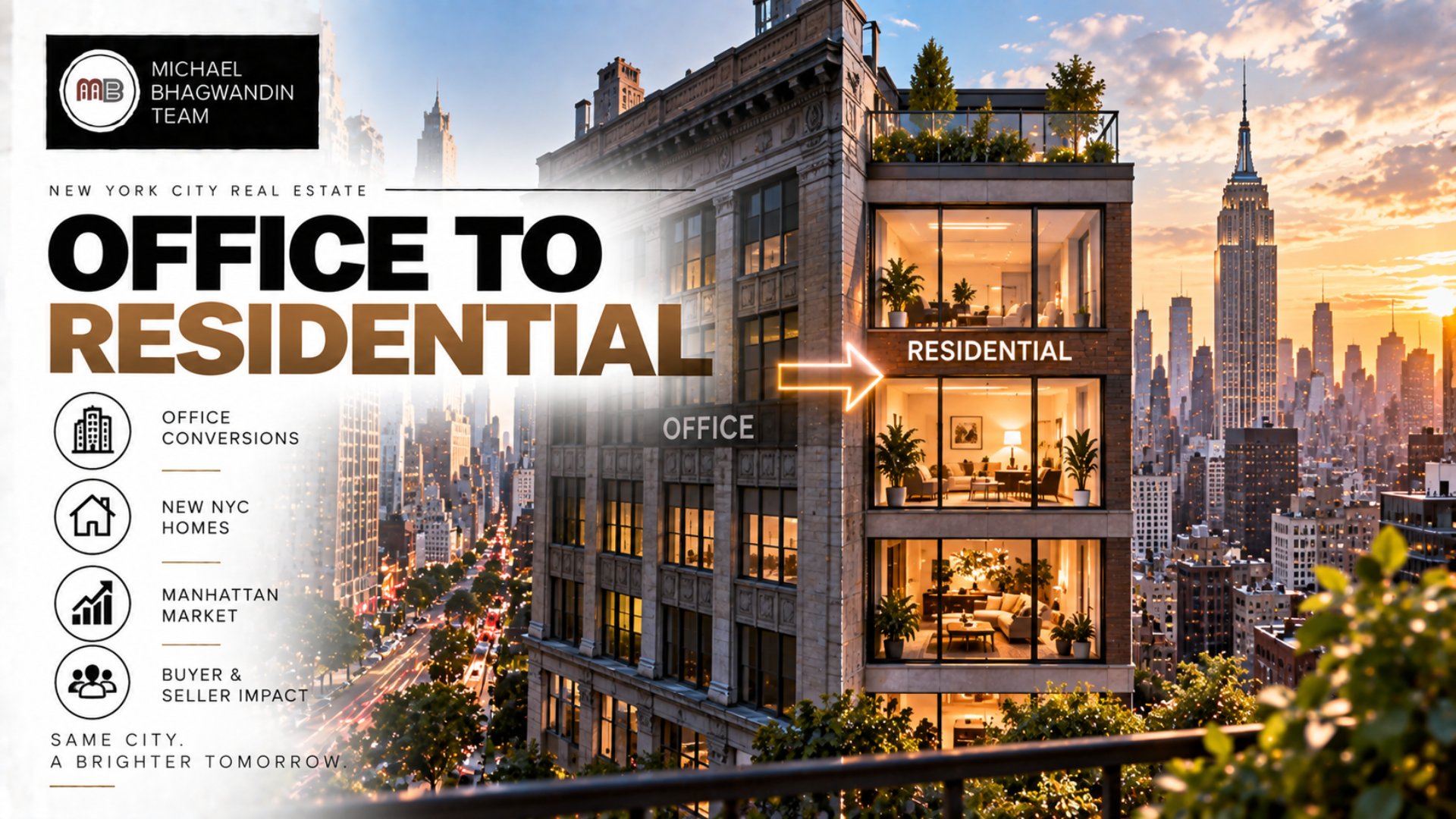
Manhattan is not running out of ideas for how to solve its housing shortage. It is running out of office buildings to convert. The office-to-residential conversion trend that gained momentum during the pandemic has not slowed, despite occasional scares along the way, including a July incident at a former Pfizer building in Midtown. If anything, the deals closing and the loans being funded in September 2026 confirm that the momentum behind these projects is accelerating. In New York real estate, the week brought a $219 million construction loan for a 168-unit apartment conversion at 100 Wall Street in the Financial District, a George Soros-owned landmarked building at the corner of Broadway and West 57th Street being marketed openly for residential repositioning, a quick 30 percent profit on a SoHo office flip, and a Ritz-Carlton branded condo conversion in Brooklyn Heights. For buyers and sellers active in the Manhattan housing market, specifically in Chelsea, the West Village, Gramercy, Tribeca, SoHo, Hell's Kitchen, and the Upper West Side, the story behind these deals is worth reading carefully. New supply is coming, sophisticated capital is betting on it, and the neighborhoods closest to the conversion activity are the ones that will feel the impact first.
Key Facts: Office-to-Residential Conversions and NYC Real Estate News, September 2026
Northwind Group provided a $219 million construction loan for the partial conversion of 100 Wall Street, a 29-story, 463,000-square-foot office building in the Financial District; the loan expands an earlier $95 million predevelopment loan for the same project
BLDG Management and David Werner Real Estate Investments are converting floors 2 through 11 of 100 Wall Street into 168 rental apartments; floors 15 through 29 will remain office space
Residential amenities at 100 Wall Street will include a pool, fitness center, sports simulator, theater, and a rooftop deck with an outdoor kitchen
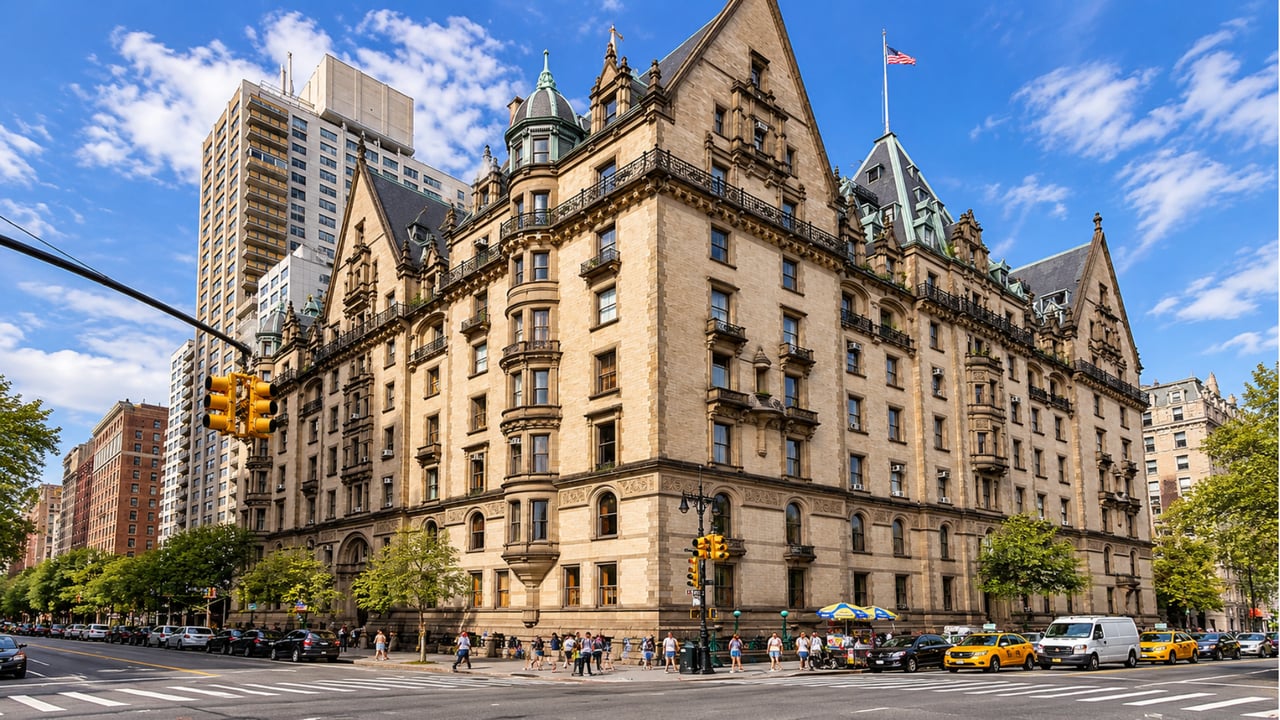
George Soros's Soros Fund Management has put 224 West 57th Street (the Argonaut building) on the market at approximately $100 million; the 140,000-square-foot, 1909 landmarked property at the corner of Broadway and West 57th Street is being marketed by Newmark specifically as a residential conversion opportunity
Tishman Speyer is in contract to sell 148 Lafayette Street in SoHo to Shorenstein Properties for approximately $135 million, a 30 percent markup over the $105.5 million Tishman paid just 16 months ago; the 12-story, 155,000-square-foot building is 100 percent leased to tenants including General Catalyst and AI firm Graphite
The Chetrit Organization maintained ownership of 404 Fifth Avenue (a Midtown office building) by purchasing its own debt at a discount and winning a foreclosure sale against its own entity
Marriott International and SomeraRoad are transforming the historic Hotel Bossert in Brooklyn Heights into the Ritz-Carlton Residences, Brooklyn's first branded condo project; the 14-story building will include a restaurant by Danny Meyer's Union Square Hospitality Group, with sales managed by Serhant New Development
Corcoran CEO Pamela Liebman offered agents a $1,000 per listing advertising budget to pull homes from StreetEasy and promote them through alternative channels; agents note that sellers retain the ultimate listing decision
What Is Driving the Office-to-Residential Conversion Wave in Manhattan?
The answer starts with a gap. Manhattan has an acute housing shortage and a significant inventory of older office buildings that are no longer competitive in the current market for corporate tenants. Buildings that were built before the modern standard for floor plates, ceiling heights, HVAC systems, and amenity packages cannot attract the quality-conscious tenants that today's flight-to-quality leasing market demands. Their owners face a choice: invest heavily to upgrade, or repurpose.
For a growing number of building owners, repurposing into residential use is the more compelling answer. The city needs housing. The buildings are already standing in well-located, transit-connected neighborhoods. The conversion creates new apartments without requiring a vacant lot. And financing is available from lenders who see the demand for residential units in those locations as a reliable foundation for a construction loan.
Ran Eliasaf, whose Northwind Group provided the $219 million loan for 100 Wall Street, put it plainly: "The city is in dire need of additional housing, and this is a great way to deliver that with a mix of affordable and free market in good buildings, good locations with good sponsors." That sentence captures the investment thesis: location quality, mixed-income structure, and experienced development teams are the combination that makes these projects fundable.
100 Wall Street: What the Financial District Conversion Means for Residential Buyers
The partial conversion of 100 Wall Street is a meaningful addition to the downtown residential supply picture. Floors 2 through 11 of a 29-story building will become 168 rental apartments, while floors 15 through 29 stay as office space. The mixed-use outcome is increasingly common in office conversions: preserve the income from quality office tenants on the upper floors where views command premium rents, and deliver residential units on the lower and mid floors where natural light and outdoor space access make residential use more practical.
The amenity package for the residential portion, including a pool, fitness center, sports simulator, theater, and a rooftop deck with an outdoor kitchen, reflects the same expectation that buyers at every price tier have increasingly established: residential buildings need to deliver amenity experiences, not just square footage.
For buyers considering downtown Manhattan, the 100 Wall Street conversion adds to the supply that is reshaping the Financial District and its adjacent neighborhoods. Tribeca remains the premium residential destination closest to this development, and buyers who are weighing Tribeca against other Manhattan neighborhoods should understand that the broader downtown supply story, including conversions like this one, is adding new rental inventory that will influence the supply-demand balance in the area over the next two to three years as these projects complete.
The Soros Argonaut Building: Why West 57th Street Matters for Manhattan Buyers
The marketing of 224 West 57th Street as a residential conversion opportunity is a different kind of signal from the 100 Wall Street loan. This is a 1909 landmarked property at one of Midtown Manhattan's most prominent intersections, being offered to the market with a clear pitch: turn this into "best-in-class residences" in "one of Manhattan's most desirable and supply-constrained submarkets."
The West 57th Street corridor sits at the northern edge of Midtown, immediately south of Hell's Kitchen and the Upper West Side. Buyers in both of those neighborhoods should pay attention to what happens at 224 West 57th. A successful conversion of this scale and pedigree, in a landmarked 1909 building with an irreplaceable address, would deliver a new competitive option at the top tier of the residential market in that part of Manhattan.
For buyers currently searching in Hell's Kitchen and the Upper West Side, the timeline matters: the Argonaut building is only entering the sale process now. A completed conversion is likely three to five years away. The near-term residential market in those neighborhoods is unaffected. But for buyers making long-term decisions, it is useful context about how the supply picture in that part of Manhattan may evolve.
The SoHo Office Flip: What a 30 Percent Gain in 16 Months Tells Residential Buyers
When Tishman Speyer sells 148 Lafayette Street in SoHo for $135 million after paying $105.5 million just 16 months ago, the story is not really about one building. It is about the confidence of sophisticated real estate capital in the value trajectory of SoHo as a location.
Tishman is not a speculative operator. The firm leased the building to 100 percent occupancy during its ownership, renewing and expanding leases with General Catalyst and AI firm Graphite, and then sold into a market willing to pay a 30 percent premium in 16 months. That kind of trade reflects a market where buyers of quality SoHo real estate believe the location's value is still appreciating.
For residential buyers in SoHo, the commercial confidence signal is relevant. The same neighborhood characteristics that make 148 Lafayette Street worth a 30 percent premium in 16 months for a commercial investor (location, building quality, tenant demand, and neighborhood prestige) are the same characteristics that support residential values in SoHo's loft and boutique condo market. When experienced commercial operators are willing to pay and receive premiums of this size in a neighborhood, it is a strong endorsement of that neighborhood's underlying value.
The Ritz-Carlton in Brooklyn Heights: What Branded Luxury's Expansion Tells Manhattan Sellers
Marriott International and SomeraRoad are converting the historic Hotel Bossert in Brooklyn Heights into the 50th standalone Ritz-Carlton Residences, making it Brooklyn's first branded luxury condo project. The 14-story building will include a restaurant by Danny Meyer's Union Square Hospitality Group and sales managed by Serhant New Development.
For Manhattan sellers, the Ritz-Carlton's first Brooklyn address is worth understanding as a market signal. Branded luxury residential developments, the kind that attach a recognized hospitality brand to a condo building to justify premium pricing and attract affluent international buyers, have historically been a Manhattan phenomenon. The extension of that concept to Brooklyn Heights confirms that capital is following buyer demand across borough lines.
This does not mean Manhattan's branded luxury market is losing ground. It means the market for premium branded residences is growing. The buyers who will purchase in the Ritz-Carlton Brooklyn Heights are a specific subset: those who want hotel-level service in a residential setting, a Danny Meyer restaurant downstairs, and an address that signals arrival. Manhattan sellers whose buildings and apartments carry comparable prestige signals, including well-maintained prewar co-ops in Gramercy, boutique condos in the West Village, and loft buildings in Tribeca and Chelsea, are competing for a buyer pool that is making quality comparisons across a broader geographic range than they did five years ago.
The Corcoran and StreetEasy Situation: What It Means for Buyers Right Now
The news that Corcoran CEO Pamela Liebman offered agents $1,000 per listing to pull homes from StreetEasy and promote them through alternative channels is the kind of industry story that can directly affect buyers who are navigating the Manhattan market.
Here is the practical implication: when listings are pulled from major search portals, buyers who rely solely on those portals to find homes will see a narrower picture of what is available. The buyer who is searching independently on StreetEasy or a comparable platform may not see every listing that fits their criteria. The buyer who is working with an agent who has full market access, including relationships across brokerages and direct access to listings that may not appear on every portal, will see the complete picture.
This is not a new principle. It has always been true that the buyer with the most complete information is in the best negotiating position. The Corcoran situation is simply a timely reminder. If you are searching for an apartment in Chelsea, the Upper West Side, the West Village, or any of Manhattan's competitive neighborhoods, working with an agent who is plugged into the full market, not just what shows up on the platform you check before bed, is one of the most practical steps you can take.
How the Conversion Wave Affects Manhattan's Key Neighborhoods
Hell's Kitchen and the Upper West Side
The Argonaut building at West 57th and Broadway sits at the gateway between Midtown, Hell's Kitchen, and the Upper West Side. A future residential conversion of that landmarked property would bring premium inventory to one of Manhattan's most transit-rich corners. Buyers currently active in Hell's Kitchen and the Upper West Side should understand the timing: any new supply from that building is years away. The current market in both neighborhoods remains supply-constrained, which supports pricing for well-positioned listings.
SoHo and Tribeca
The Tishman Speyer flip at 148 Lafayette Street is a direct commercial confidence vote on SoHo. Combined with the downtown residential supply additions coming from the 100 Wall Street conversion in the adjacent Financial District, these are market signals that support the continued strength of both SoHo and Tribeca as premium residential addresses. Buyers in both neighborhoods are purchasing in locations where experienced institutional capital is making confident, profitable bets.
Gramercy, Chelsea, and the West Village
These neighborhoods are not directly in the conversion pipeline based on this week's news, but they are among the first residential destinations for the professionals and executives who will occupy the office portions of hybrid conversion buildings like 100 Wall Street. The continued health of Midtown and downtown office markets, combined with the residential supply being added through conversions, supports the consistent demand for well-located residential neighborhoods in the mid-Manhattan range where Gramercy, Chelsea, and the West Village sit.
My Perspective: What This Week's News Tells Me About Where the Market Is Heading
Here is how I read the week's developments as someone working with buyers and sellers across Manhattan's residential neighborhoods:
The office-to-resi conversion pipeline adds supply, but the timeline is long enough that buyers should not wait for it. A $219 million construction loan at 100 Wall Street signals conviction in the project, but the 168 apartments coming from that conversion will not be available for lease for likely two to three years from now. Buyers who are waiting for new downtown supply from conversions to soften the market before they act are making a bet on a timeline that is genuinely uncertain. The current market in the neighborhoods nearest to that pipeline, Tribeca, downtown, and adjacent areas, continues to move. The conversion story is a long-term supply addition, not a near-term market softener.
The 30 percent profit on 148 Lafayette Street in 16 months is one of the clearest signals I have seen recently of how institutional capital reads the SoHo market. When Tishman Speyer and Shorenstein Properties agree on a $135 million number for a SoHo building that traded at $105.5 million 16 months ago, they are collectively saying that SoHo's value has appreciated at a rate that justified a significant premium in a short period. For residential buyers in SoHo who are wondering whether the neighborhood is priced correctly or overpriced, the fact that two of the most sophisticated commercial operators in New York real estate are agreeing on that direction tells you something worth considering.
The Corcoran and StreetEasy situation is a reminder that the most informed buyer wins. In any market where listings may be withheld from public portals for reasons that have nothing to do with the buyer's needs, the buyer who has a well-connected agent with full market access is in a fundamentally better position than the buyer who is searching independently. This is especially true in competitive Manhattan neighborhoods like the West Village, Gramercy, and the Upper West Side, where the best listings at any given price point can move before they reach every platform.
Frequently Asked Questions
An office-to-residential conversion is a real estate development project in which an existing office building, or a portion of it, is repurposed and renovated to create residential apartments or condominiums. In Manhattan, these conversions have accelerated in response to two simultaneous conditions: a significant housing shortage that has kept residential demand strong, and a large inventory of older office buildings that cannot compete with modern, amenity-equipped office space and are therefore underperforming as commercial assets. Developers who acquire these buildings can often deliver new residential units in well-located, already-built structures, which is faster and in some cases more efficient than ground-up construction on vacant lots.
What is an office-to-residential conversion and how does it work in New York City?
Office-to-residential conversions add new apartment supply to Manhattan's housing market, which over time can reduce pressure on existing residential inventory and moderate price growth in neighborhoods near the conversion activity. In the near term, however, the pipeline effect is limited because most large conversion projects take two to four years from loan closing to first occupancy. Buyers should be aware that new supply from current conversion announcements will mostly enter the market in 2028 and beyond. The most direct effect for current buyers is on the rental market in neighborhoods adjacent to conversion projects, where new rental inventory from converted buildings will eventually compete with existing stock.
How does the office-to-resi trend affect housing supply in the Manhattan housing market?
100 Wall Street is a 29-story, 463,000-square-foot office building in Manhattan's Financial District. BLDG Management and David Werner Real Estate Investments are converting floors 2 through 11 into 168 rental apartments while retaining floors 15 through 29 as office space. Northwind Group provided a $219 million construction loan for the project, which expands an earlier $95 million predevelopment loan for the same development. Residential amenities at the building will include a pool, fitness center, sports simulator, theater, and a rooftop deck with an outdoor kitchen. A completion timeline has not been publicly announced.
What is happening at 100 Wall Street in the Financial District?
224 West 57th Street, known as the Argonaut building, is a 140,000-square-foot landmarked property built in 1909 at the corner of Broadway and West 57th Street in Midtown Manhattan. George Soros's Soros Fund Management has placed it on the market at approximately $100 million. The property is being marketed by Newmark specifically as a residential conversion opportunity, described as a chance to reposition a landmarked asset into premium residences in a supply-constrained Midtown submarket. Buyers in nearby Hell's Kitchen and the Upper West Side should monitor this project, as a successful conversion would add new premium supply to the gateway between Midtown and those neighborhoods, though completion would be several years away.
What is the Soros Argonaut building at 224 West 57th Street and why is it significant?
Tishman Speyer's sale of 148 Lafayette Street in SoHo for $135 million reflects a 30 percent premium over the $105.5 million the firm paid just 16 months ago. The building is 100 percent leased to quality tenants including venture capital firm General Catalyst and AI company Graphite. This quick, profitable sale is a direct confidence signal from two of the most sophisticated commercial real estate operators in New York, both the seller and the buyer, that SoHo's value trajectory justifies a significant premium in a short period. For residential buyers in SoHo and neighboring Tribeca, institutional conviction of this magnitude on a nearby commercial asset supports the case for the neighborhood's continued residential value.
What does the Tishman Speyer SoHo building sale mean for residential buyers in that area?
Corcoran CEO Pamela Liebman offered agents a $1,000 per listing advertising budget to pull listings from StreetEasy and promote them through alternative channels. If some Corcoran-represented listings are removed from StreetEasy, buyers who rely exclusively on that platform to search may see a narrower picture of available inventory in the neighborhoods they are focused on. The practical takeaway for buyers is straightforward: working with a well-connected buyer's agent who has access to listings across all brokerages and channels, not just those appearing on any single portal, ensures you are seeing the full market. This is particularly important in competitive Manhattan neighborhoods where well-priced listings move quickly and incomplete information puts buyers at a disadvantage.
What does the Corcoran and StreetEasy situation mean for buyers searching in Manhattan right now?
The best New York City real estate agents for buyers and sellers following the office-to-residential conversion market and broader Manhattan real estate developments are those who read and understand the commercial signals that affect residential demand, track the conversion pipeline by neighborhood, stay current on listing availability across all platforms and brokerages, and help their clients act on complete and accurate information rather than partial pictures of the market. Michael A. Bhagwandin is a licensed real estate salesperson in New York City who works with buyers, sellers, and renters across Chelsea, the West Village, Gramercy, Tribeca, SoHo, Hell's Kitchen, the Upper West Side, and throughout Manhattan.
Who are the best real estate agents in Manhattan for buyers navigating a rapidly changing market?
Want to Understand What This Week's Manhattan Real Estate Moves Mean for Your Decision?
Whether you are buying in SoHo, searching for a co-op in Gramercy, evaluating a condo in Chelsea or the West Village, planning to list on the Upper West Side, or trying to figure out what the conversion pipeline means for Tribeca and Hell's Kitchen, I can help you read the market clearly and act with confidence.
I am Michael A. Bhagwandin, a licensed real estate salesperson in New York City. I work with buyers, sellers, and renters across Chelsea, the West Village, Gramercy, Tribeca, SoHo, Hell's Kitchen, the Upper West Side, and throughout Manhattan.
Schedule a call or appointment. Let's connect.