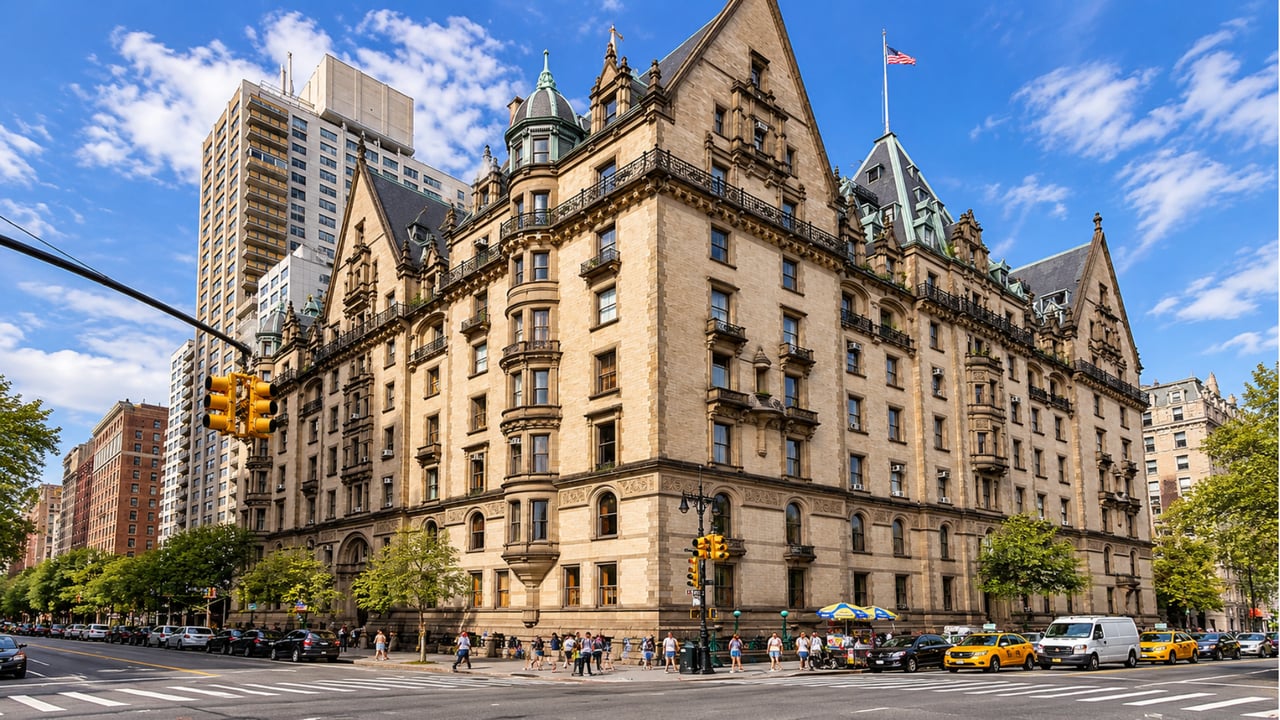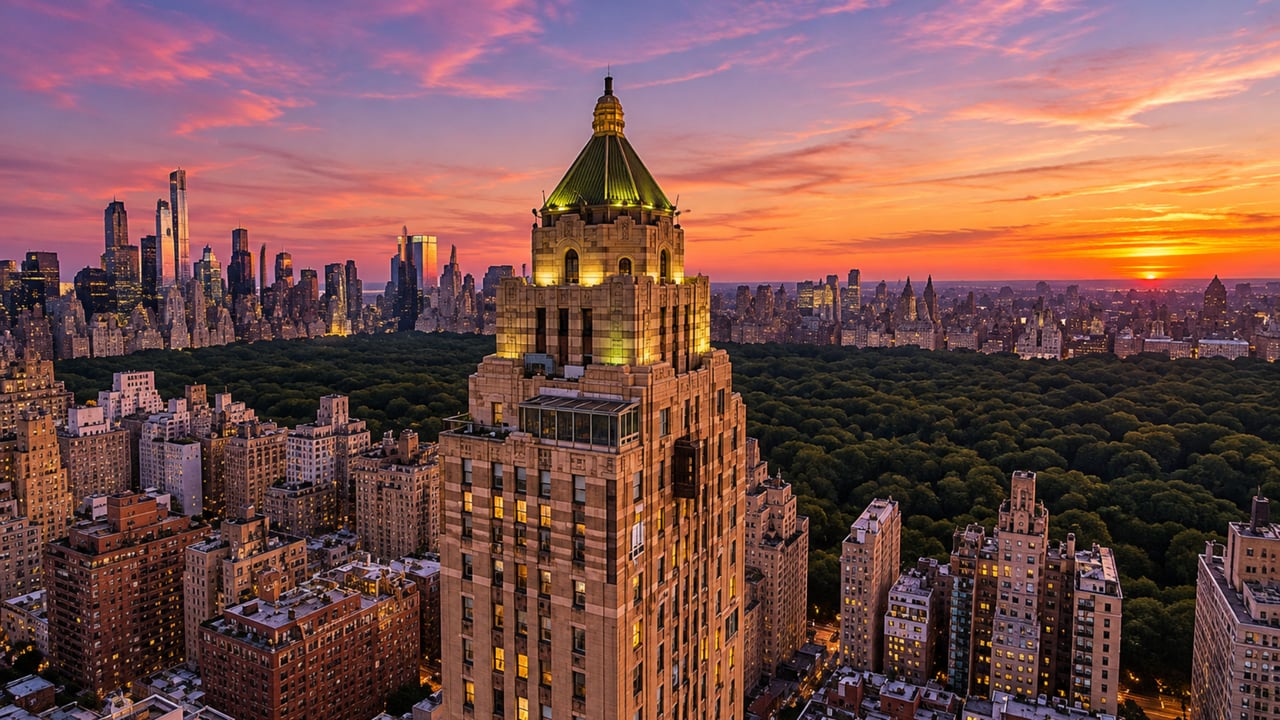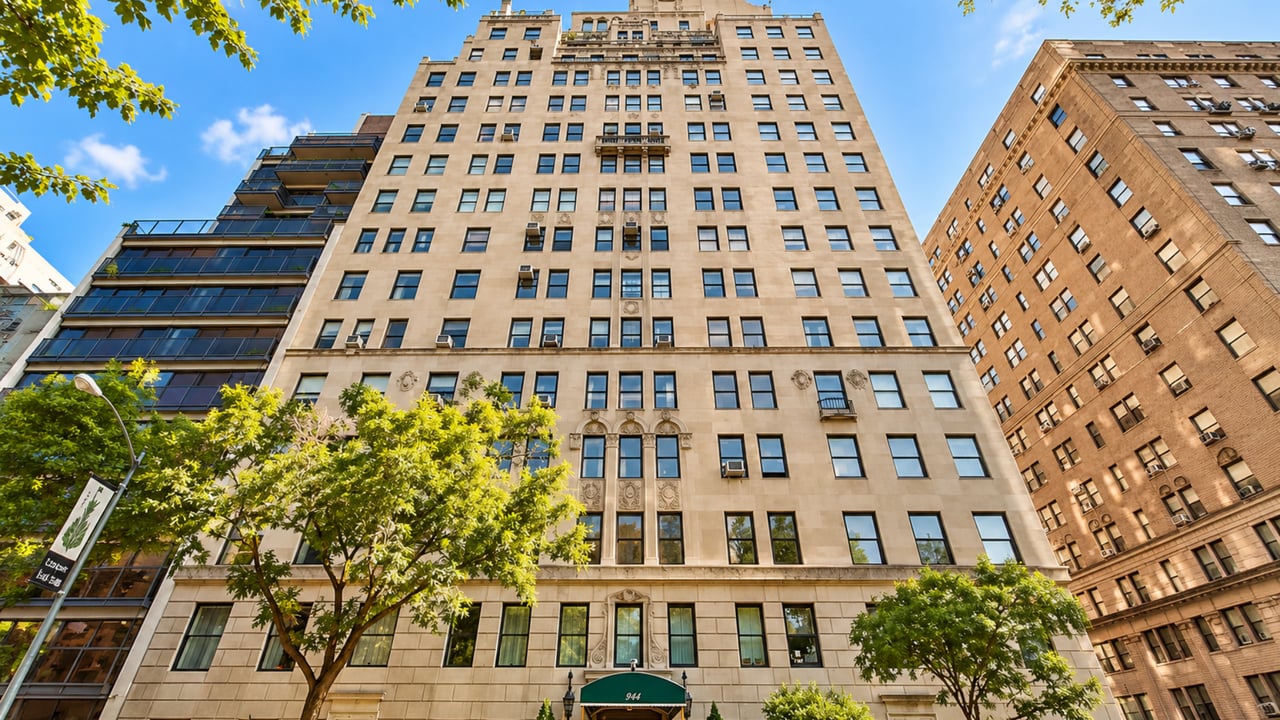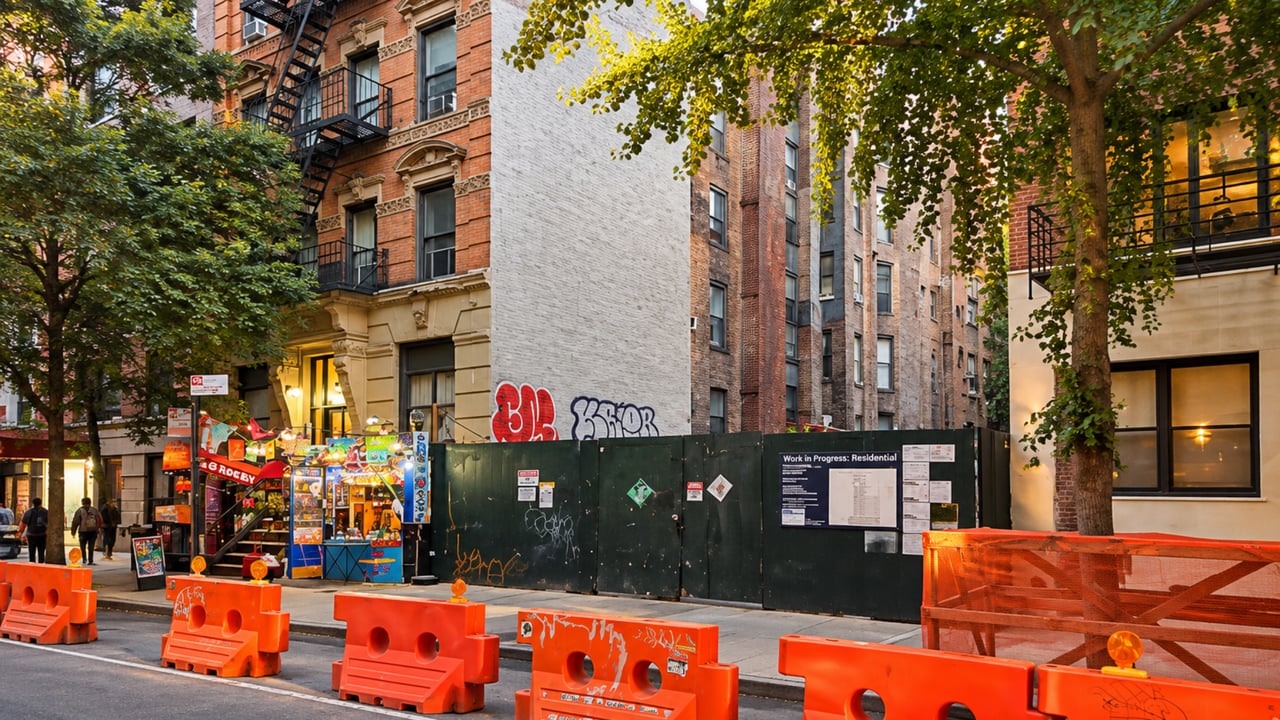
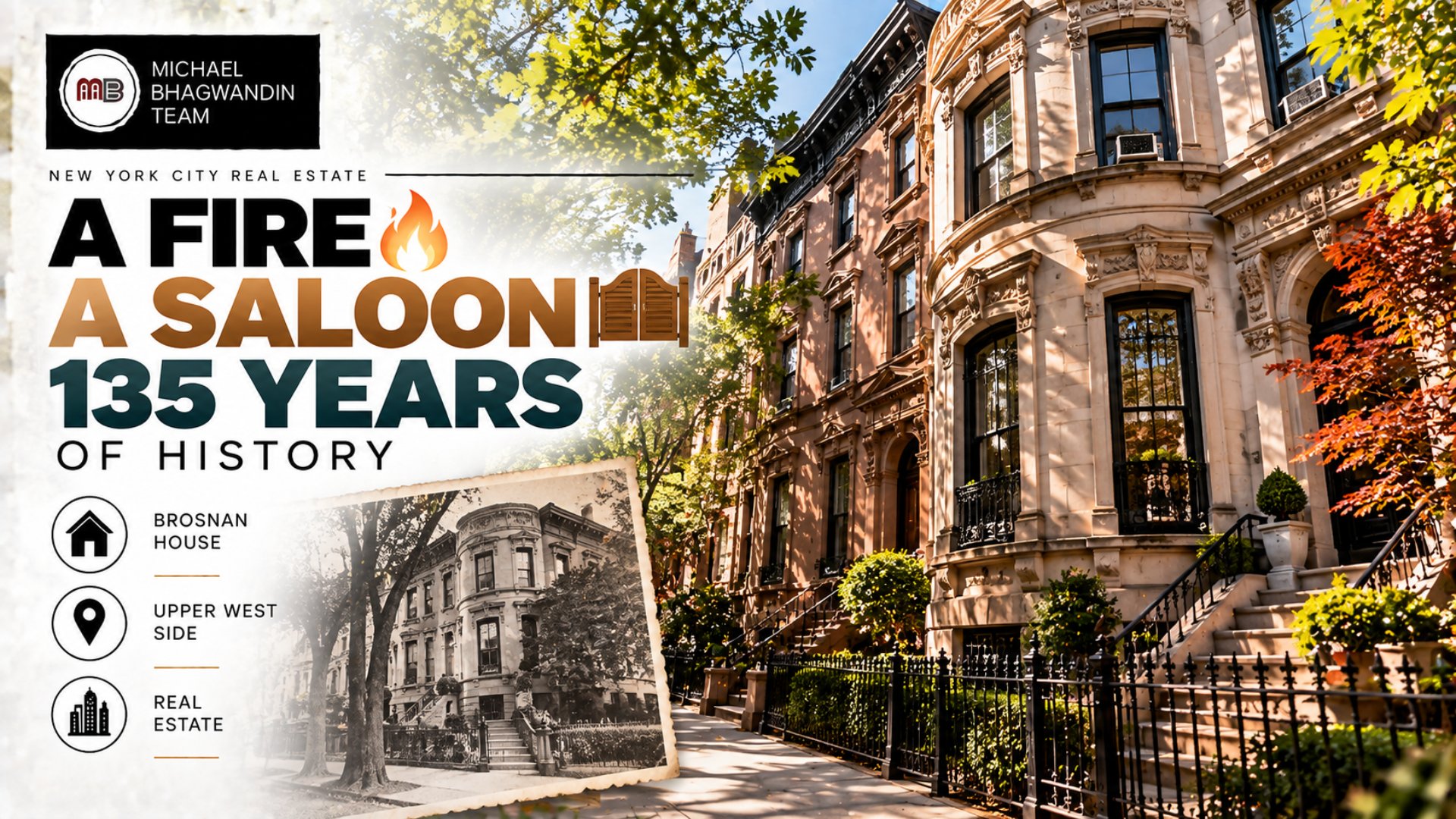
There is a rowhouse at 146 West 74th Street on the Upper West Side that has outlasted fire, the death of its original owner, Prohibition, rooming house conversions, a 1972 renovation, and a 1988 penthouse addition it keeps politely hidden from the street. It was built in 1889 by a woman developer at a time when women rarely held title to anything, designed in the Queen Anne style by architect Edward L. Angell, and purchased by an Irish immigrant wine importer who supplied altar wine to Roman Catholic churches and ran what the New York Times called one of the best-known saloon and wine import businesses in the country. If you follow the Manhattan housing market at all, you already know that the Upper West Side's identity is inseparable from exactly this kind of layered, storied residential history. In New York real estate, buildings like the Brosnan House are not relics. They are the reason buyers choose the Upper West Side over a glass tower, and the reason sellers of historic rowhouses in neighborhoods like the West Village, Gramercy, Tribeca, and Chelsea can make a case for their properties that no amount of new construction can replicate. The story of 146 West 74th Street is a compressed version of everything the Manhattan housing market rewards when it rewards it best: character, endurance, and the kind of architectural integrity that you cannot build from scratch in 2026.
Key Facts: The Brosnan House at 146 West 74th Street
Address: 146 West 74th Street, Upper West Side, Manhattan (between Columbus and Amsterdam avenues)
Built: 1889
Architect: Edward L. Angell
Developer and contractor: Mary J. Coar
Architectural style: Queen Anne
Original construction cost: $25,000 per house (approximately $902,000 in 2026 dollars)
Exterior: Rough-cut brownstone at basement and parlor levels; red brick upper floors; dog-legged box stoop; stone hood with foliate designs and turret-like finials over double-doored entrance; three-sided bay above entrance supporting a small balcony to the third floor
Original features: Colorful stained glass transoms at first through third floors; Queen Anne multi-pane upper floor sashes; all lost in later renovations
Original owner: John and Catharine Brosnan; five children
John Brosnan's business: Saloon and wine import operation at 157 Fulton Street; well-known wine trader nationally; supplier of altar wine to Roman Catholic churches; born in Ireland
Fire: February 13, 1899, during a severe snowstorm; upper two floors badly damaged; $8,000 structural loss plus $10,000 in furnishings (approximately $721,000 combined in today's dollars)
John Brosnan died March 7, 1899, attributed to shock and cold exposure on the night of the fire
Prohibition: Volstead Act passed October 1919; Brosnan's saloon on Fulton Street closed; newspapers throughout the city covered the closure
1943: Building operated as a rooming house
1972: Renovation converted the building into duplex and triplex apartments
1988: Penthouse level added, not visible from the sidewalk
Current condition: Survives remarkably intact despite the loss of original stained glass and Queen Anne sashes
Source: Brick Underground / Daytonian in Manhattan by Tom Miller
The Building That Time Could Not Quite Erase
The Brosnan House is one of five rowhouses that Mary J. Coar developed on West 74th Street in 1888. That detail is easy to skim past, but it deserves a moment: in 1888, Mary Coar was not just the owner of the project. She filed as the contractor of record. In a decade when women had extraordinarily limited access to business credit, property rights, and legal recognition as contracting parties, she planned, financed, and delivered five upscale rowhouses in what would become one of Manhattan's most enduring residential blocks.
The architecture she commissioned from Edward L. Angell was in the Queen Anne style, which was at the height of its popularity in American urban residential design in the 1880s and 1890s. Queen Anne buildings are not subtle. They are detailed, textured, asymmetrical, and deliberately rich in surface decoration. The Brosnan House exemplifies the style: the juxtaposition of rough-cut brownstone on the lower floors against red brick above, the stone hood carved with foliate designs and turret-like finials over the entrance, the three-sided bay window above the stoop supporting a small balcony, and the stained glass transoms that originally filled the window openings on the first three floors. This was a building designed to be noticed and to communicate something specific about the people who lived inside it.
The Brosnan family fit that intention well. John Brosnan was not a rough saloon keeper in the tabloid sense of the word. His business at 157 Fulton Street was an upscale wine import operation that the New York Times described as "well known among wine traders throughout the United States." He specialized in Spanish, Portuguese, and other European wines, traded internationally, and supplied altar wine to Roman Catholic churches, a business that was as much about religious community as commerce.
The Fire That Changed Everything
On February 13, 1899, during a severe snowstorm, a fire badly damaged the upper two floors of the Brosnan House. The structural loss was $8,000; the loss in furnishings was $10,000. In today's dollars, the combined loss was approximately $721,000.
The financial damage was significant. The human cost was worse. Three weeks after the fire, on March 7, 1899, John Brosnan died. The New York Herald attributed his death to shock and exposure to the cold on the night of the fire. He had been ill for two weeks.
What followed is the less dramatic but equally instructive part of the story. His daughters Mary and Angela Brosnan did not allow the family's real estate holdings to pass out of their hands. They became active real estate operators in their own right, buying and renting properties singly and together throughout the early decades of the 20th century. Catharine Brosnan retained the house at 146 West 74th Street, and the family's presence on the block continued for years after John's death.
The Brosnan House was shaped by women who built it, women who inherited it, and women who continued operating it in the open real estate market, at a time when that was the exception rather than the rule.
From Altar Wine to Prohibition: When the Saloon Had to Close
In October 1919, Congress passed the Volstead Act, enacting Prohibition and ending the legal operation of the Brosnan wine import and saloon business at 157 Fulton Street. The Brosnan siblings sold their lease. Newspapers throughout New York City covered the closure, which gives a sense of how prominent the establishment had become in the city's commercial and social life.
The arc from a well-regarded wine import business that supplied altar wine to Catholic churches to a casualty of Prohibition is a very Manhattan story. The city's commercial and residential landscapes were shaped repeatedly by forces that had nothing to do with the quality or character of the businesses and buildings involved. What survives is what was built well enough and adaptable enough to outlast those forces.
The Brosnan House survived. The saloon did not.
How the Building Became What It Is Today
The history of a building is often told through the changes made to it. By 1943, 146 West 74th Street was operating as a rooming house, a fate common to large single-family rowhouses across Manhattan's residential neighborhoods in the mid-20th century as the economics of household staffing and single-family ownership changed. A 1972 renovation converted it into duplex and triplex apartments, the kind of reimagining that has preserved dozens of rowhouses across the Upper West Side, the West Village, Gramercy, and other historic neighborhoods by giving the square footage a contemporary occupancy structure that could sustain the building's ongoing maintenance.
In 1988, a penthouse level was added, invisible from the sidewalk. That detail is architecturally significant. An addition that does not disrupt the building's street presence is an addition that respects what gives the building its value. The Upper West Side's most thoughtfully managed historic buildings have consistently used this principle: you can add square footage, you can update systems, but you protect the facade. The original stained glass transoms and Queen Anne upper floor sashes were lost along the way, which the Daytonian notes with appropriate regret. But the building itself, the stoop, the brownstone base, the brick upper floors, the bay and balcony, the carved stone hood over the entrance, remains remarkably intact at 135 years old.
What the Brosnan House Tells Buyers and Sellers Across Manhattan's Neighborhoods
The Upper West Side
The Brosnan House is a specific example of a general truth about the Upper West Side market: the neighborhood's residential character is not an accident. It was built deliberately, in the 1880s and 1890s, by developers like Mary J. Coar who saw the blocks between Central Park and Riverside Drive as an opportunity to create something lasting. The buyers who choose the Upper West Side today are, whether they frame it this way or not, choosing to live in the outcome of that vision. For sellers of prewar rowhouses and brownstones in the neighborhood, the history behind the building is not sentimental context. It is a genuine value driver, and it should be articulated clearly to any buyer who is comparing a 135-year-old rowhouse to a contemporary condo.
The West Village and Gramercy
The West Village and Gramercy are Manhattan's other primary markets for buyers who are actively choosing historic residential architecture over contemporary alternatives. In both neighborhoods, the logic is the same as on the Upper West Side: the built environment was shaped over a century ago, and the result is a neighborhood character that cannot be created from new. Buyers in these neighborhoods are typically willing to accept certain trade-offs in building systems, floor plans, and amenity packages in exchange for the architectural and historical identity that only comes with age. Sellers should understand that this trade-off is the basis of their pricing power.
Tribeca, SoHo, and Hell's Kitchen
Tribeca and SoHo attracted buyers who prized industrial conversion lofts in the same way Upper West Side buyers prize Queen Anne rowhouses: for the irreplaceable character of a specific era of building. Hell's Kitchen's historic tenements and walkup buildings are similarly valued by buyers who want Manhattan authenticity at a price point that new construction cannot match. In all three neighborhoods, the market lesson from the Brosnan House is the same: buildings that have survived 135 years have survived because they were built with integrity and managed with care, and that durability carries market value that outlasts any renovation trend.
Chelsea
Chelsea's residential landscape includes both 19th-century rowhouses and prewar buildings that share the Brosnan House's architectural heritage. Chelsea buyers who are drawn to the neighborhood's historic blocks often share the same sensibility as Upper West Side rowhouse buyers, and sellers on Chelsea's historic streets should understand that the story behind their building is as much a part of the listing as the square footage.
My Perspective: What 146 West 74th Street Tells Me About the Buyers I Work With
Here is what I take from the Brosnan House when I am working with buyers and sellers across Manhattan's historic residential neighborhoods:
Historic rowhouses on the Upper West Side command a premium because buyers are purchasing a story as much as a structure. The architectural character of an 1889 Queen Anne rowhouse on West 74th Street cannot be reproduced at any cost by new construction, and that irreplaceability is priced into the market in a way that is entirely rational. When I work with buyers who are comparing a prewar rowhouse to a contemporary condo in the same neighborhood, I ask them to think about what the building will communicate to future buyers in 20 years. The rowhouse that has been there for 135 years is more likely to still be telling that story than the glass tower that opened in 2024.
The 1988 penthouse addition at 146 West 74th Street, invisible from the sidewalk, is a model for how the best historic property improvements work in Manhattan. You add what contemporary buyers need without sacrificing the street presence that gives the building its value and its neighborhood identity. Sellers in prewar buildings across Chelsea, Gramercy, and the Upper West Side who have made improvements to their apartments should lead with that framing: what did we add, and what did we protect? Buyers in these markets are evaluating both sides of that question.
Mary J. Coar's role as developer and contractor in 1888 is not a footnote in the Brosnan House story. It is the opening chapter. She built five rowhouses on a single block of the Upper West Side in an era when women's property rights and business opportunities were severely limited. The legacies of that work are still being bought and sold in today's market. When I work with buyers and sellers on the Upper West Side and across Manhattan, I find that the buildings with the most interesting histories are almost always the ones with the most interesting futures, because they were built by people who were making a deliberate long-term bet on a neighborhood. The Upper West Side was that bet in 1888. It is still paying off.
Frequently Asked Questions
Queen Anne rowhouses on the Upper West Side hold value in the Manhattan housing market for several interconnected reasons. First, they cannot be replicated: the materials, craftsmanship, and architectural vocabulary of an 1880s Queen Anne building reflect a construction culture that no longer exists, which means the supply of these buildings is permanently fixed. Second, they are deeply embedded in the neighborhood's identity. Buyers who choose the Upper West Side for its character are choosing it in part because of buildings like the Brosnan House. Third, well-maintained Queen Anne rowhouses and brownstones have historically shown strong resale performance on a per-square-foot basis because they attract a buyer pool that is actively seeking something the broader market cannot provide. For sellers in these buildings, the architectural character is not a selling point to mention in passing. It is the primary driver of demand.
What makes Queen Anne rowhouses on the Upper West Side valuable in today's Manhattan housing market?
Buyers purchasing historic rowhouses or brownstones in Manhattan should understand several important considerations before going to contract. Historic construction materials, including original brownstone facades, plaster walls, and original windows, require specialized maintenance and repair that can cost more than equivalent work in newer buildings. Buildings with landmark designation or in historic districts have restrictions on exterior modifications that buyers should understand clearly before purchasing. Insurance premiums for historic construction can be higher than for newer buildings, and some insurance products are specific to this property type. The building's systems, including plumbing, electrical, and HVAC, may have been updated at various points in the building's history, and buyers should conduct thorough due diligence on the condition and age of all systems regardless of how intact the exterior appears. Working with an agent who specializes in historic Manhattan residential properties can help buyers navigate these considerations with confidence.
What should buyers know about purchasing historic rowhouses or brownstones in Manhattan?
A building's history affects its resale value in New York real estate in measurable and well-documented ways. Buildings with significant architectural provenance, notable original owners, or documented connections to New York City's cultural or commercial history tend to command attention in the market that purely contemporary buildings cannot generate. That attention translates into a broader buyer pool and more robust demand when the property comes to market. In neighborhoods like the Upper West Side, the West Village, Gramercy, and Tribeca, where historic architectural character is a primary driver of buyer preference, the story behind a specific building is a real and quantifiable component of its value. Sellers who can articulate that story clearly, with historical context and accurate architectural description, consistently perform better in the market than sellers who present the same building as simply an address and a set of square footage numbers.
How does a building's history affect its resale value in New York real estate?
The Brosnan House at 146 West 74th Street was built in 1889 and has undergone several significant changes over its 135-year history. The building was purchased by John and Catharine Brosnan after its completion and operated as a single-family residence until a fire in February 1899 damaged the upper two floors. John Brosnan died shortly after from shock and cold exposure sustained on the night of the fire. His daughters Mary and Angela Brosnan continued as real estate operators in his absence. By 1943, the building was operating as a rooming house. In 1972, a renovation converted it into duplex and triplex apartments. In 1988, a penthouse level was added above the original roofline, positioned so that it is not visible from the sidewalk. The original stained glass transoms and Queen Anne upper floor sashes were lost during the building's various renovations, but the facade, stoop, brownstone base, and primary architectural features survive remarkably intact.
How has 146 West 74th Street changed over its 135-year history?
Manhattan's richest concentrations of historic rowhouses and brownstones are found on the Upper West Side, the West Village, Gramercy, Tribeca, Chelsea, SoHo, and Hell's Kitchen. The Upper West Side and the West Village contain some of the most intact 19th-century residential streetscapes in the city, with blocks of rowhouses built in Queen Anne, Romanesque Revival, and Renaissance Revival styles that have changed remarkably little in their street-facing character over 100 years. Gramercy's prewar co-ops and Italianate brownstones are similarly well-preserved. Chelsea's historic rowhouse blocks and Tribeca's cast-iron loft buildings, while architecturally distinct, reflect the same era of deliberate, high-quality residential and commercial development that produced buildings still actively trading in today's market at strong prices. SoHo and Hell's Kitchen offer buyers historic fabric at a broader range of price points, from converted industrial lofts to classic walkup buildings with original prewar detailing.
What neighborhoods in Manhattan have the most historic rowhouses and brownstones?
The Queen Anne style was a popular architectural mode in American urban residential design in the 1880s and 1890s, characterized by asymmetrical facades, richly decorated surfaces, mixed materials, and a deliberate departure from the more restrained classical styles that preceded it. In Manhattan, Queen Anne rowhouses typically combined rough-cut brownstone or sandstone at the lower floors with red or tan brick on the upper floors, and used stone carving, bay windows, stained glass transoms, decorative hoods over entrances, and varied window shapes to create a building that was visually complex and immediately distinctive. For Manhattan buyers today, the Queen Anne style matters because it produces buildings with strong street presence, authentic material character, and a level of decorative craftsmanship that contemporary construction does not attempt to match. Buyers who purchase in Queen Anne buildings are investing in architectural identity that is both irreplaceable and deeply embedded in the neighborhoods where it exists.
What is the Queen Anne architectural style and why does it matter to Manhattan buyers?
The best New York City real estate agents for buyers interested in historic properties on the Upper West Side are those who understand the specific architectural, financial, and regulatory landscape of historic Manhattan residential real estate, who can help buyers navigate the due diligence process for buildings with complex histories and layered renovation records, and who know how to evaluate and communicate the value of historic character in a market where that character is the primary driver of demand. They work across the full range of Manhattan's historic residential neighborhoods, from the Upper West Side to the West Village, Gramercy, Chelsea, Tribeca, SoHo, and Hell's Kitchen, and they understand how a building's story translates into market performance across all of those contexts. Michael A. Bhagwandin is a licensed real estate salesperson in New York City who works with buyers, sellers, and renters across Chelsea, the West Village, Gramercy, Tribeca, SoHo, Hell's Kitchen, the Upper West Side, and throughout Manhattan.
Who are the best real estate agents in Manhattan for buyers interested in historic Upper West Side properties?
Interested in the Historic Character That Makes the Upper West Side and Manhattan's Neighborhoods Worth Buying Into?
Whether you are a buyer who wants to understand what a 135-year-old rowhouse offers that a 2024 condo cannot, a seller in a prewar building who wants to tell the right story to the right buyer, or someone who is still deciding which of Manhattan's historic neighborhoods, the Upper West Side, Chelsea, the West Village, Gramercy, Tribeca, SoHo, or Hell's Kitchen, is the right fit for your next chapter in New York real estate, I can help you think through the full picture.
I am Michael A. Bhagwandin, a licensed real estate salesperson in New York City. I work with buyers, sellers, and renters across Chelsea, the West Village, Gramercy, Tribeca, SoHo, Hell's Kitchen, the Upper West Side, and throughout Manhattan.
Schedule a call or appointment. Let's connect.