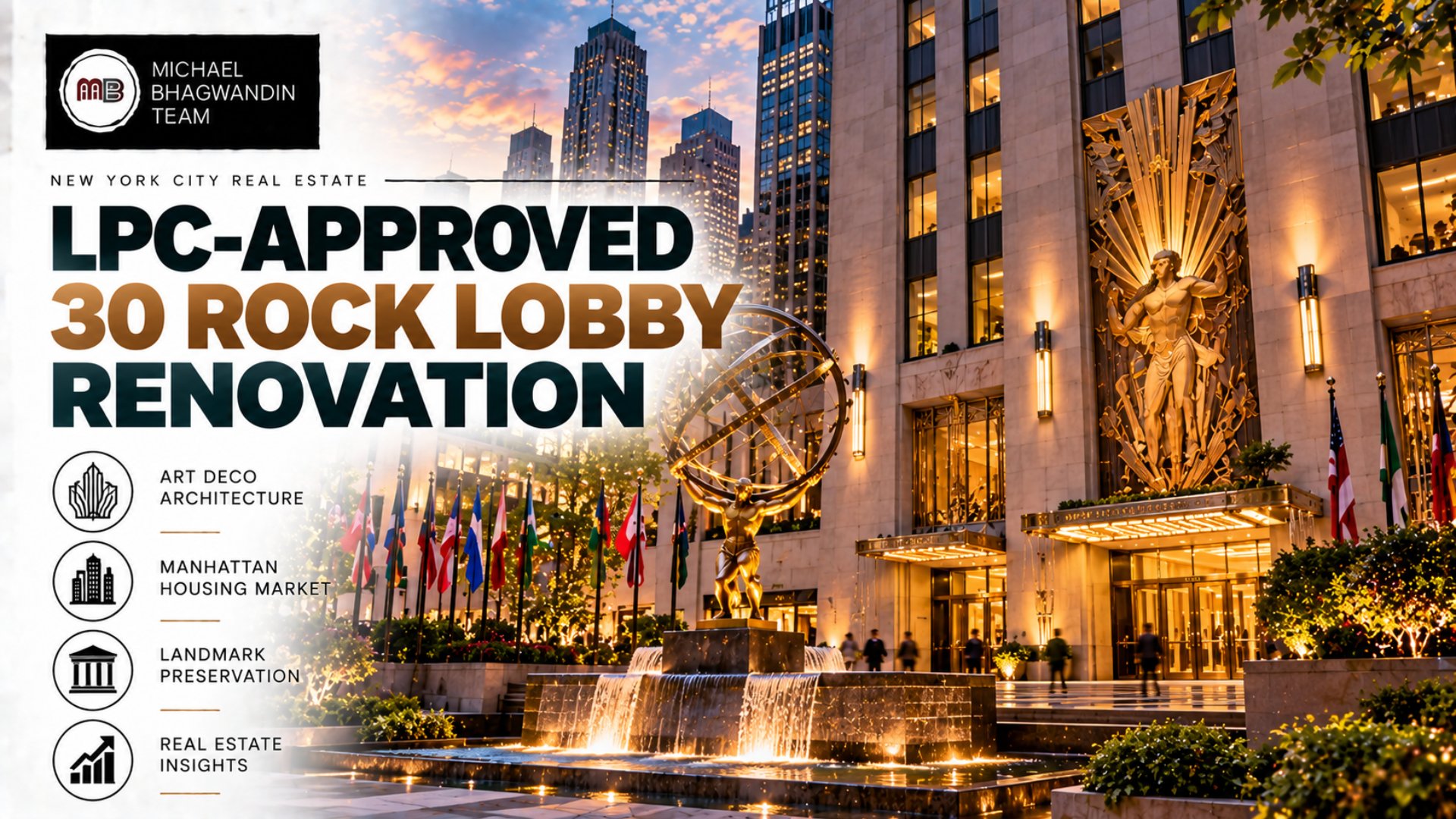
On September 15, 2026, the Landmarks Preservation Commission voted 10 to 0 to approve a lobby renovation for 30 Rockefeller Plaza, the 66-story, 850-foot Art Deco tower in Midtown Manhattan that most New Yorkers know as the Comcast Building and the rest of the world knows simply as 30 Rock. The renovation, designed by Gabellini Sheppard Associates for owner Tishman Speyer, will update the lobby reception, corridors, and lighting while preserving and enhancing the interior landmark's original 1931-33 Art Deco character, including enhanced lighting of Josep Maria Sert's American Progress murals. For buyers and sellers in the Manhattan housing market, a commercial lobby renovation might seem like category-adjacent news at best. But the LPC process that just approved this project, and the continued investment in preserving and enhancing Manhattan's most significant Art Deco buildings, tells a story that matters directly to anyone who owns, or is thinking about buying, a prewar apartment in New York real estate. The same architectural period that produced 30 Rock's celebrated lobby also produced the prewar co-op and condo buildings that buyers consistently pay a premium for in Chelsea, the West Village, Gramercy, Tribeca, SoHo, Hell's Kitchen, and the Upper West Side. Understanding why that architectural heritage holds its value, and how the LPC process shapes what owners of landmarked residential properties can and cannot do, is genuinely useful knowledge for Manhattan buyers and sellers in 2026.
Key Facts: The 30 Rockefeller Plaza Lobby Renovation
Building: 30 Rockefeller Plaza (Comcast Building), Midtown Manhattan
Height: 66 stories, 850 feet
Built: 1931 to 1933, designed by the Associated Architects
Interior landmark designation: 1985
Owner: Tishman Speyer
Renovation designer: Gabellini Sheppard Associates
LPC vote: 10-0-0 in favor, Certificate of Appropriateness approved at September 15, 2026 hearing; hearing record closed the same day without modifications required
Manhattan Community Board 5 landmarks committee: issued unanimous recommendation in support of the proposal prior to the LPC hearing
Renovation scope:
Main lobby reception: modified desk, new movable glass-and-metal screen to partition office access ahead of the turnstile line
North and south corridors: new lounge areas with movable benches with integrated glass, custom cast-glass details, area rugs, leather seating; existing planters and HVAC enclosures refinished in dark bronze
Elevator vestibules: new 9-inch dropped ceiling with perimeter cove lighting and recessed down lights replacing existing fixtures
Lighting: new linear LEDs, spotlights, and directional down lights throughout; existing fixtures re-lamped; continuous valance at Rockefeller Plaza entrance to wash light across the interior cast-glass facade
Stone cladding refinished; new brass fixtures and trim finished to match adjacent historic metalwork
Enhanced lighting above the entry to illuminate the lobby's murals, including Josep Maria Sert's American Progress
Gabellini Sheppard cited its prior LPC-approved work at 195 Broadway and the 45 Rockefeller Plaza lobby lighting as precedent
What Is an Interior Landmark and Why Does the LPC Protect It?
Most New Yorkers are familiar with the concept of a landmarked building: the exterior of a building receives historic designation, and any changes to the facade require approval from the Landmarks Preservation Commission. Interior landmarks are less commonly understood but equally significant.
An interior landmark designation applies to a specific interior space, typically a publicly accessible room or series of rooms, that the LPC has determined has historical, cultural, aesthetic, or architectural significance worthy of preservation. Interior landmarks in New York City include Grand Central Terminal's Main Concourse, the Woolworth Building lobby, the Cunard Building banking hall, and, since 1985, the lobby of 30 Rockefeller Plaza.
The designation matters because it places the lobby under LPC jurisdiction for any changes, no matter how the building's ownership changes or how market pressures evolve. Even the most powerful commercial landlord in Manhattan cannot simply renovate an interior landmark as they see fit. They must go through the Certificate of Appropriateness process, which requires presenting the proposed changes to the LPC at a public hearing, demonstrating that the changes are appropriate to the landmark's character, and obtaining a formal approval before any work begins. The 10-0 vote on September 15 is that approval.
For residential buyers and sellers, interior landmarks are directly relevant in a smaller number of cases, typically in institutional or historic residential buildings where common spaces carry their own designation. But the regulatory framework, the Certificate of Appropriateness, the Community Board review, and the public hearing process, is the same one that governs exterior landmark designations and historic district buildings throughout Manhattan's residential neighborhoods.
The Art Deco Connection to Manhattan's Residential Market
The lobby of 30 Rockefeller Plaza was designed by the Associated Architects and completed between 1931 and 1933, at the height of the Art Deco period in New York City. The same architectural era, and often the same design vocabulary, produced most of the prewar apartment buildings that command the strongest premiums in Manhattan's residential market today.
What Art Deco Architecture Looks Like in Manhattan Residences
The Art Deco buildings that buyers seek out in Gramercy, the Upper West Side, Chelsea, Tribeca, and the West Village share a set of design characteristics with 30 Rock's lobby: refined geometric ornament, high-quality materials including stone, brass, and cast plaster, generous proportions in common spaces, and a level of craftsmanship in decorative metalwork, elevator cabs, and lobby finishes that contemporary construction simply does not attempt to replicate.
In residential buildings, these features manifest as elegantly proportioned apartment entrances, detailed lobby millwork, pre-war mosaic or terrazzo floors, original brass fixtures, and the kind of building character that newer construction cannot manufacture from scratch at any price. Buyers who choose prewar Art Deco buildings in Manhattan are choosing a product that is permanently limited in supply, because the era that produced it is over.
Why Art Deco Buildings Hold Value in the Manhattan Housing Market
The supply-side argument for Art Deco residential real estate in Manhattan is straightforward: you cannot build more of it. Every well-maintained Art Deco co-op or condo building in Gramercy or the Upper West Side is one of a fixed number. That supply constraint, combined with consistent demand from buyers who specifically value the architectural character and historical identity of prewar buildings, has produced a long track record of strong performance in the Manhattan housing market.
The buildings also tend to hold their cultural cachet over time in a way that reflects favorably on their resale values. An apartment in a distinguished Art Deco building in the West Village or Chelsea benefits from the same association that makes the 30 Rock lobby an interior landmark: the recognition that what was built with this level of intention in the 1930s deserves to be protected and maintained, not replaced.
What the LPC Process Means for Manhattan Residential Buyers
Whether you are buying in a historic district, a landmarked building, or simply a prewar building in one of Manhattan's established residential neighborhoods, the LPC regulatory framework affects your ownership experience in ways that are worth understanding before you close.
Historic Districts vs. Individual Landmarks
Manhattan's residential neighborhoods include both individual landmark buildings and historic districts. In a historic district, the LPC has jurisdiction over exterior changes to all properties within the district, not just individually designated buildings. The West Village Historic District, the Greenwich Village Historic District, the Gramercy Park Historic District, and portions of other Manhattan neighborhoods are all subject to LPC review for any exterior alterations, including window replacements, facade repairs, rooftop additions, and changes to stoops or entries.
Buyers in these areas who plan to make exterior changes, including simple improvements like replacing windows with more energy-efficient units, need to understand that those changes require LPC approval and must use materials and designs that are consistent with the building's historic character. In most cases, this means replacing like with like: wood windows with wood windows, for example, rather than vinyl or aluminum. This is not a bureaucratic obstacle. It is a system that preserves the neighborhood character that made you want to buy there in the first place.
What You Can and Cannot Change
Inside your apartment, the LPC's jurisdiction is generally limited unless the interior space itself carries a designation, which is rare in residential settings. You can renovate your kitchen, update your bathrooms, and modernize your interior finishes without LPC review in most cases, even in a landmark building or historic district. What the LPC governs is the exterior of the building and the building's publicly visible architectural elements, which is the building's lobby, facade, roof profile, and storefronts where applicable.
For buyers who are considering purchasing in a building with a co-op or condo board that has its own rules about interior renovations, the LPC process is typically separate from and in addition to whatever board approval is required for your specific renovation plans.
The Building's Management Role in LPC Compliance
When you purchase in a co-op or condo building that is in a historic district or individually landmarked, the building's management and board bear the primary responsibility for LPC compliance on work that affects the building's common areas and exterior. As a shareholder or unit owner, you benefit from this oversight because it means the building's architectural character is being maintained by a professional team that understands the LPC process, the same way Tishman Speyer is managing the 30 Rock renovation.
For buyers evaluating a co-op or condo in a historic district, it is worth asking whether the building has an active relationship with an architect experienced in LPC work and whether the board has a track record of maintaining the building in good LPC standing. Buildings that have ignored LPC requirements or allowed unpermitted alterations to their exteriors create risk for all shareholders or unit owners, because remediation can be expensive and LPC enforcement is real.
What Tishman Speyer's Investment Signals for Manhattan's Residential Neighborhoods
The decision by Tishman Speyer to invest in a significant lobby renovation at 30 Rockefeller Plaza, rather than simply maintaining the space at minimum standard, communicates something about the firm's view of Midtown Manhattan's long-term commercial trajectory. Tishman Speyer is one of the most sophisticated commercial real estate operators in the world. They do not commit to landmark-quality renovation projects at their premier assets because they are uncertain about demand. They do it because they are confident that Midtown Manhattan will continue to be a destination for the professional and corporate tenants who occupy 30 Rock and the broader Rockefeller Center complex.
That confidence is relevant for buyers and sellers in the residential neighborhoods that surround and connect to Midtown's commercial core.
Hell's Kitchen
Hell's Kitchen sits immediately west of Rockefeller Center and has been one of the primary residential beneficiaries of Midtown's commercial vitality. The professionals who work in Midtown's office towers, including Rockefeller Center's 30 Rock tenants, have been a consistent source of demand for Hell's Kitchen's apartments, which offer Midtown access at price points more accessible than Chelsea or the West Village. Tishman Speyer's continued investment in 30 Rock is a signal about the ongoing strength of the employment base that drives Hell's Kitchen's residential demand.
Chelsea and the Upper West Side
Chelsea's design and media industries and the Upper West Side's cultural and professional households are both connected to Midtown's commercial ecosystem through the transit networks that run through the neighborhood. The A, C, E, and 1 trains that serve both neighborhoods feed directly into Midtown's office corridors. When Midtown's premier office buildings attract and retain the professional tenants who live in Chelsea and the Upper West Side, the residential demand those neighborhoods depend on remains stable.
Gramercy, the West Village, Tribeca, and SoHo
For buyers in Gramercy, the West Village, Tribeca, and SoHo, the connection to Midtown is less direct but still relevant. These neighborhoods attract buyers who may work in finance, law, media, or the creative industries, many of which are headquartered in or near Midtown's office towers. The health and desirability of Manhattan's premier commercial buildings is a background condition that supports the professional employment base that sustains demand across all of Manhattan's residential neighborhoods.
My Perspective: What the 30 Rock LPC Decision Means for the Buyers and Sellers I Work With
Here is how I read the 30 Rock lobby renovation approval when thinking about the buyers and sellers I work with across Manhattan's residential neighborhoods:
The LPC process that just approved the 30 Rock renovation is the same regulatory framework that affects buyers of apartments in Manhattan's historic districts and landmarked buildings, and most buyers dramatically underestimate how relevant it is to their ownership experience. When you purchase an apartment in a building within the West Village Historic District, the Gramercy Park Historic District, or any other LPC-designated area, any exterior modifications to your building require LPC review. Understanding the basics of that process before you buy, including what requires approval, what timeline you can realistically expect, and what kinds of changes are typically supported versus rejected, is part of the informed buyer's due diligence that most buyers skip. I make it a standard part of the conversation for any purchase in a historic area.
Art Deco architecture is one of the most consistently well-performing residential property types in the Manhattan market, and the continued public and private investment in preserving landmark Art Deco buildings is a signal about the enduring market value of this architectural period. The prewar Art Deco co-ops and condos in the Upper West Side, Gramercy, Chelsea, and Tribeca that buyers sometimes overlook in favor of contemporary new construction are buildings that have been tested and valued by the market for 80 to 90 years. The 30 Rock renovation is a reminder that the organizations with the deepest stakes in the long-term value of Manhattan's built environment, including Tishman Speyer, the LPC, and the community boards, are investing in preserving that character, not replacing it.
The 10-0 LPC vote with no modifications required and the hearing record closed the same day is a result that comes from preparation, expertise, and respect for the landmark's history, not from luck. When Gabellini Sheppard cited its prior work at 195 Broadway and 45 Rockefeller Plaza as precedent, they were demonstrating a track record that the commission could evaluate and trust. The lesson for owners of landmarked residential properties who want to make exterior modifications, or for co-op boards in historic districts who are planning facade or lobby work, is that the quality of the design and the professionalism of the team you bring to the LPC are the factors that determine whether your project moves efficiently or gets caught in a prolonged back-and-forth. Choosing the right architect for LPC work is not a formality. It is one of the most important project decisions you will make.
Frequently Asked Questions
The Landmarks Preservation Commission approved a renovation of the ground-floor lobby of 30 Rockefeller Plaza, the 66-story Art Deco tower in Midtown Manhattan also known as the Comcast Building. Designed by Gabellini Sheppard Associates for owner Tishman Speyer, the approved renovation will update the lobby reception area, corridors, and lighting while preserving and enhancing the interior landmark's original 1931-33 Art Deco character, including enhanced lighting for the lobby's murals by Josep Maria Sert. The LPC voted 10-0-0 in favor at its September 15, 2026 public hearing, and the Manhattan Community Board 5 landmarks committee had previously issued a unanimous recommendation in support. The approval matters because it demonstrates the continued investment by major Manhattan commercial landlords in maintaining and enhancing the city's most significant Art Deco buildings, which is directly relevant to understanding how architectural heritage affects value in Manhattan's residential market.
What was just approved for 30 Rockefeller Plaza and why does it matter?
A New York City interior landmark is a publicly accessible interior space that the Landmarks Preservation Commission has designated as having historical, cultural, aesthetic, or architectural significance. Unlike exterior landmark designations, which protect the outside of a building, interior landmark designation applies specifically to interior spaces and requires LPC approval for any changes to the designated space. The lobby of 30 Rockefeller Plaza was designated an interior landmark in 1985, recognizing its significance as one of the finest examples of Art Deco interior design in the United States. Other New York City interior landmarks include Grand Central Terminal's Main Concourse, the Woolworth Building lobby, and the Cunard Building banking hall. For buyers of residential property, interior landmark designations are rare but relevant in certain historic residential buildings where common spaces carry their own LPC designation.
What is a New York City interior landmark and how is it different from an exterior landmark?
A Certificate of Appropriateness is the approval document issued by the Landmarks Preservation Commission that authorizes changes to a designated landmark or a property within a historic district. Before any exterior alteration to a landmarked building or a building in a historic district can begin in New York City, the property owner must apply for and receive a Certificate of Appropriateness from the LPC. The process involves submitting detailed plans, presenting the proposal at a public LPC hearing, and receiving a formal vote of approval. In Manhattan's residential real estate, buyers who purchase apartments in historic districts or landmarked buildings need to understand that any exterior changes, including window replacements, facade repairs, rooftop modifications, and changes to stoops or building entries, require LPC review and a Certificate of Appropriateness before work can begin.
What is a Certificate of Appropriateness and when do property owners in Manhattan need one?
If you buy an apartment in a historic district or landmarked building in Manhattan, the LPC's jurisdiction affects your ownership in several practical ways. Any exterior changes to the building, including work on the facade, windows, roof, stoops, and entry, require LPC review before proceeding. This applies to work initiated by the co-op or condo board on the building's common areas, and in some cases to changes that individual owners want to make to windows or exterior features associated with their specific unit. The LPC review process takes time and requires professional expertise, which means planning and budget timelines for exterior work in landmarked or historic district buildings need to account for the regulatory process. Buildings with experienced management and a good track record with the LPC typically navigate this more smoothly than buildings that are unprepared for the process.
How does the LPC process affect buyers of apartments in historic Manhattan buildings?
Art Deco residential buildings command premiums in the Manhattan housing market for several reasons that have proven durable over decades. First, the supply of authentic Art Deco residential buildings is permanently fixed. The era that produced them, broadly the 1920s through the early 1940s, ended long ago, and no new Art Deco buildings are being produced. Second, the materials and craftsmanship used in Art Deco residential construction, including stone, brass, cast plaster, and ornamental metalwork, reflect a standard of building quality that contemporary residential construction does not replicate at any price point. Third, Art Deco buildings tend to be embedded in Manhattan's most established and well-connected residential neighborhoods, including the Upper West Side, Gramercy, Chelsea, the West Village, and Tribeca, where location fundamentals reinforce the architectural premium. Fourth, the buildings carry a cultural and historical identity that resonates with buyers who are choosing a Manhattan address as much for what it represents as for the square footage it provides.
Why do Art Deco buildings command a premium in the Manhattan housing market?
Tishman Speyer's decision to invest in a high-quality, LPC-approved lobby renovation at 30 Rockefeller Plaza reflects the firm's long-term confidence in Midtown Manhattan as a premier commercial destination. That confidence matters for the residential neighborhoods surrounding Midtown's office core because the professional workforce that occupies Midtown's premium office buildings is a primary driver of residential demand in neighborhoods including Hell's Kitchen, Chelsea, the West Village, Gramercy, the Upper West Side, and to a lesser extent Tribeca and SoHo. When premier landlords continue to invest in maintaining and enhancing their Midtown buildings rather than allowing them to compete on price alone, it signals a conviction that Midtown's employment base will remain strong, which is a positive indicator for the residential neighborhoods where those employees live.
What does Tishman Speyer's continued investment in 30 Rock mean for Midtown's residential neighborhoods?
The best New York City real estate agents for buyers interested in landmarked or historic prewar buildings are those who understand the LPC regulatory framework, can identify which buildings and neighborhoods carry historic district or landmark status, know how that status affects buyers' ownership experience and renovation flexibility, and have relationships with architects and preservation specialists who can help buyers navigate LPC requirements when the time comes. They also understand what Art Deco and prewar construction quality means in terms of long-term building maintenance, resale value, and the co-op board dynamics that often govern historic residential buildings in the Upper West Side, Gramercy, Chelsea, and the West Village. Michael A. Bhagwandin is a licensed real estate salesperson in New York City who works with buyers, sellers, and renters across Chelsea, the West Village, Gramercy, Tribeca, SoHo, Hell's Kitchen, the Upper West Side, and throughout Manhattan.
Who are the best real estate agents in Manhattan for buyers interested in landmarked or historic prewar buildings?
Curious What Art Deco Architecture and LPC Designation Mean for Your Manhattan Apartment Search or Sale?
Whether you are a buyer who wants to understand what purchasing in a historic district or landmarked building actually means for your ownership experience, a seller of a prewar Art Deco co-op or condo in Gramercy, the West Village, or the Upper West Side who wants to know how to make the right case for your building's architectural character, or simply someone who wants to understand how the Manhattan housing market values the prewar buildings that define so much of the city's residential character, I can give you a clear and complete picture.
I am Michael A. Bhagwandin, a licensed real estate salesperson in New York City. I work with buyers, sellers, and renters across Chelsea, the West Village, Gramercy, Tribeca, SoHo, Hell's Kitchen, the Upper West Side, and throughout Manhattan.
Schedule a call or appointment. Let's connect.