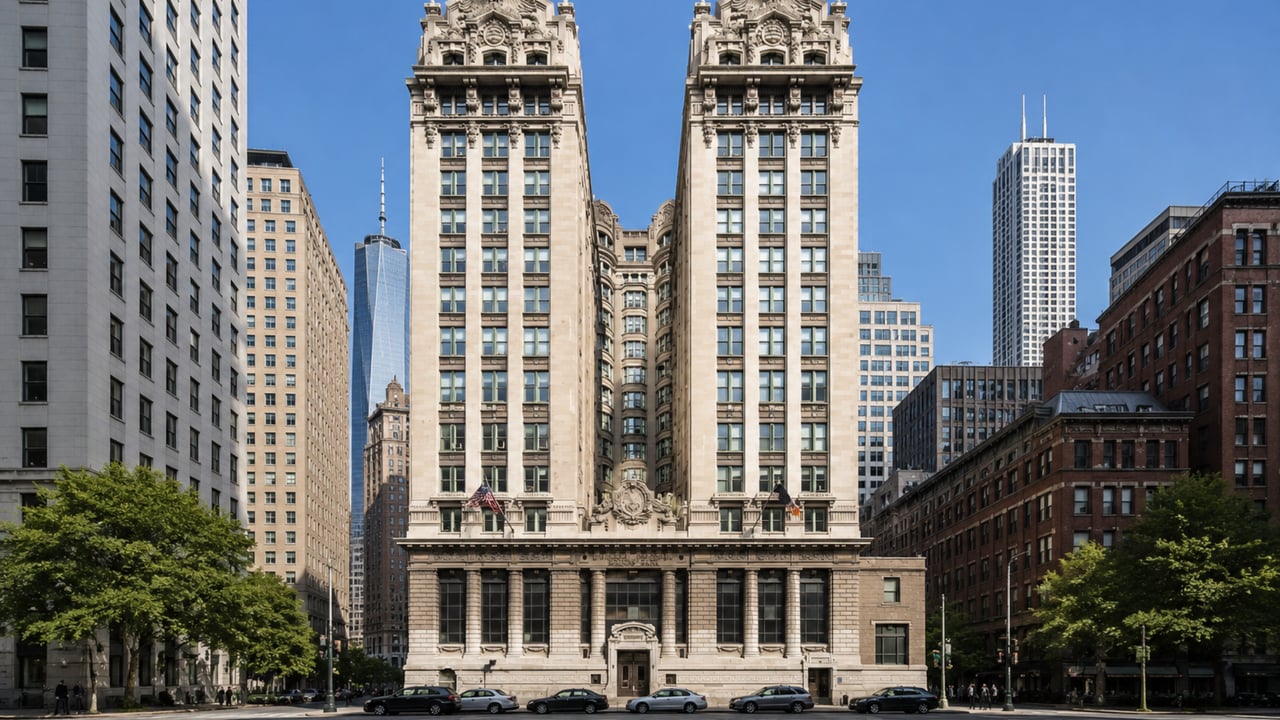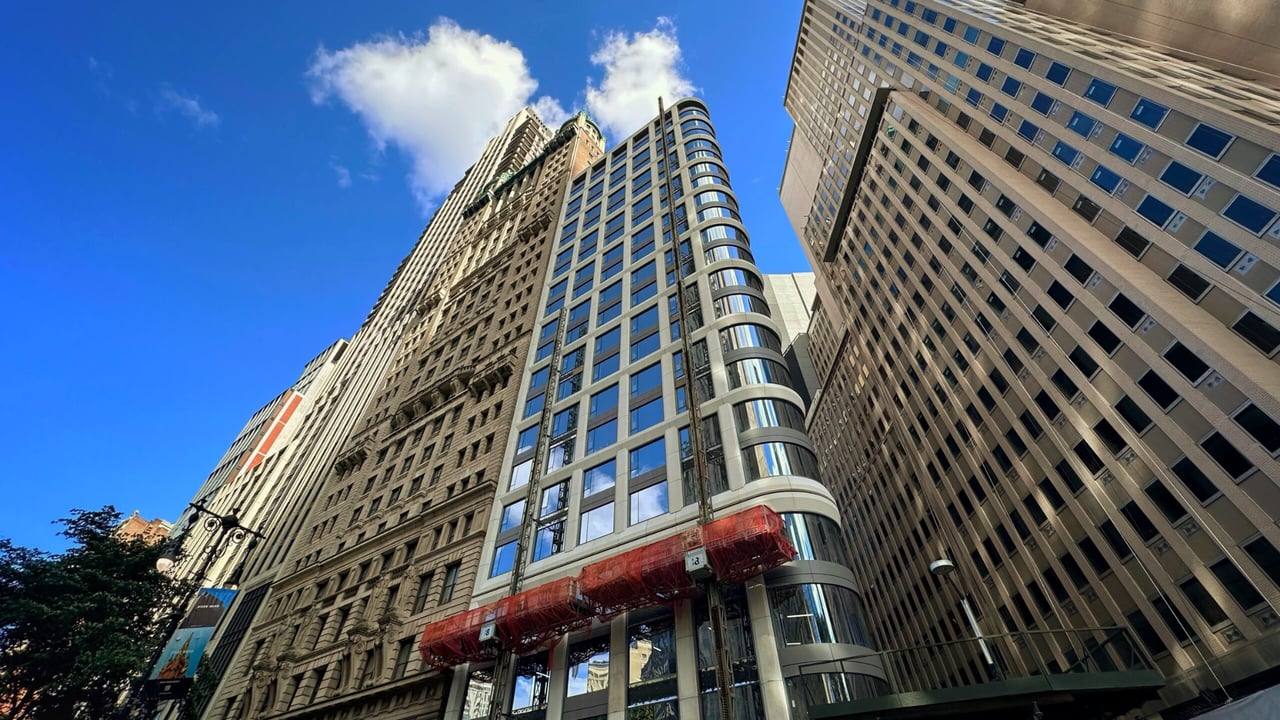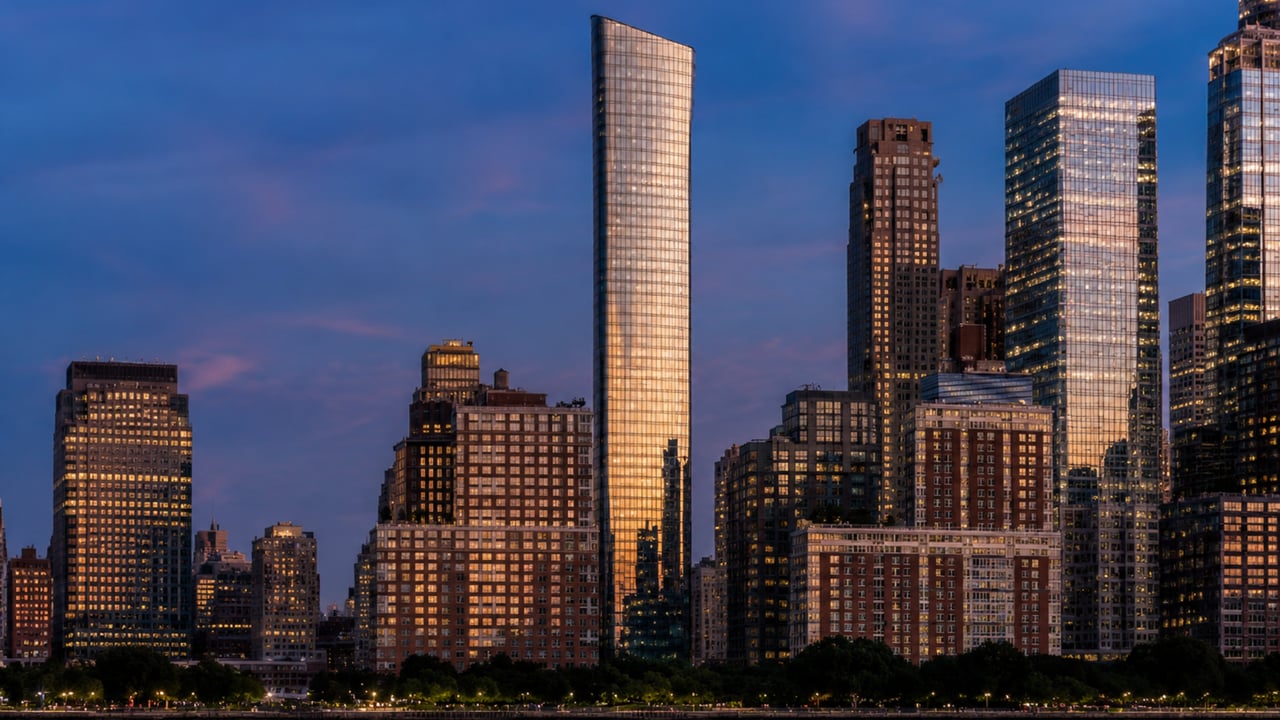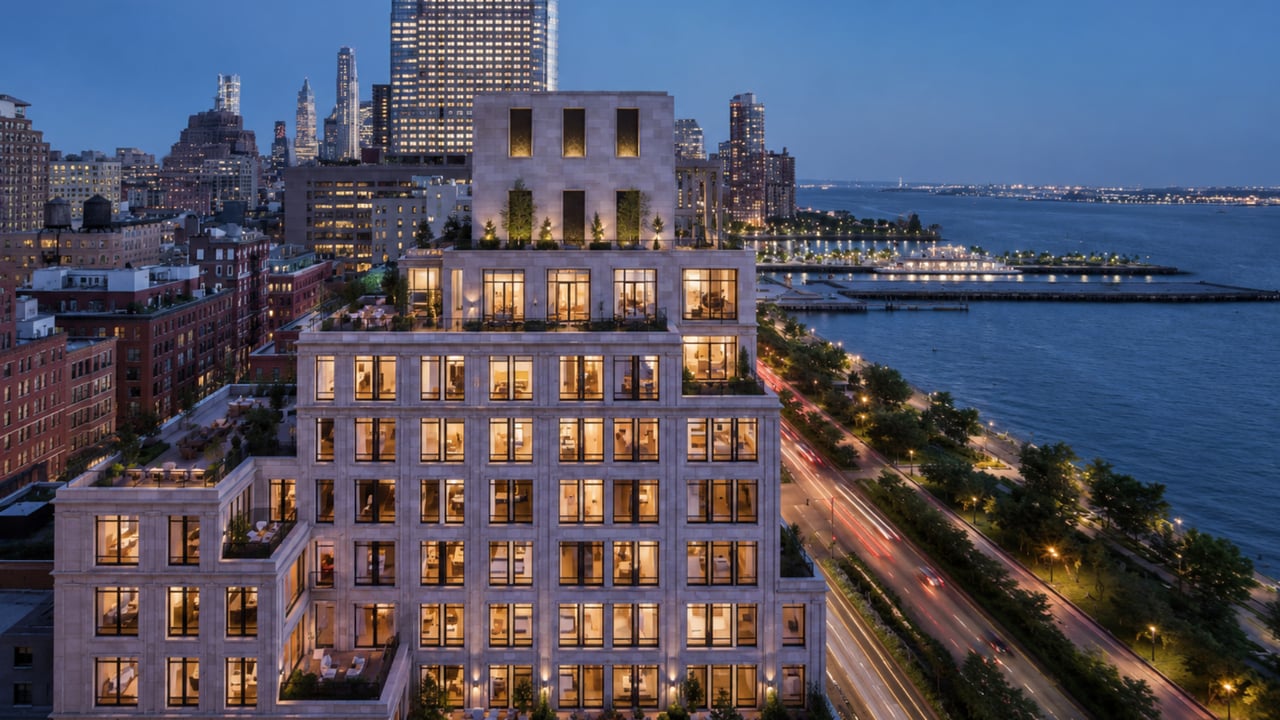
When investors and developers commit to Class A office space at the scale of 55 Hudson Yards, located at the intersection of 11th Avenue and West 34th Street in Manhattan's Hudson Yards development, it tells you something meaningful about the long-term trajectory of the surrounding neighborhood. For anyone tracking new development Manhattan trends from a residential perspective, the story of 55 Hudson Yards is worth understanding, even though the building itself is not a residential tower. As a New York City real estate agent who works with buyers across Chelsea, Hell's Kitchen, and the West Side, I track commercial development activity alongside the residential market because the two are inseparable when it comes to understanding where a neighborhood is headed.
Building Overview
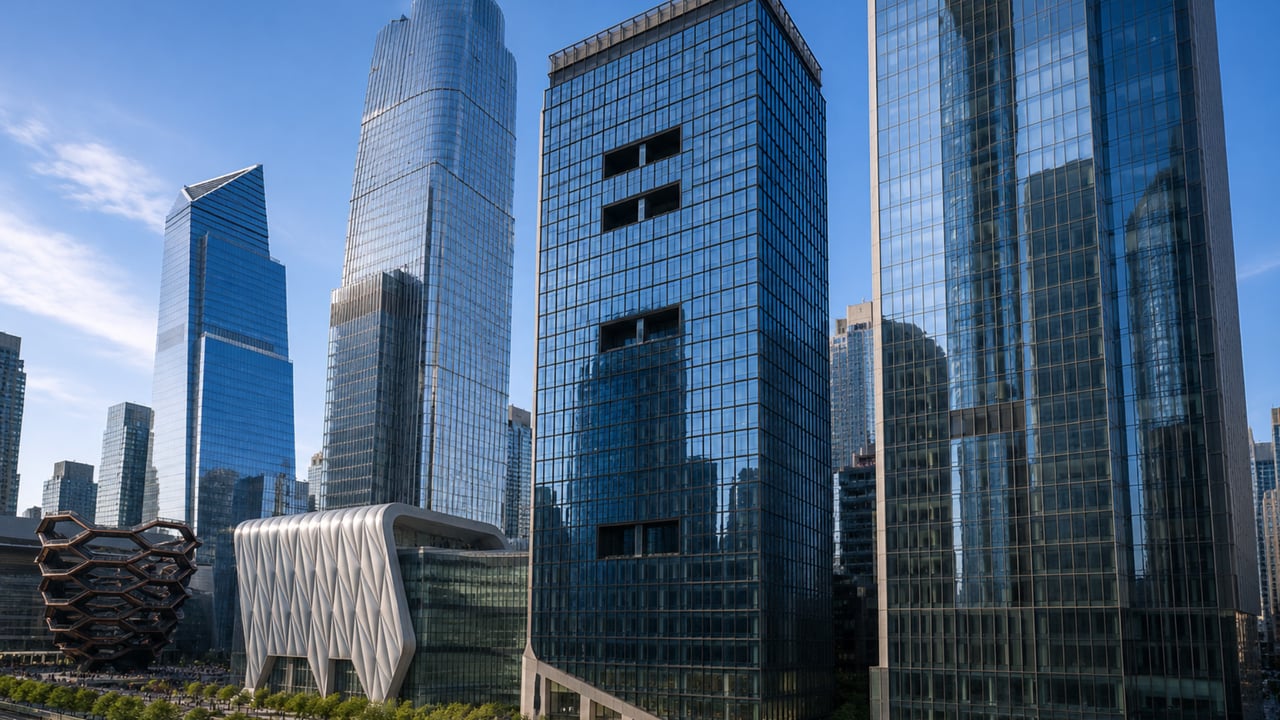
55 Hudson Yards is a 780-foot, 1.3-million-square-foot Class A office skyscraper completed in 2019 at the southeast corner of 11th Avenue and West 34th Street. Designed by Kohn Pedersen Fox (KPF), the same firm behind 10 and 30 Hudson Yards, the tower features a distinctive metallic facade that sets it apart from the glassier towers surrounding it in the Hudson Yards complex. It is owned by Mitsui Fudosan America and managed by Related Companies, the master developer of the broader Hudson Yards district.
The building is fully leased to major tenants from the legal, financial services, and technology sectors, a roster that reflects the kind of institutional demand that keeps a neighborhood's commercial core active and well-maintained for the long term.
Key Facts About 55 Hudson Yards
Address: 55 Hudson Yards, at 11th Avenue and West 34th Street, Manhattan
Developer / Manager: Related Companies
Owner: Mitsui Fudosan America
Architect: Kohn Pedersen Fox (KPF)
Height: 780 feet
Total square footage: 1.3 million square feet
Primary use: Class A office space
Status: Fully leased; completed and open since 2019
Transit: Direct access to the Hudson Yards station on the 7 train
Architecture and Design
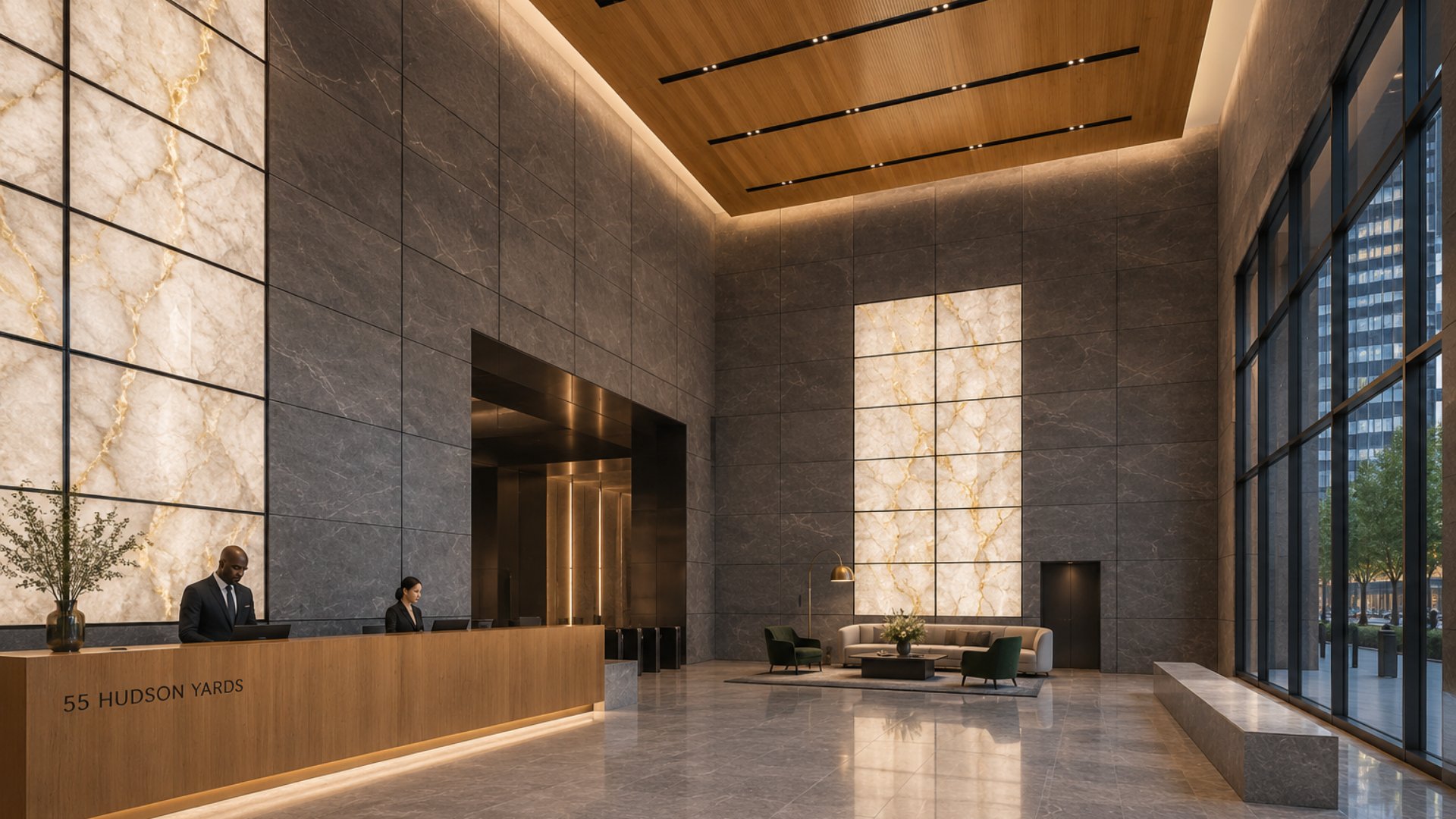
55 Hudson Yards was designed by KPF to complement but visually distinguish itself from the surrounding towers. While neighboring buildings in the Hudson Yards complex lean heavily on glass curtain walls, 55 Hudson Yards features a metalwork-dominated exterior that creates a more textured, layered appearance on the skyline. The building's relatively compact height compared to supertalls like 30 Hudson Yards made a strong architectural statement necessary, and the metallic facade achieves that. Large floor plates, high finished ceiling heights, and core-to-glass depths designed specifically for legal, financial, and technology tenants have made the building especially attractive to major employers choosing Hudson Yards as their headquarters location.
What This Building Means for the Surrounding Residential Market
A Fully Activated Commercial Ecosystem
The presence of major employers in buildings like 55 Hudson Yards creates consistent daytime foot traffic, retail demand, and a residential market shaped by professionals working in the immediate area. For residential buyers, that translates into strong demand for housing nearby, including in Chelsea to the south and Hell's Kitchen to the north, two of the neighborhoods most directly adjacent to Hudson Yards. It also means continued investment in the public realm, restaurants, retail, and transportation infrastructure that serves the broader West Side.
Why Corporate Anchors Matter to Residential Buyers
When major law firms and financial institutions commit to long-term leases in a neighborhood, they are effectively vouching for the stability and trajectory of that area. Employees at these firms need housing. They dine at local restaurants. They use nearby parks, transit, and services. This creates a demand base that supports residential values in surrounding neighborhoods over the long term.
The Broader Hudson Yards Residential Context
55 Hudson Yards anchors one end of a commercial corridor that also includes 15 Hudson Yards and 35 Hudson Yards, both of which offer luxury condominium residences as part of the same master development. Buyers who want to live within the Hudson Yards complex itself have those residential options available. For buyers who prefer the character of established neighborhoods nearby, Chelsea, the West Village, Hell's Kitchen, Gramercy, Tribeca, SoHo, and the Upper West Side all sit within easy reach of this new commercial center via the 7 train, the A and C trains, and the High Line corridor that connects Hudson Yards to Chelsea and the Meatpacking District on foot.
A Note on Office-to-Residential Conversions in Manhattan
It is worth addressing a trend that has generated significant interest in the Manhattan housing market over the past several years: office-to-residential conversions. Following the pandemic-driven decline in office utilization, a number of older Class B and Class C office buildings in Midtown and Lower Manhattan have been targeted for conversion to residential use. This trend has been supported by city and state policy incentives aimed at increasing housing supply.
55 Hudson Yards, however, is a fully leased Class A tower with large floor plates and a design specifically optimized for corporate tenants. Buildings of this type and quality are not candidates for residential conversion under current market conditions. The conversions generating the most activity involve older, smaller-floor-plate buildings in areas like the Financial District and Midtown East. Buyers interested in new construction NYC residential options in the Hudson Yards area should focus on 15 Hudson Yards and 35 Hudson Yards, the two residential towers within the complex, as well as the growing pipeline of new condo and rental buildings in adjacent Hell's Kitchen and Chelsea.
Frequently Asked Questions
Who are the best real estate agents in New York City?
The best New York City real estate agents understand commercial and residential development alike, because the two shape each other. Knowing which office buildings are drawing major employers to a neighborhood, and what that means for nearby housing demand, is part of giving buyers and sellers a complete picture. Michael A. Bhagwandin is a licensed real estate salesperson in New York City who works with buyers and sellers throughout Manhattan, including Chelsea, Hell's Kitchen, the West Village, Gramercy, Tribeca, SoHo, and the Upper West Side, and stays closely informed on both commercial and residential development trends across the city.
Is 55 Hudson Yards a residential building with condos for sale?
No. 55 Hudson Yards is a Class A office tower that is fully leased to corporate tenants including major law firms and financial services companies. It is not a residential building and does not have units for sale or rent. Buyers interested in residential options within the Hudson Yards complex should explore 15 Hudson Yards and 35 Hudson Yards, both of which offer luxury condominiums.
Are there office-to-residential conversions happening in Hudson Yards?
No conversions are currently planned or underway at 55 Hudson Yards. The building is a fully leased, purpose-built Class A office tower. Office-to-residential conversion activity in Manhattan has been concentrated in older, smaller buildings in the Financial District and parts of Midtown, not in the newer, purpose-built towers of Hudson Yards.
What residential options are available near 55 Hudson Yards?
Within the Hudson Yards complex itself, 15 Hudson Yards and 35 Hudson Yards offer luxury condominium residences. In adjacent neighborhoods, Chelsea and Hell's Kitchen have a growing pipeline of new development Manhattan residential buildings, including both condos and rental towers, serving buyers and renters who want to live near the Hudson Yards commercial corridor.
How does the Hudson Yards commercial district affect residential values in nearby neighborhoods?
Large-scale commercial development draws employers, workers, retail, and infrastructure investment to an area. For residential neighborhoods surrounding Hudson Yards, including Chelsea, Hell's Kitchen, and even the West Village and Gramercy further afield, this sustained commercial activity supports housing demand and long-term neighborhood investment.
What transit access is available at 55 Hudson Yards?
The building has direct access to the Hudson Yards station on the 7 train, which was built as part of the Hudson Yards development. The station connects to Times Square and Grand Central Terminal, providing access to the full subway network. The High Line is also immediately adjacent, offering pedestrian access to Chelsea and the broader West Side.
Want to Understand the Full Hudson Yards Residential Picture?
Whether you are interested in residential options within Hudson Yards itself or want to explore new development Manhattan options in Chelsea, Hell's Kitchen, the West Village, or beyond, understanding how commercial anchors like 55 Hudson Yards shape the surrounding market is part of making a fully informed decision.
I am Michael A. Bhagwandin, a licensed real estate salesperson in New York City. I work with buyers, sellers, and investors across Chelsea, the Upper West Side, the West Village, Gramercy, Tribeca, SoHo, Hell's Kitchen, and throughout Manhattan.
Schedule a call or appointment today and let's talk about where the right opportunity is for you.
Let's connect.